
侧边栏

宋代木雕彩绘水月观音菩萨(巴黎佳士得)
尺寸:高131厘米
年代:宋代
质地:木雕彩绘
风格:中原
来源:拍卖会
成交:5,170,500欧元(2016.12)
参阅:外部链接
鉴赏:
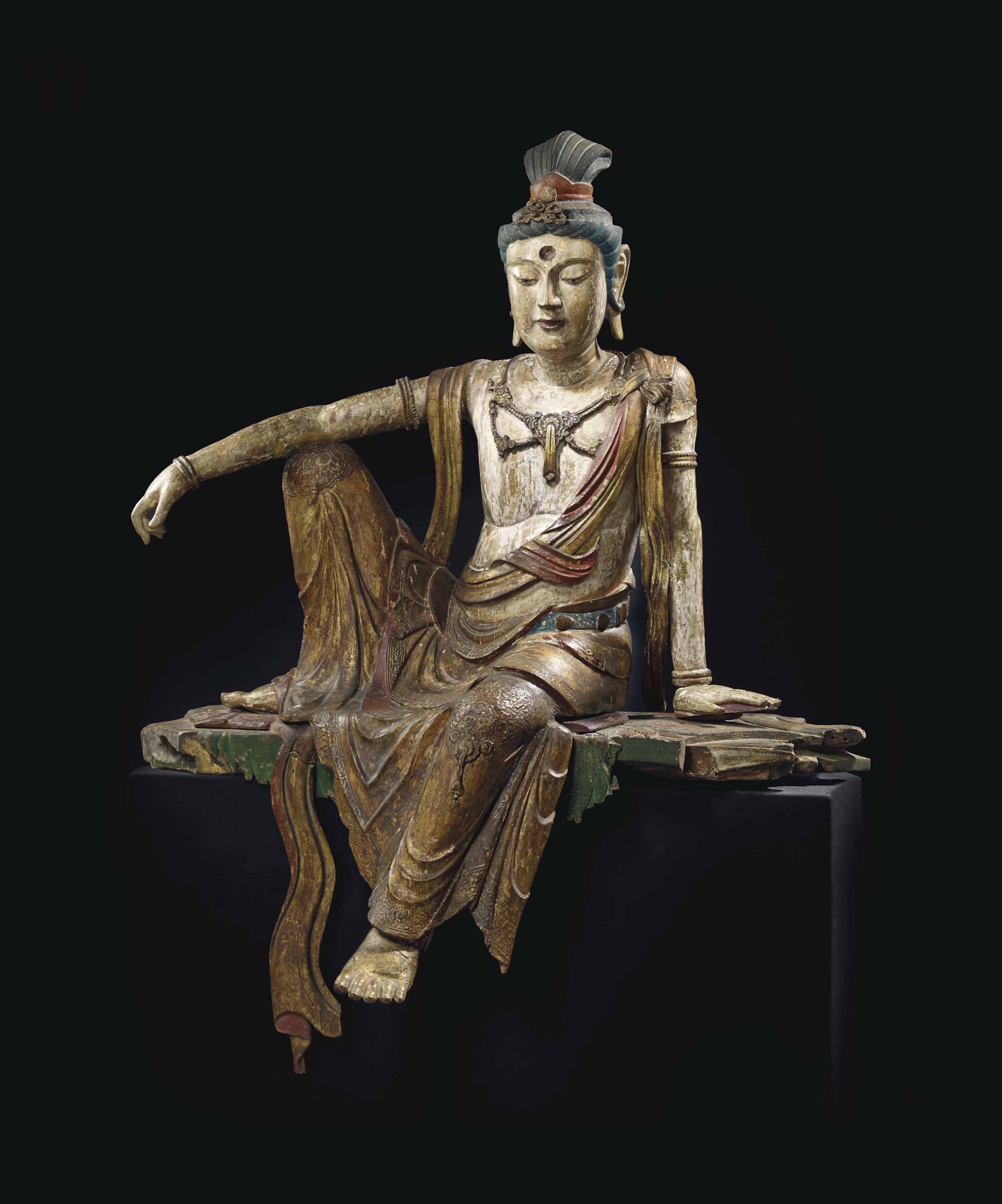
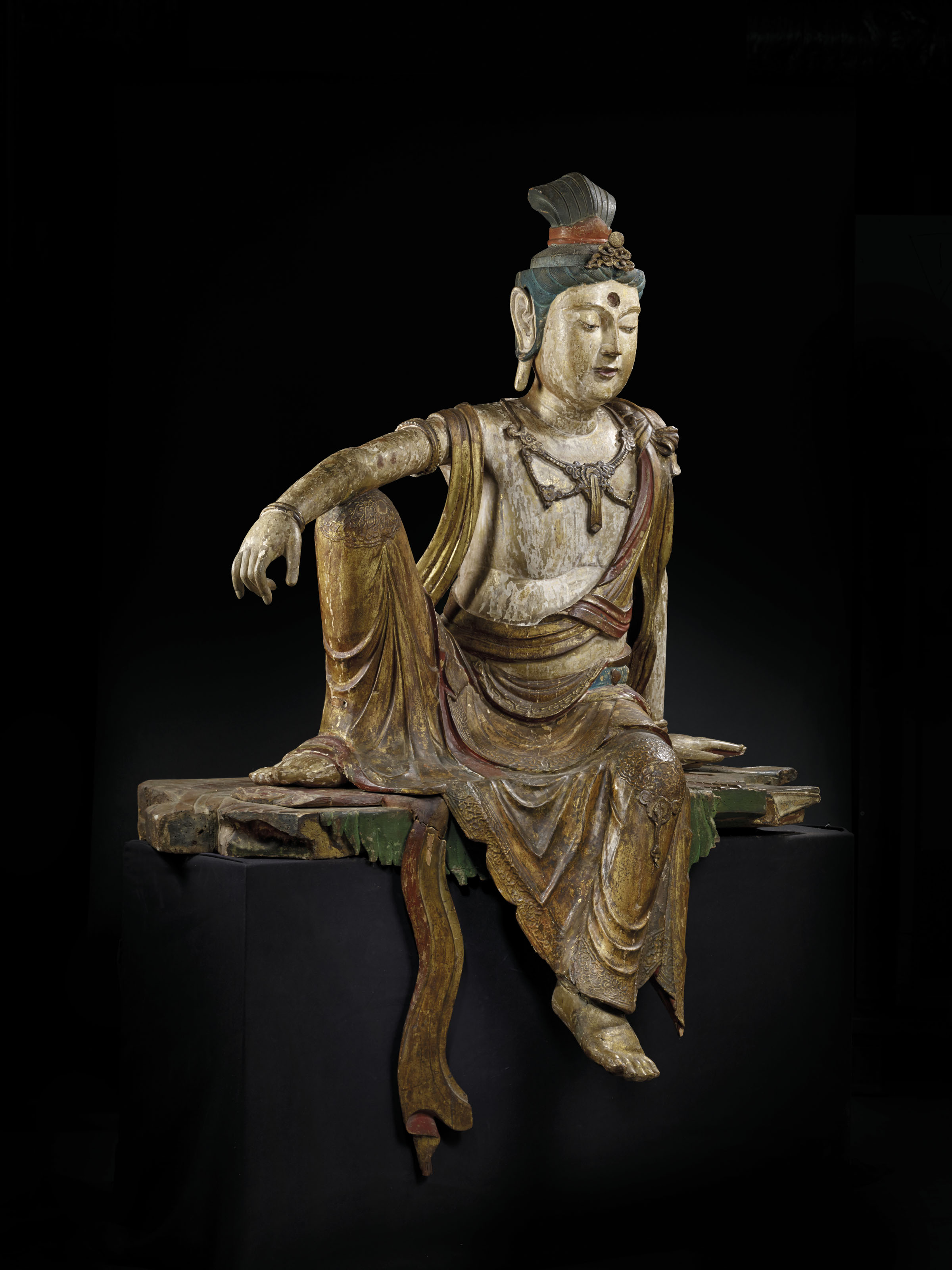
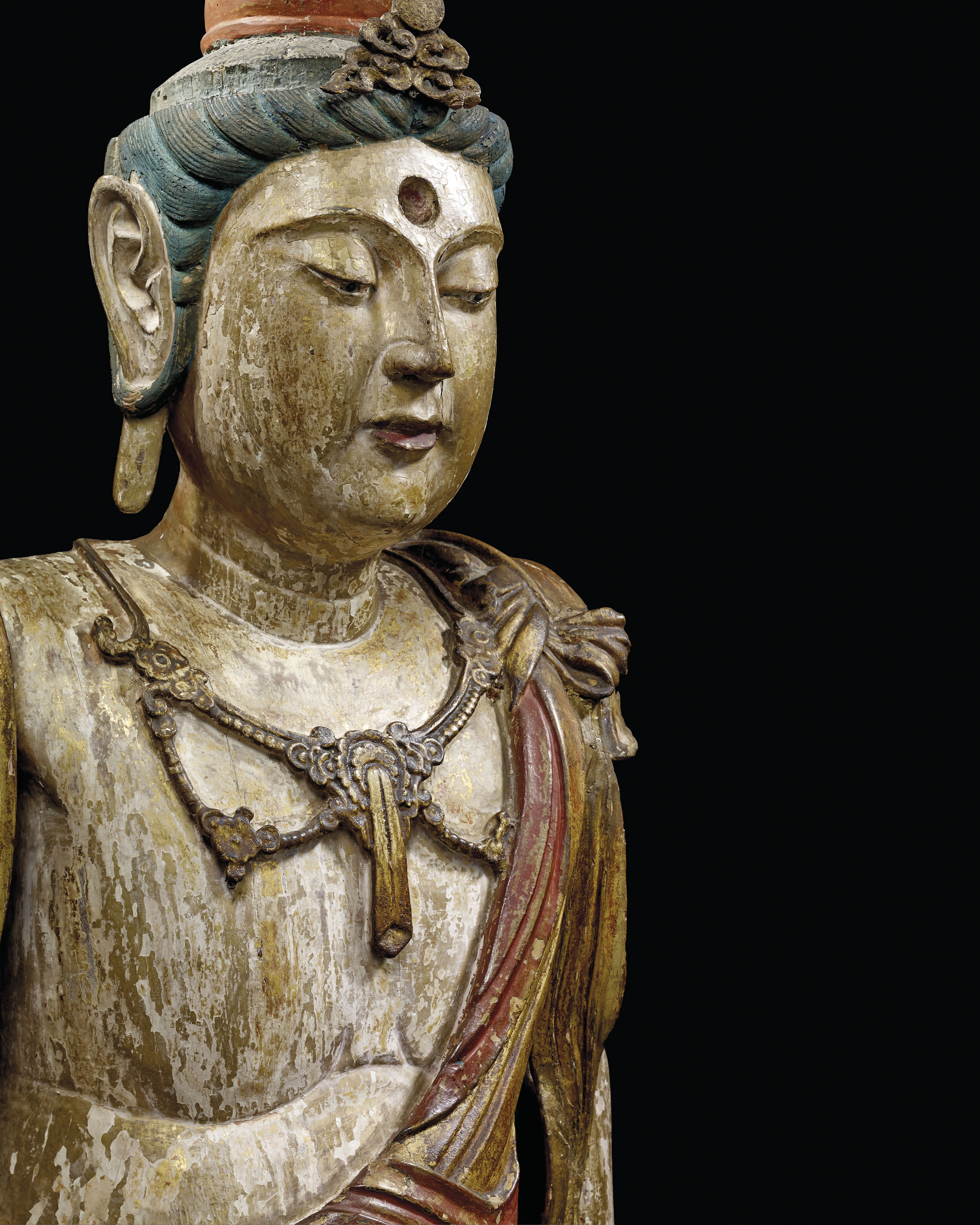
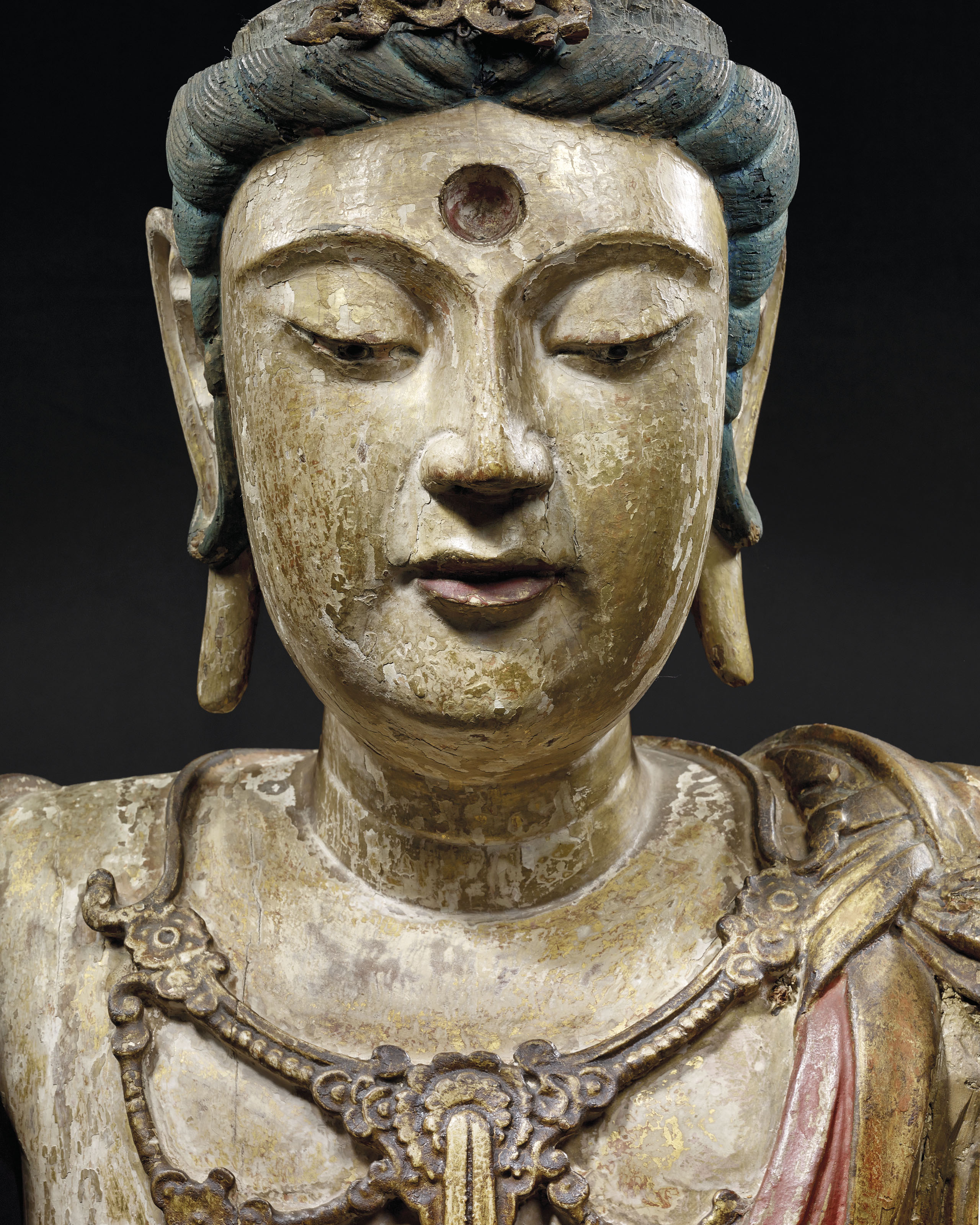
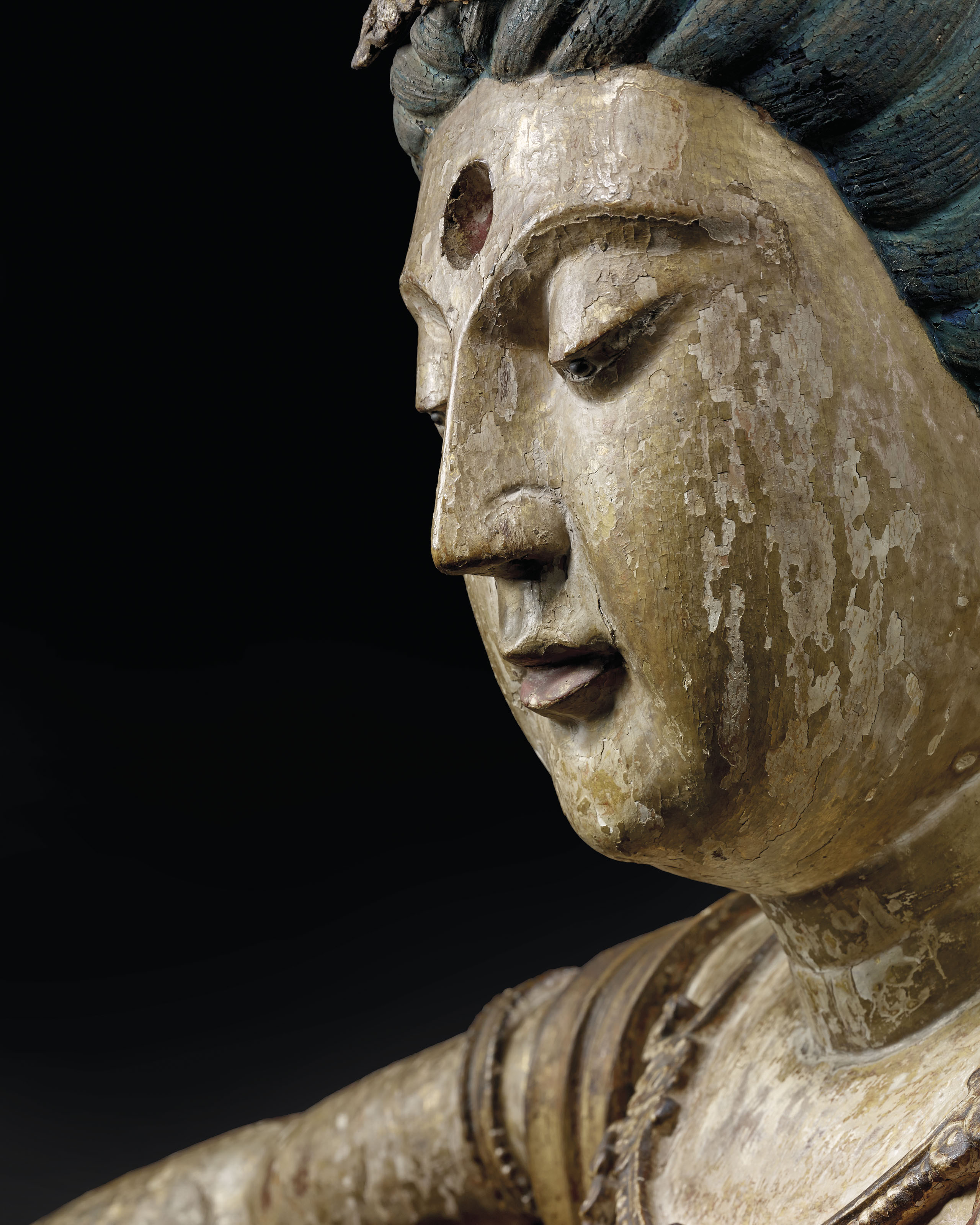
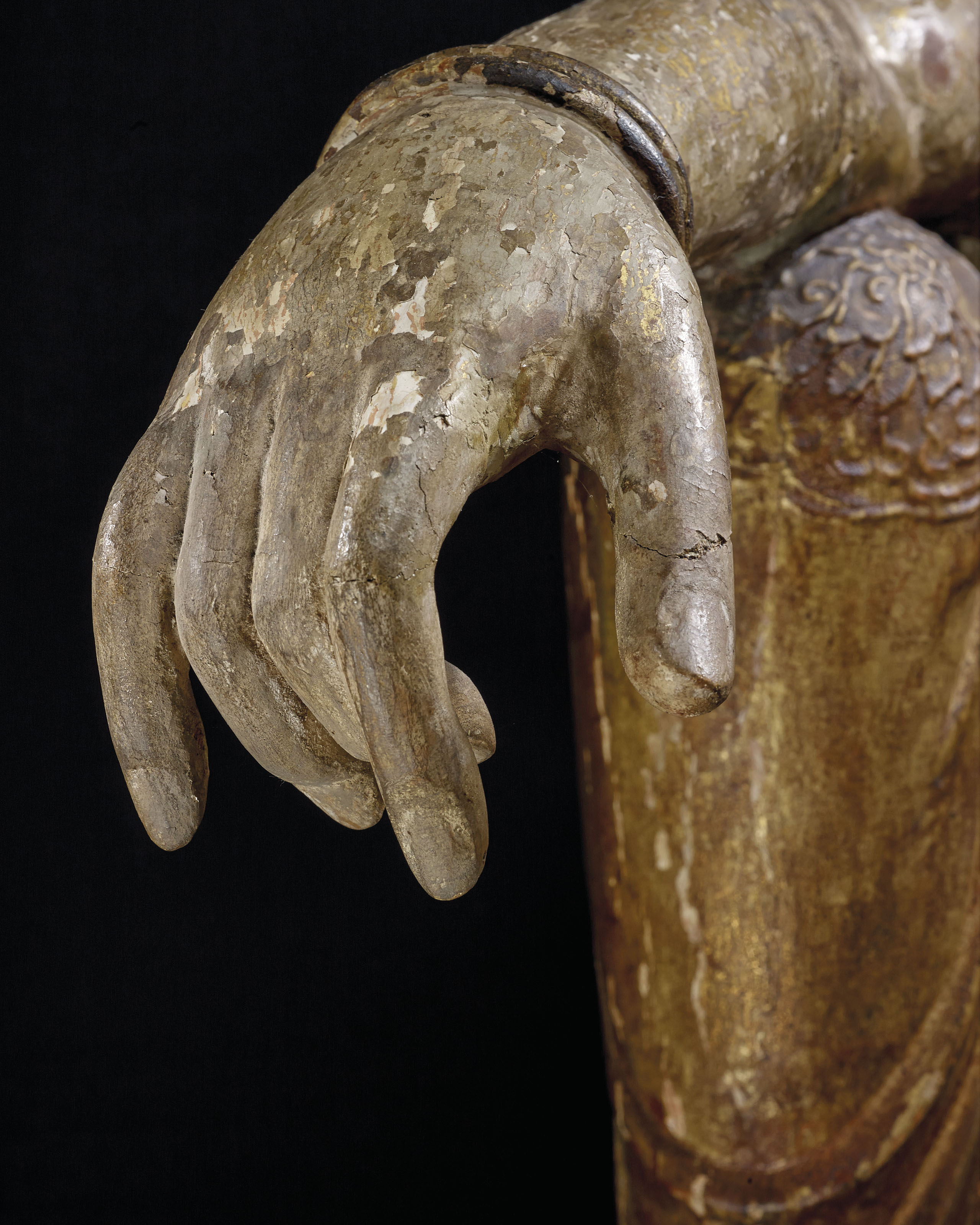
 RARE ET IMPORTANTE STATUE DE GUANYIN EN BOIS POLYCHROME ET DORE
CHINE, DYNASTIE SONG (960-1279)
Il est élégamment assis en rajalilasana, la main droite posée sur son genou droit plié. Il est vêtu d'un fin dhoti, une écharpe posée sur ses épaules laissant son torse dénudé paré d'un précieux collier. Son visage aux yeux mi-clos est empreint de sérénité et surmonté d'un haut chignon retenu par un ruban rouge. Son front est agrémenté de l'urna ; restaurations. Hauteur : 131 cm. (51 ½ in.), socle
Provenance
Compagnie de la Chine et des Indes, Paris.
Collection of Mr Roger Vivier (1903-1998), Paris. Mr Vivier was a famous French fashion designer who specialised in shoes. His best known creation was the stiletto heel. He was called the “Fragonard of the shoe” and worked amongst others for Christian Dior.
Acquired from Mr Vivier by a French private collector through the expert Michel Beurdeley on June 28th 1978, and thence by descent in the family.
Literature
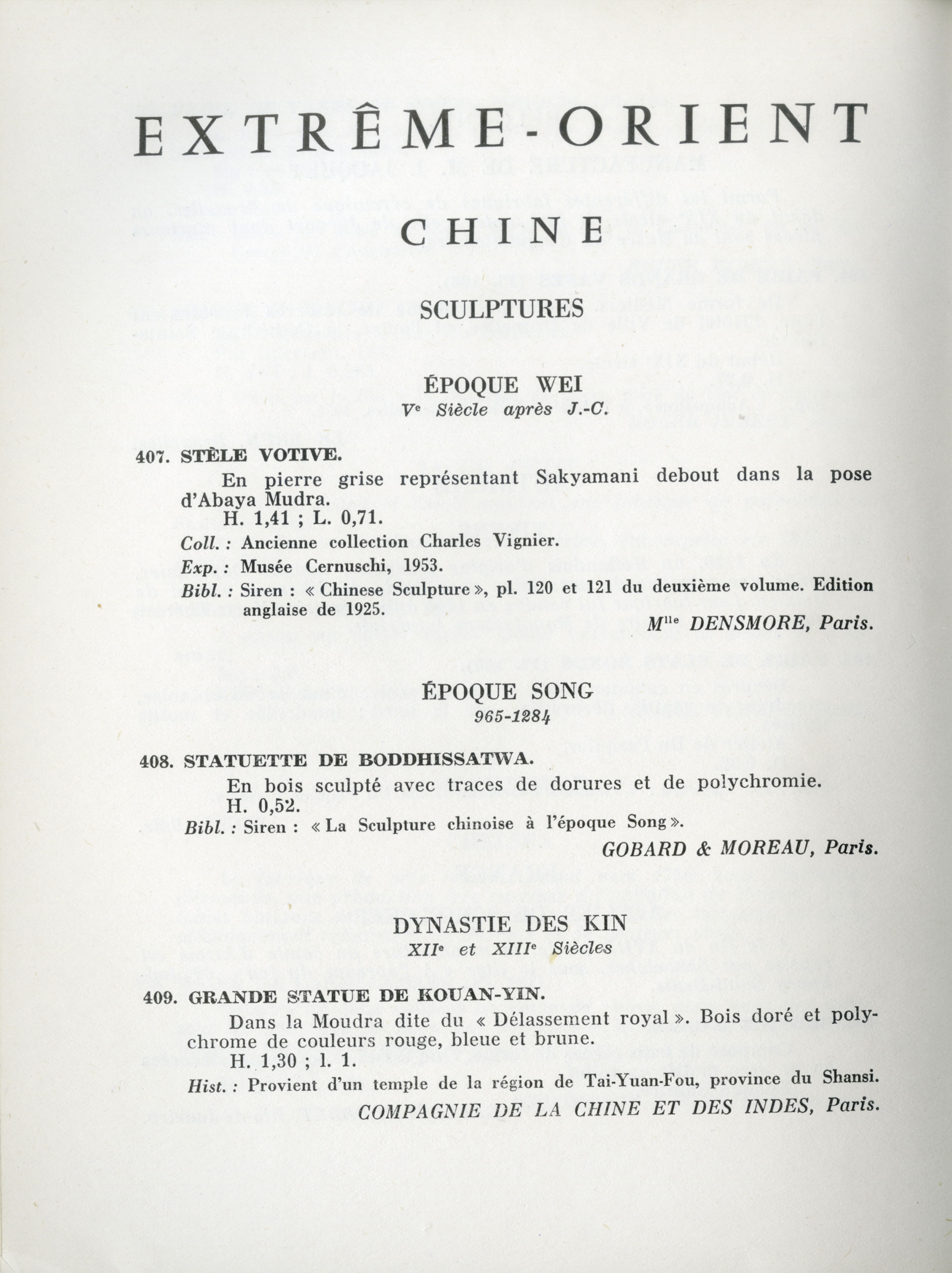
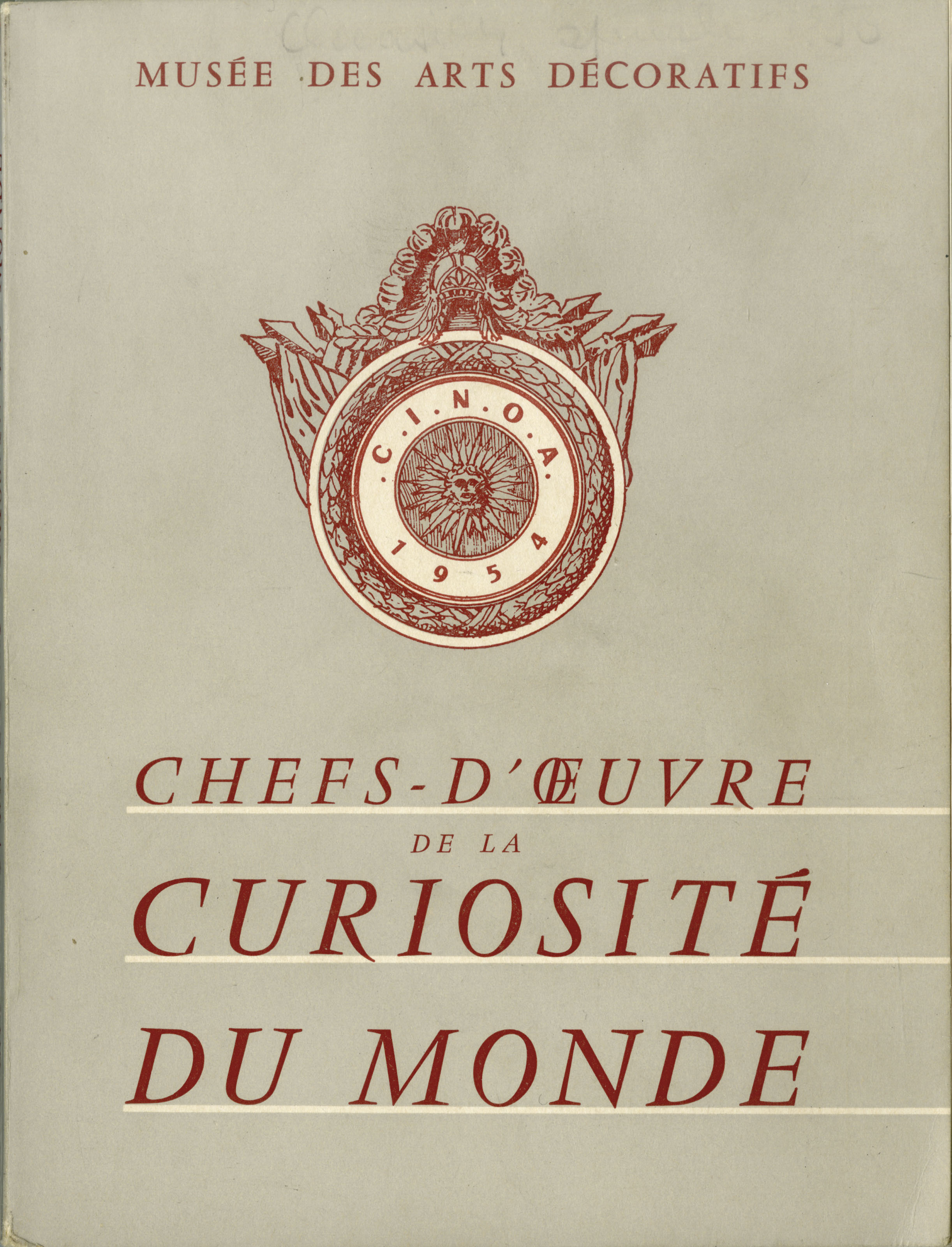
Musée des Arts Décoratifs, Chefs d'Oeuvre de la Curiosité du Monde, 2ème Exposition Internationale de la C.I.N.O.A, 10 June - 30 September 1954, Exhibition Catalogue, n° 409.
Encyclopaedia Universalis, Encyclopaedia Universalis France S.A, Paris, 1968, Volume 5, article Dieux et Déesses, pl. VI.
Connaissance des Arts, Les grandes collections, Art ancien avec Art nouveau pour M. Roger Vivier la création artistique ne connait ni frontières ni époques, Juillet-Aout 1968, n° 197-198, pp. 88-94.
Exhibited
Paris, Musée des Arts Décoratifs, Chefs d'Oeuvre de la Curiosité du Monde, 2ème Exposition Internationale de C.I.N.O.A, 10 June - 30 September 1954.
Further details
A RARE AND IMPORTANT GILT AND POLYCHROME WOOD FIGURE OF GUANYIN
CHINA, SONG DYNASTY (960-1279)
Serenity and Compassion – A Rare Song Dynasty Guanyin Rosemary Scott, International Academic Director Asian Art
This graceful figure of the bodhisattva Guanyin sits in a variation of the pose known in Indian iconography as rajalilasana, or ‘royal ease’. The left leg is pendant, while the right is bent and raised, so that, at just below shoulder height, the bodhisattva’s right arm is able to rest casually on the knee. The torso leans very slightly to the left, giving the impression that the left arm, which is straight, appears to take the full weight of the body. The figure does, indeed, appear completely at ease – relaxed, but retaining a quiet dignity and serenity. This pose is often associated with one of the most popular aspects of the bodhisattva – ‘Guanyin of the Southern Seas’ or ‘Water-Moon Guanyin’. This name is a reference to Guanyin residing on the mythical Mount Potalaka, which was believed to exist in the seas off the southern coast of India. This particular imagery was introduced into China in the 5th century with the first complete translation of the Avatamska Sutra (full name - Mahāvaipulya Buddhāvataṃsaka Sūtra, The Flower Adornment Sutra 大方廣佛華嚴經), one of the most influential sutras of Mahayanist Buddhism.
The bodhisattva Guanyin, whose name in Sanskrit is Avalokitesvara, is an important figure in the Mahayanist Buddhist tradition. The Sanskrit name derives from two parts – avalokita, meaning ‘seen’ – and ishvara, meaning ‘lord’. The meaning is therefore either ‘the lord who is seen’ or ‘the lord who sees’. In either case it is the presence of the deity amongst the people of the world, and his accessibility, that is emphasised. The full name in Chinese is Guanshiyin 觀世音 – ‘one who hears the sounds [prayers] of the world’. The impression is of an omnipresent deity to whom mortals may turn in times of trouble. Guanyin is a bodhisattva, which means that he is one who has attained enlightenment, but who has deferred entering nirvana and Buddhahood in order to help allay the suffering of others and help them to attain enlightenment. In the Chinese translation of the Saddharma Puṇḍarīka Sutra (Lotus Sutra 妙法蓮華經), the Indo-Iranian Kumarajiva (ca. AD 350-410) refers to Guanyin as the ‘Bodhisattva of Infinite Compassion’. With the rise of the Pure Land School of Buddhism in China in the 7th century, Guanyin became one of the most prominent figures in the Chinese Buddhist pantheon. In the Song dynasty, when this sculpture was created, Guanyin was still depicted as an androgynous male, but later in the 12th century the bodhisattva began to be associated with a female manifestation, which gained momentum in the succeeding centuries until Guanyin was seen as the ‘Goddess of mercy’.
In Pure Land Buddhism 淨土宗 Guanyin is identified as one of the counsellor-emissaries of the Buddha Amitabha – the Buddha who presides over the Pure Land or Western Paradise, and in a second translation of the three sutras that comprise the Pure Land Sutra, Guanyin is identified as the successor to Amitabha. The same translation notes that any virtuous man or woman who finds themselves in trouble may entrust themselves to the Bodhisattvas Avalokitesvara or Mathasthamapraptra, and they will be saved. Representations of Guanyin, therefore, may sometimes be identified by a small figure of Amitabha at the front of the diadem.
This bodhisattva is shown in simple, but princely robes. The lower body and legs are clothed in a paridhana or long dhoti, which falls in elegant, natural, folds and conforms to the shape of the lower legs of the figure. His chest is bare, but a long sinuous scarf crosses it obliquely, is tied on the left shoulder, and is draped over the right arm. The bodhisattva wears jewellery appropriate to his princely rank in the form of a necklace, bracelets, and a diadem in his hair. Typically for figures of this period, the hair is looped around the ears and then swept up into a chignon. Like a number of other surviving wooden bodhisattva figures of this date there are relief designs on the paridhana at the knees of the figure and along the edges of the cloth. It must be born in mind that figures such as this one would have been in a temple for centuries and at intervals it would have been redecorated. Therefore, not only are there several layers of pigment, but these relief designs, which may have been added in the Ming dynasty.
A slightly larger Northern Song Guanyin sculpture in this pose, although seated on a lotus throne, dated to the third year of Yuanfeng (AD 1079), is in the Chongqing temple in Shanxi province (illustrated in Zhongguo meishu quanji, diaosu bian, 5, Wudai Song diaosu, Beijing, 1988, p. 65, no. 64. Such sculptures, including the current example are particularly associated with North China, especially Shanxi province in the period 10th-14th century, due to the pre-eminent centres of Buddhism at Taiyuan and Wutaishan. Another similar figure, dated c. AD 1025, is in the Honolulu Academy of Arts. A slightly smaller Guanyin in this pose, dated c. AD 1200, is in the collection of the Victoria and Albert Museum, London and is discussed at length by J. Larson and R. Kerr in Guanyin – A Masterpiece Revealed, London, 1985. A slightly smaller figure of Guanyin in similar pose, dated c. AD 1250, is in the collection of Princeton University, where the curators note that the relief decoration on the skirt and scarves of the figure was probably added during the Ming dynasty. A slightly larger Song sculpture of Guanyin in this pose is also in the collection of the British Museum, London (see Buddhism: Art and Faith, London, 1985, no. 296), while a slightly smaller Northern Song figure of the bodhisattva Manjusri in a similar pose, is in the collection of the Metropolitan Museum (see Wisdom Embodied – Chinese Buddhist and Daoist Sculpture in The Metropolitan Museum of Art, New York, 2010, p. 180, no. A44).
A C14 test (CIO/853-16/PWL, Rijksuniversiteit Groningen) dated 20 June 2016, consistent with our dating, is available on request.
宁静与慈悲——一件罕见的宋代观音像
Rosemary Scott,亚洲艺术国际学术总监
这尊优雅的观音菩萨像,其坐姿是印度图像学中“rajalilasana”(自在坐)的一种变体。菩萨左腿自然垂下,右腿弯曲抬起,高度约与肩齐,右臂便就这样随意地搭在右膝上。身躯微微向左倾斜,让人感觉笔直的左臂仿佛在支撑着整个身体的重量。整尊造像确实显得极其自在——姿态放松,但依然保持着一种沉静的庄严与安宁。
这种坐姿常与观音最广受欢迎的化身之一——“南海观音”或“水月观音”联系在一起。这一名号源于观音所居住的普陀洛伽山(Mount Potalaka),相传此山位于印度南部沿海之外。这一特有的图像随着《Avatamska Sutra》(全称《Mahāvaipulya Buddhāvataṃsaka Sūtra》,即《大方广佛华严经》,大乘佛教最重要的经典之一)于公元5世纪首次完整汉译而传入中国。
观音菩萨(梵文名 Avalokitesvara)是大乘佛教传统中的重要人物。其梵文名由两部分组成:avalokita(观/见)和 ishvara(主/自在)。因此其含义或为“被观见之主”,或为“观照世间之主”。但无论哪种解释,其核心都在于这位菩萨并非高高在上,而是亲临世间,与众生同在,随时可被祈求。其完整的汉文名号“观世音”,意为“观照世间(祈求)音声者”,令人感受到一位无处不在的慈悲者,凡人逢遇苦难,皆可向其求助。
观音是一位菩萨,意味着他已经觉悟,但推迟进入涅槃、证得佛果,为的是帮助众生减轻苦难,并助其获得觉悟。在《Saddharma Puṇḍarīka Sutra》(即《妙法莲华经》)的汉译本中,印度-伊朗裔的译经家 Kumarajiva(鸠摩罗什,约公元350-410年)称观音为“大悲菩萨”。随着公元7世纪中国净土宗(Pure Land School of Buddhism)的兴起,观音成为中国佛教神系中最显赫的人物之一。在这尊造像创作的宋代,观音仍表现为中性化的男性形象;但到了12世纪后期,这位菩萨开始与女性化现相关联,这种趋势在后世愈演愈烈,直至观音被视为“慈悲女神”(Goddess of mercy)。
在净土宗中,观音被认为是阿弥陀佛(Amitabha)的两位胁侍菩萨之一——阿弥陀佛是执掌净土或西方极乐世界(Western Paradise)的佛陀。在构成净土宗“三经”的第二种译本中,观音被指明为阿弥陀佛的继任者。同一种译本还指出,任何身处困境的善男子或善女人,若能皈依观世音菩萨或大势至菩萨(Mathasthamapraptra),便能获得救度。因此,观音造像有时可以通过其宝冠正面饰有的小化佛(阿弥陀佛)来辨识。
这尊菩萨身着简朴但具贵胄之气的衣袍。下半身及双腿覆以腰布(paridhana,一种长裹裙),衣褶自然、优雅地垂落,贴合着造像小腿的轮廓。上身袒露,一条修长的飘带斜挎胸前,于左肩系结,并披搭于右臂之上。菩萨佩戴着与其王子身份相称的饰物,包括项链、臂钏及发髻上的宝冠。与此时期造像的典型特征一致,其发髻环绕耳际,然后向上盘成高髻。
与许多同年代留存至今的木雕菩萨像一样,其膝盖处的腰布及衣缘上饰有浮雕纹样。需要谨记的是,这类造像会在寺庙中历经数百年,其间会被不断地重新妆饰。因此,不仅存在多层彩绘,而且这些浮雕装饰(可能添加于明代)亦是如此。
山西省崇庆寺(Chongqing temple)内有一尊略大、呈此坐姿的北宋观音像(虽坐于莲台之上),其纪年为元丰三年(公元1079年)(图见《Zhongguo meishu quanji, diaosu bian, 5, Wudai Song diaosu》,北京,1988年,第65页,图64)。包括本件作品在内的此类造像,尤其见于10至14世纪的中国北方,特别是山西省,因为太原和五台山(Wutaishan)是当时重要的佛教中心。另一尊约公元1025年的同类造像藏于檀香山艺术学院(Honolulu Academy of Arts)。伦敦维多利亚与阿尔伯特博物馆(Victoria and Albert Museum)藏有一尊呈此姿势、尺寸略小的观音像,断代约为公元1200年,J. Larson 与 R. Kerr 在《Guanyin – A Masterpiece Revealed》(伦敦,1985年)中对此有详尽论述。普林斯顿大学(Princeton University)藏有一尊呈类似姿势、尺寸略小的观音像,断代约为公元1250年,该馆专家指出,其衣裙与飘带上的浮雕装饰可能添加于明代。大英博物馆(British Museum,伦敦)亦藏有一尊呈此姿势、尺寸略大的宋代观音像(参见《Buddhism: Art and Faith》,伦敦,1985年,第296号)。而大都会艺术博物馆(Metropolitan Museum of Art,纽约)则藏有一尊呈类似姿势、尺寸略小的北宋文殊菩萨像(参见《Wisdom Embodied – Chinese Buddhist and Daoist Sculpture in The Metropolitan Museum of Art》,纽约,2010年,第180页,图A44)。
本件造像的碳十四检测(编号 CIO/853-16/PWL,格罗宁根大学(Rijksuniversiteit Groningen))于2016年6月20日完成,其结果与我们的断代一致,可应请求提供。

