
侧边栏
10世纪(983年)北宋莫高窟佛画自在观音菩萨(伦敦大英博物馆)
尺寸: H. 99 cm
年代: 北宋(983年)
质地: 絲綢
风格: 中原 莫高窟
来源: 伦敦大英博物馆
参阅: 外部链接
鉴赏:
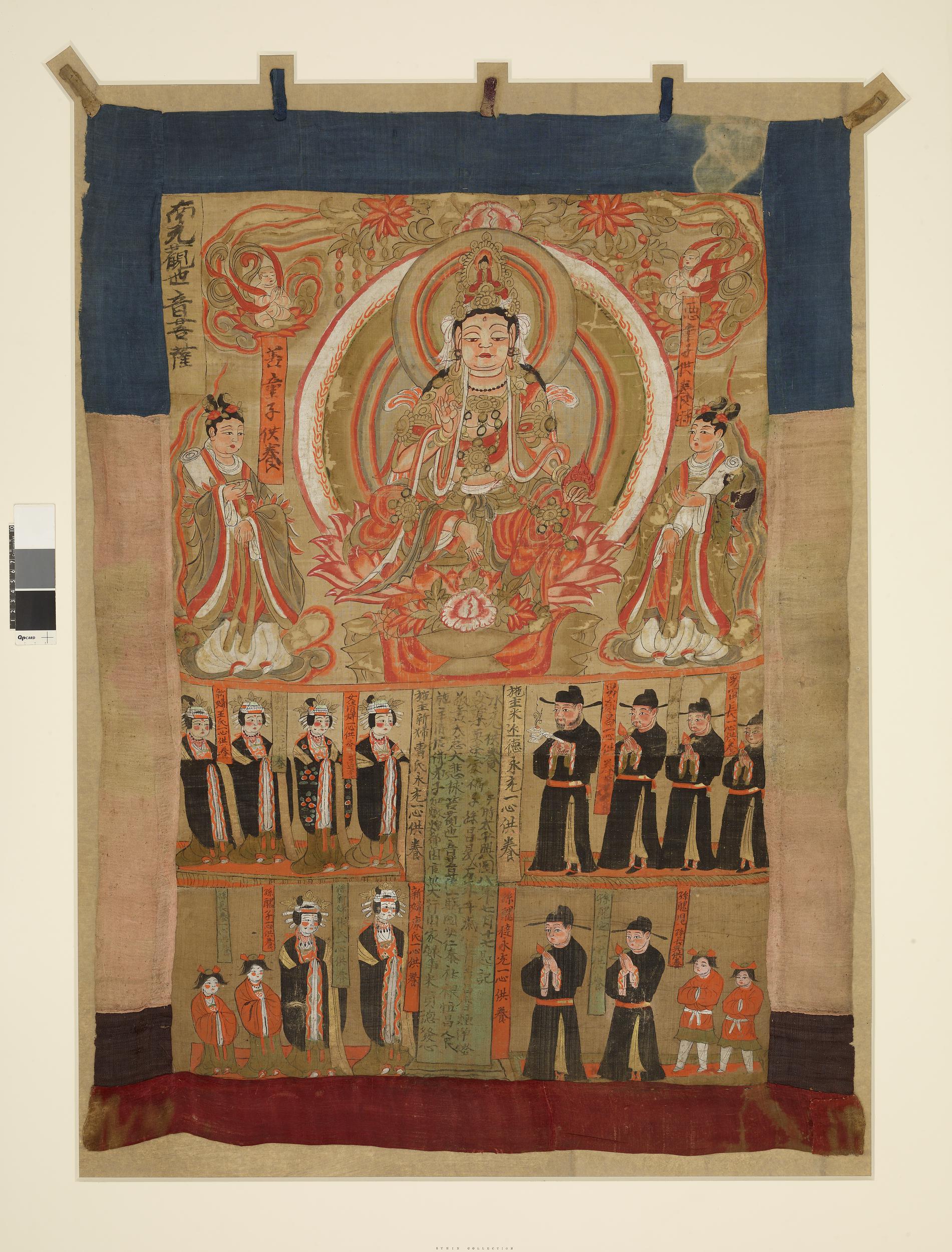
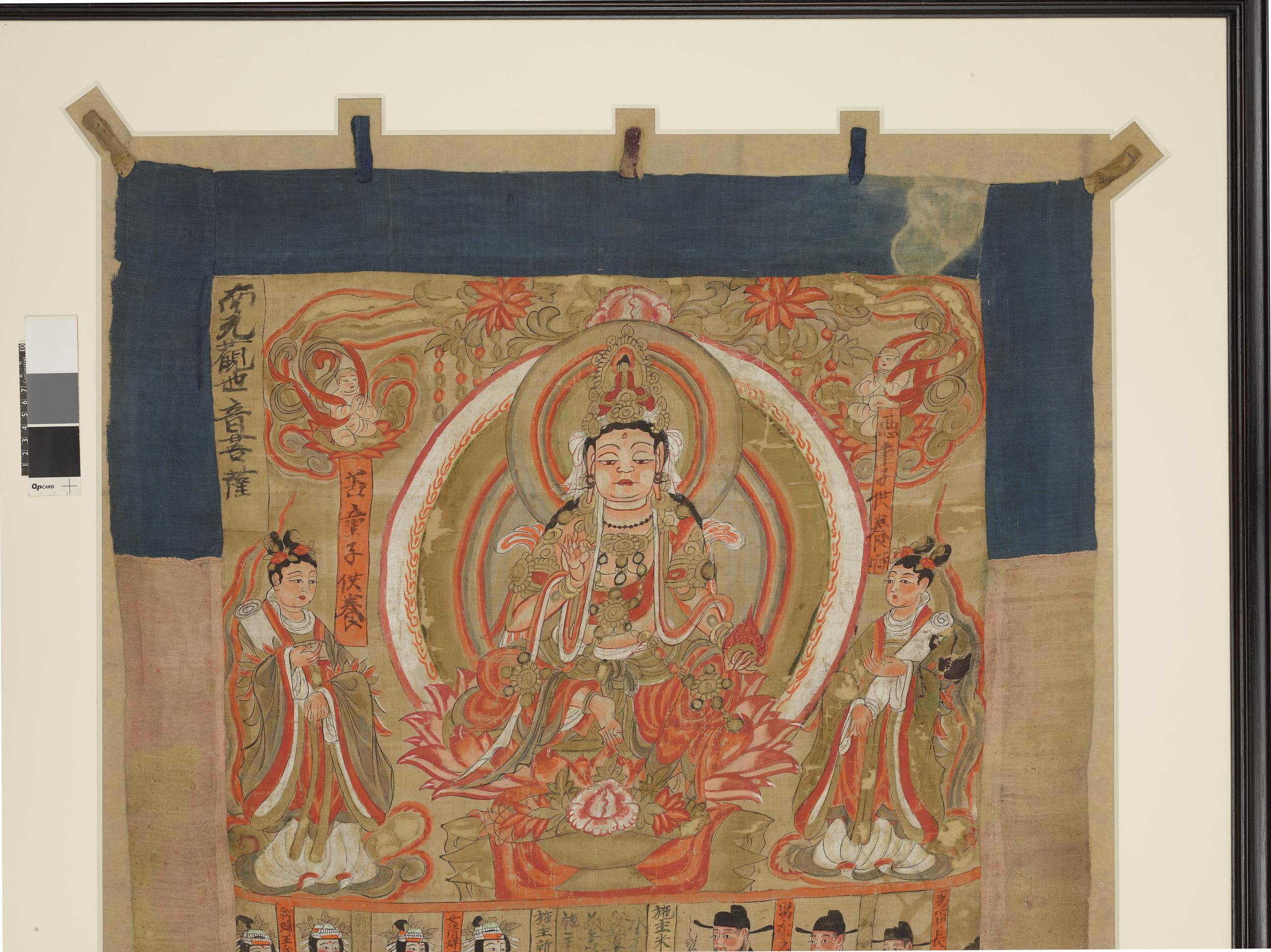
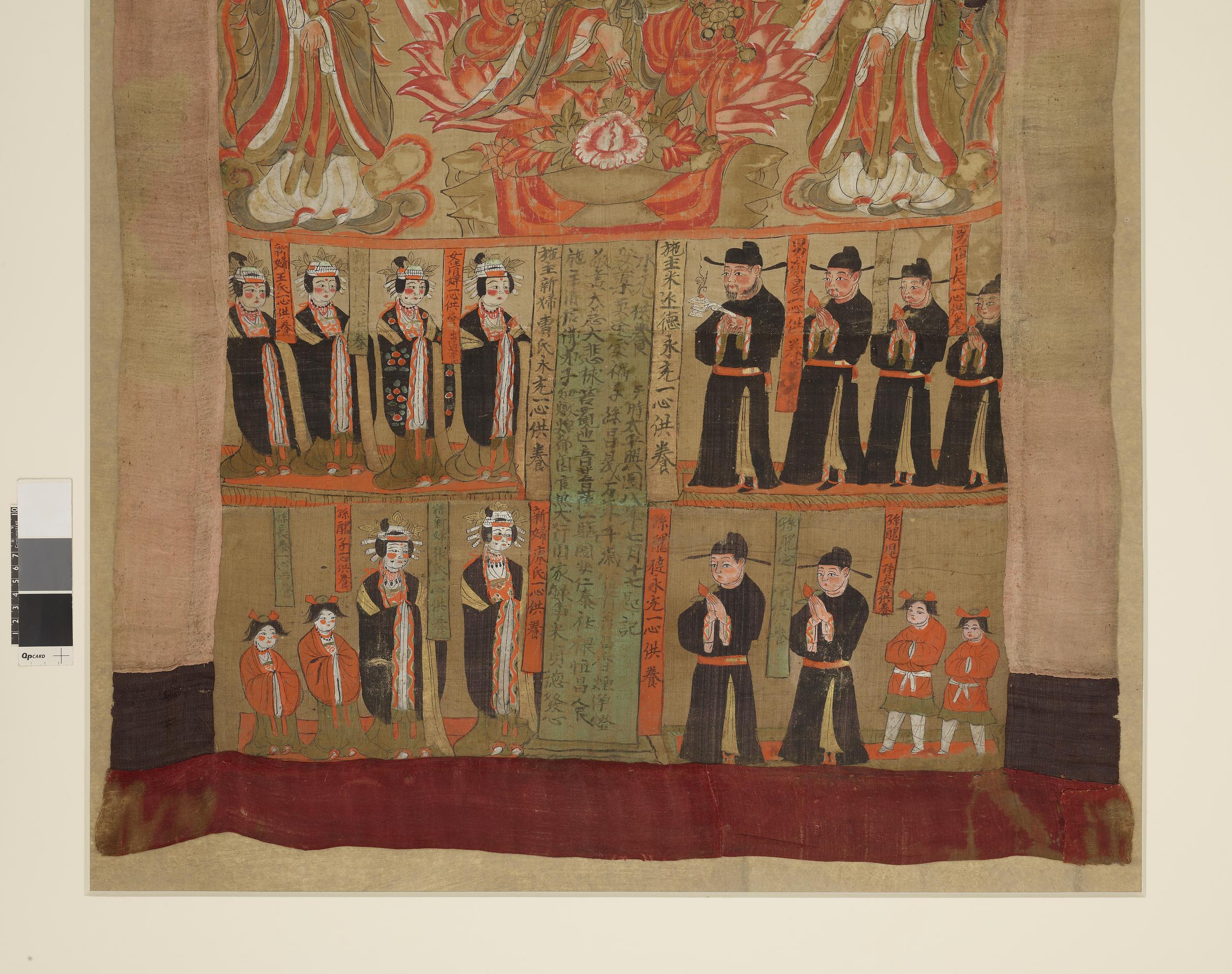 Avalokiteśvara seated on a lotus seat with the Good and Bad Boys. In the lower register are two rows of male, female and child donors, with central inscription and identifying catouches. Ink and colour on silk.
观音菩萨结跏趺坐于莲台之上,善财童子和恶童子胁侍左右。下方区域绘有两排男女及儿童供养人像,中央有题记,并配有标识身份的榜题。绢本设色。
出自: 敦煌: 莫高窟: 第17窟
题记:
Inscription position: in cartouches and central panel
Inscription language: Chinese
Inscription content: 題記(從左至右)(1)上 新婦王氏一心供養下 孫長泰一心供養(2)上 新婦陰氏一心供養下 孫醜子一心供養(3)上 女清婢一心供養出適李氏下 孫新婦張氏一心供養(4)上 施主新婦曹氏永充一心供養下 新婦康氏一心供養 1.施主清信佛弟子知敦煌都園官兼大行園家錄事米員(延)德發心 2.敬畫大慈大悲救苦觀世音菩薩一軀願國安人泰社稷恆昌人民 3.安藥(樂)莫逢災禍子孫昌晟萬年千歲富貴囗昌香煙淨燈 4.永充供養 於時太平興國八年七月十七日題記 (5)上 施主米延(員?)德永充一心供養下 孫場面撻永充一心供養(6)上 男願昌一心供養下 孫醜定一心供養(7)上 男願盈一心供養下 孫醜兒 孫長興供養(8)上 男富長一心供養
Inscription translation: 8th year of Taiping Xingguo (AD 983).
Inscription note: Written from left to right. Dated AD 983.
From Whitfield 1983:
Apart from its value as a dated work (Fig. 36), the painting is remarkable since it has suffered few changes from its original appearance. It has been backed with modern Japanese paper, and a stave and roller have been added, but it retains its original multi-coloured border, sewn on after the painting was completed and overlapping it for about a centimetre around the edges.
The colouring, the prominence of the donors and the arrangement of the aureole and nimbus all link this painting closely with the preceding one (Pl. 26). According to the cartouche in the upper left corner and judging by the “parent” figure of Amitabha in the headdress, the central figure is Avalokitesvara. This ever-popular Bodhisattva has here, however, assumed some features more properly associated with Ksitigarbha, who, as we have seen (Pls. 22-24), enjoyed considerable popularity in the tenth century. Thus in his left hand Avalokitesvara is holding the cintamani, while on either side he is accompanied by standing figures of the Good and Bad Boys, each holding a large scroll. These are the spirits who keep records and at regular intervals ascend to make reports that will be used after death when the soul appears before the Ten Kings for judge-ment of its actions during life, and a decision on the sphere in which it will be reborn.
From Whitfield 1983:
此畫除了是有紀年的作品外,有幾處改變很值得注意。用新的日本紙做裏子,加了新的竹竿和卷軸,使用的各種色布的邊仍以原來的樣子保存下來,畫的四邊各縫進1釐米。
色彩的使用方法、供養人的突出,頭光和身光的結構和配色等,可看出與上一圖(圖26)有密切關連。根據畫面左上角長方形題箋中記錄的像名和寶冠上的化佛,知道中尊是觀世音菩薩。但是,通常人氣很高的觀音,在這裏,使人聯想起曾在圖22~24中,10世紀時深受歡迎的地藏菩薩具有的幾個特徵。那是因觀音左手持火焰寶珠,兩旁跟隨著懷抱很大卷物的善童子和惡童子的原因。這兩個童子的作用,是獲得記錄後在一定時間內作出報告書。死者因生前的行爲,出現在十王面前而受審判時,根據那報告書判斷他將轉生於哪一界。
著录:
Stein 1921a / Serindia: detailed report of archaeological explorations in Central Asia and Westernmost China (p.1082; vol.IV, pl.LXVI)
Whitfield 1983 / Paintings from Dunhuang (pl.27, fig.36)
Chandra & Singhal 1995 / Dunhuang bihua zhong de Guanyin [Guanyin in Dunhuang painting] (p.97)
Whitfield 2004b / The Silk Road. Trade, Travel, War and Faith. (pl.193)
Sørensen 2019 / Donors and Image at Dunhuang: A Case Study of OA 1919,0101,0.54

