
侧边栏

8世纪斯瓦特风格铜嵌银莲花手观音菩萨坐像(纽约苏富比)
尺寸:高20.2 cm
年代:8世纪
质地:铜嵌银
风格:斯瓦特
来源:拍卖会
成交:未成交(2024.03)
参阅:外部链接
鉴赏:
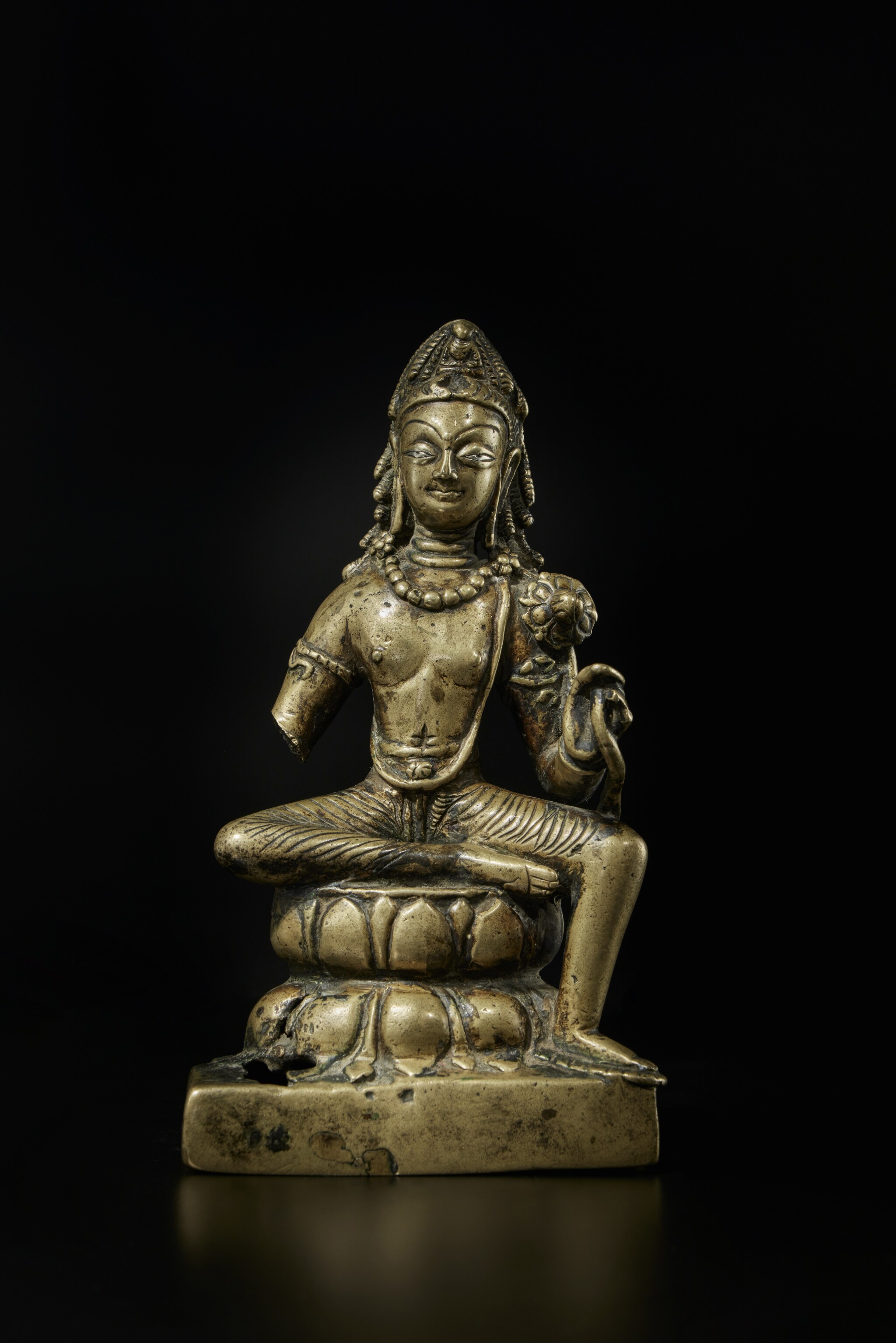
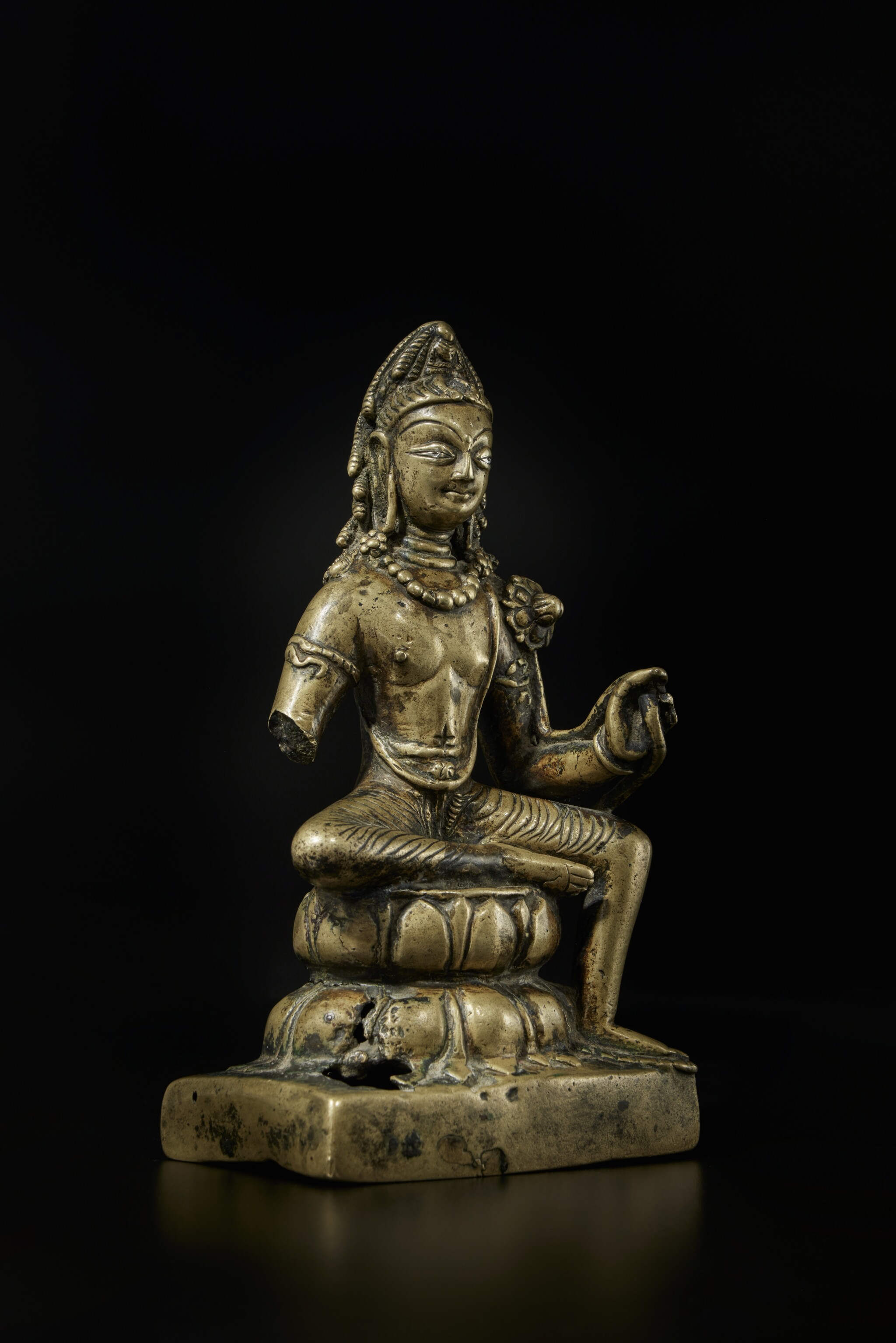
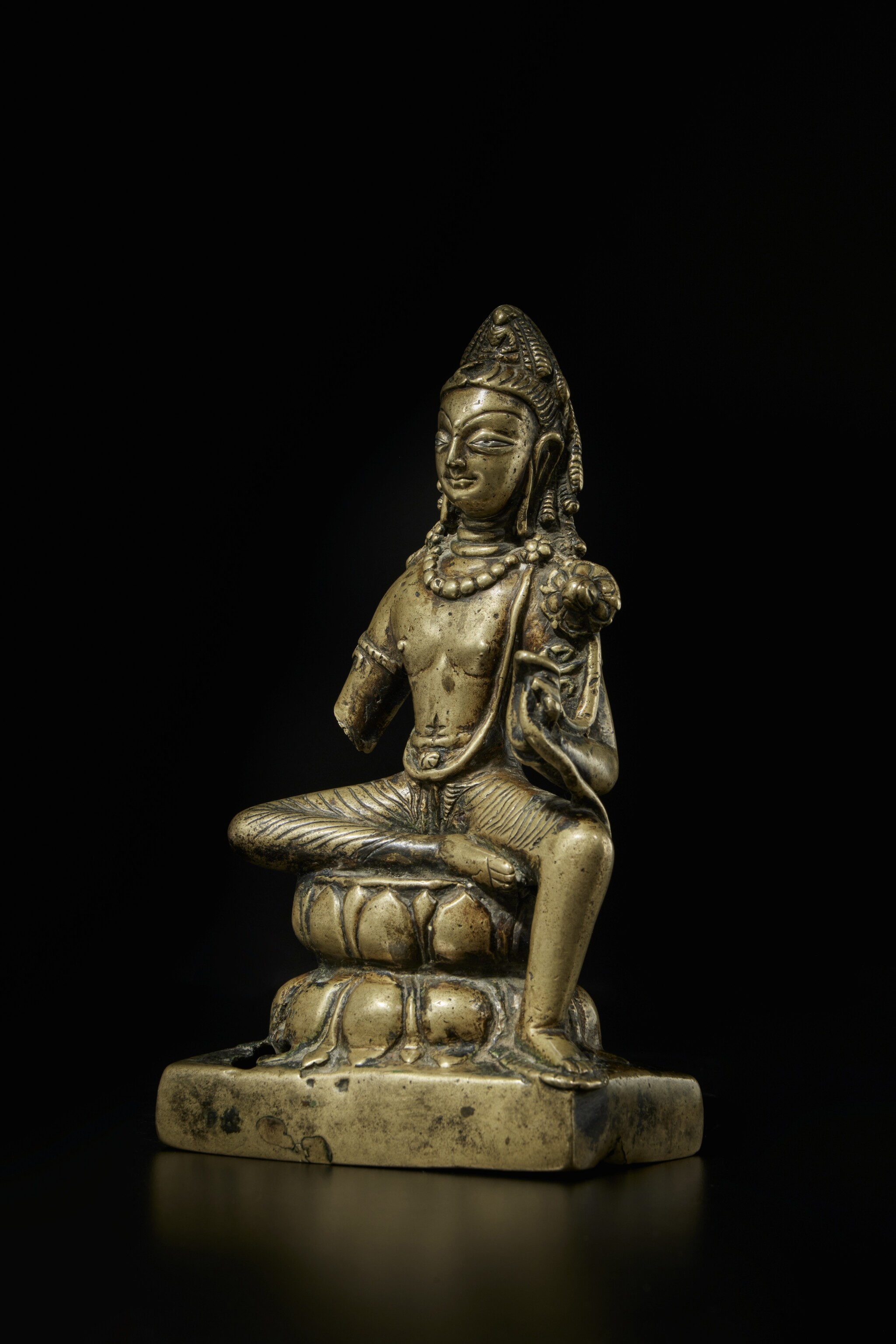
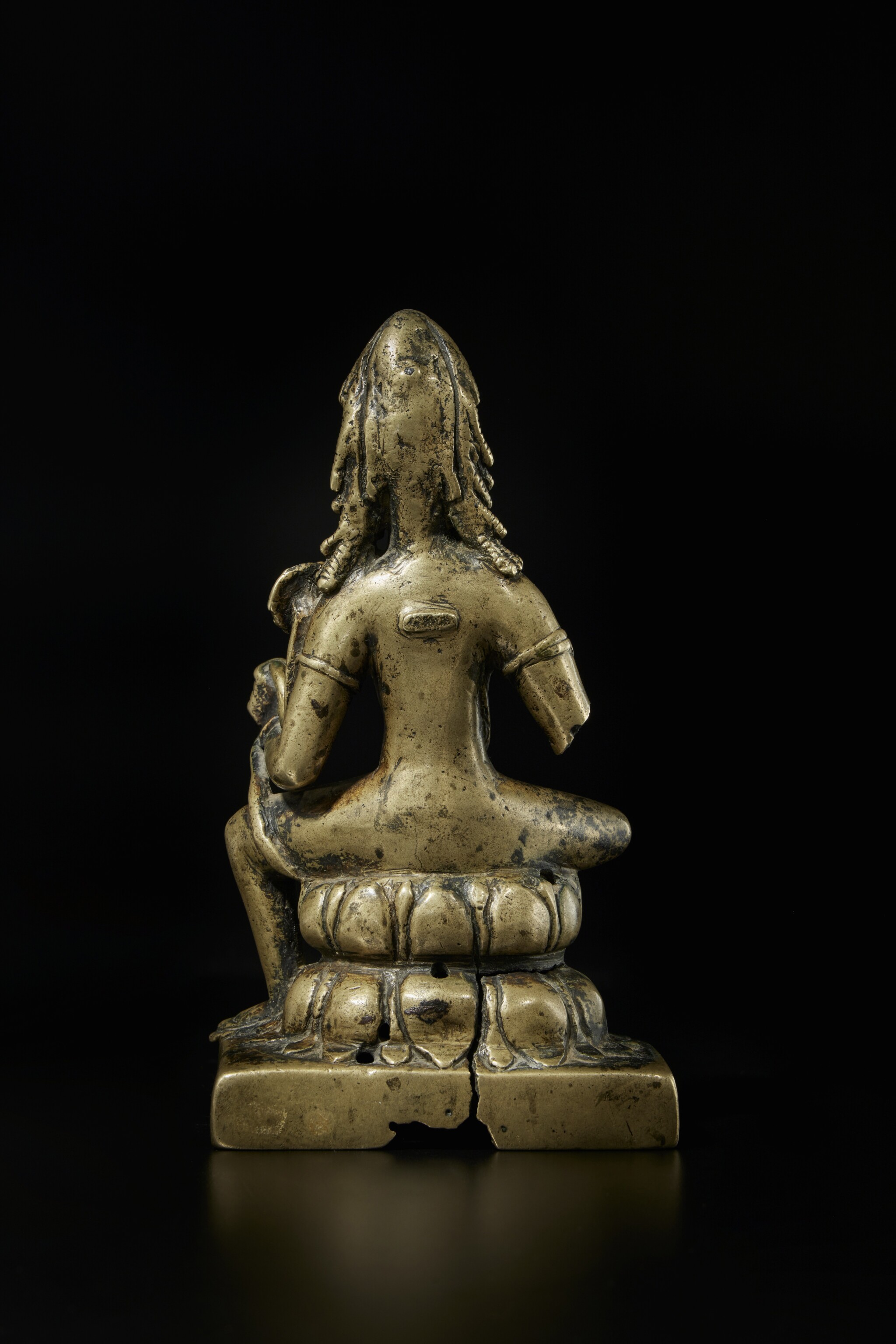 巴基斯坦 斯瓦特河谷 八世紀 銅錯銀音坐像
Himalayan Art Resources item no. 15025.
来源:
Acquired circa 1980s.
本件造像以其极为纤细收束的腰身、银嵌眼睛、深刻且高挑的弓眉以及台座上的简化莲瓣,完全契合斯瓦特河谷(Swat Valley) 的雕塑风格。菩萨头后原应有尖顶头光,证据是造像背部的一个金属环扣,用于固定头光。堪与本件直接比较的造像,有纳尔逊-阿特金斯艺术博物馆(Nelson-Atkins Museum of Art,藏品号66-22)所藏的一尊弥勒菩萨(Maitreya)像。林罗德(Linrothe)指出此像源自“大喀什米尔”地区,即喀什米尔以西的斯瓦特河谷,其特点包括“躯干部分较为柔和的轮廓处理”以及“长而宽阔的莲瓣”。
据林罗德所述:“这些艺术倾向在吉尔吉特(Gilgit)亦有体现——该地与斯瓦特河谷可能有着直接的贸易与文化联系,且地理位置较喀什米尔谷地更为接近”(见R. Linrothe《收藏乐园:喀什米尔佛教艺术及其遗产》,鲁宾艺术博物馆,纽约,2014年,第64-65页,图1.33)。斯瓦特河谷的物质文化与喀什米尔相似,并具有相似的标志性特质。因此,本件造像亦堪与布鲁克林艺术博物馆(Brooklyn Museum of Art,藏品号84.144)所藏一尊被定为喀什米尔造像的Sugatismarsana Lokesvara相对照。
The present sculpture fits very well within the sculptural milieu of the Swat Valley with its extremely tapered waist, silver-inlaid eyes, deeply incised and highly arched brows, and simplified lotus petals adorning the figure’s base. This figure likely exhibited a pointed halo behind the deity’s head, as indicated by a metal loop at the back of the sculpture into which this would have been affixed. A sculpture of the future Buddha Maitreya in the Nelson Atkins Museum of Art (accession no. 66-22) is worthy of direct comparison to the present figure. Linrothe describes the figure as originating in 'Greater Kashmir', or west of Kashmir in the Swat Valley where 'softer definition of parts of the torso and the long and broad lotus leaves' can be seen.
According to Linrothe: “Those tendencies were also felt in Gilgit, which probably had direct trade and cultural relations with the Swat Valley, to which it was closer geographically than the Kashmir valley” (see R. Linrothe, Collecting Paradise: Buddhist Art of Kashmir and its Legacies, Rubin Museum of Art, New York, 2014, pp 64-65, fig. 1.33). The material culture of the Swat Valley, which has similarities to that of Kashmir, evidently has similar hallmark qualities; as such the present sculpture is worthy of comparison to an image of Sugatismarsana Lokesvara attributed to Kashmir in the Brooklyn Museum of Art (accession no. 84.144).

