
侧边栏

12世纪日本木雕十一面观音菩萨立像(奈良国立博物馆)
尺寸:H 178.6; H of halo: 218.2; H of pedestal: 42.9
年代:12世纪
质地:木造、寄木结构
风格:日本
来源:奈良国立博物馆
参阅:外部链接
鉴赏:
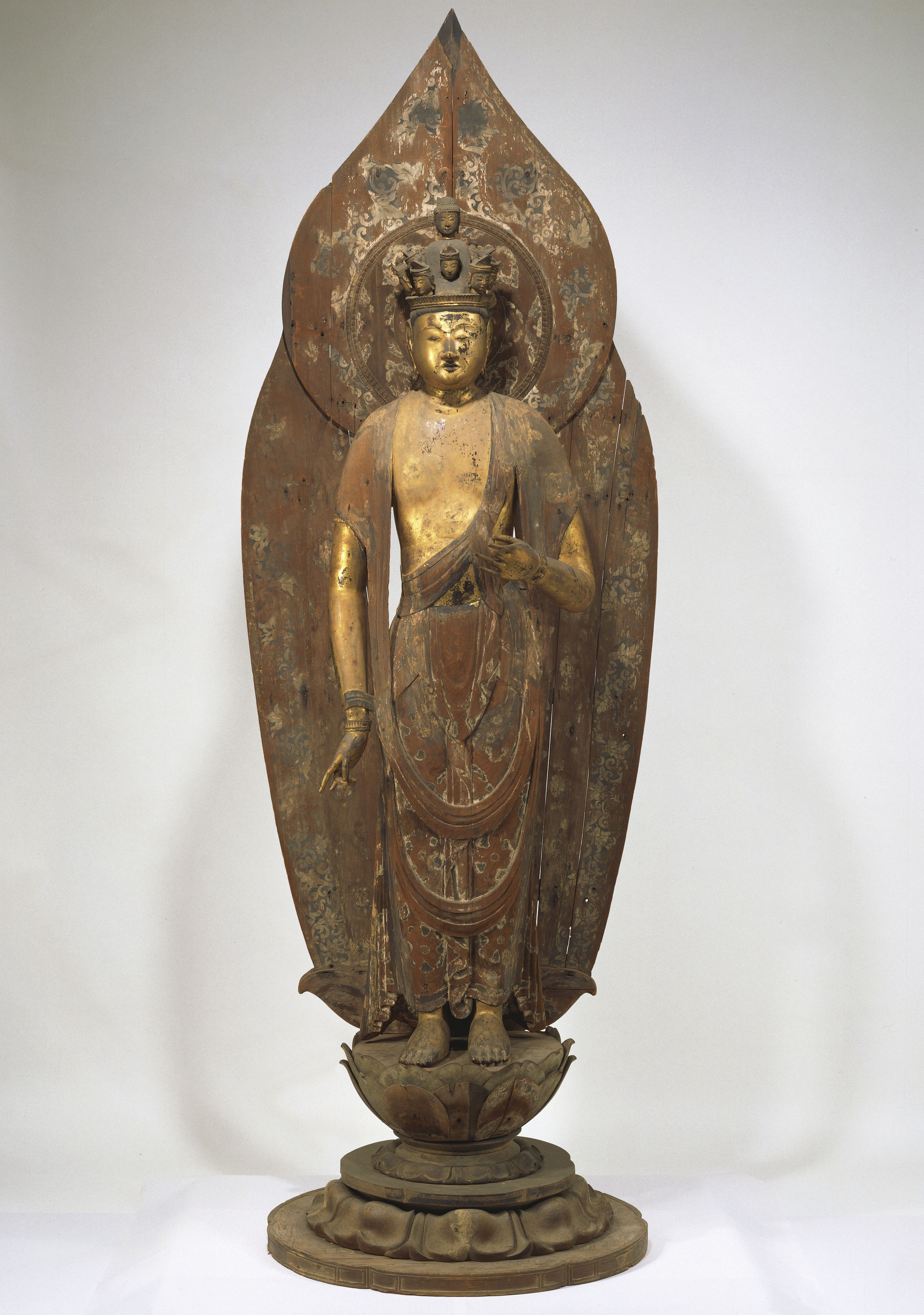 Bodhisattva Ekadaśamukha
Originally from Shinyakushi-ji Temple in Nara, this Elevenheaded Kannon was for a time placed as an attendant image to the main Yakushi Nyorai sculpture. The extremely small head and the long, slender body give the sculpture its distinctive proportions. It is backed by a wood panel mandorla, a type that was popular in Nara during the Heian period (794–1185).
十一面观音
本像原为奈良新药师寺之物,曾作为药师如来像之胁侍。头部极小,身形修长,形成独特之比例。身后配有木板雕造之光背,此类光背在平安时代(794–1185)的奈良颇为流行。
This statue came from Shin Yakushi-ji Temple. The wooden mandorla was decorated with pigments, which was widely applied to the Buddhist sculptures at Nara in Heian period. The face was expressed in gentle appearance with downcast eyes, the slender body was expressed with narrow shoulders, and the robe was delicately carved in low relief; recognized as characteristic techniques transmitted in late Heian period.
Masterworks from the Nara Buddhist Sculpture Hall at the Nara National Museum. Nara National Museum, 2010, p.141, no.131.
此像原为新药师寺之物。木雕光背施以彩绘,此种样式在平安时代奈良地区的佛教雕刻中广为流行。面容温婉,双目微垂,体态纤细,双肩窄削,衣袍以浅浮雕手法精雕细琢,均为平安时代后期传承之技法特征。
——《奈良国立博物馆佛教雕刻馆名品选》,奈良国立博物馆,2010年,第141页,第131号
“This eleven-headed Kannon (Ekādaśamukha) on the lotus seat, stretching its right arm downward, holding a flower vase with its left hand, and twisting its waist slightly to the left, was originally kept in Shin-yakushi-ji temple in Nara as an attendant of the principal Buddha's image.”, “ The body and head parts were carved from a single piece of hinoki wood (Japanese cypress), which was then split into two parts (front and back) in order to allow the carving of the inside. The naked part of the body is coated with lacquer foil, and the garment is colored over a layer of white clay. Red color, which is extant on some part of the stole and the skirt, and the design of flowers painted on the front side of the skirt reflect the graceful way of selecting colors in the late Heian period. The modeling of this high statue with its small head, which emphasizes the tall body even more, the gentle face and smoothly curving lines of the drapes reflect the characteristics of sculptures in the late Heian period. The halo which is decorated with large arabesque vines, is also characteristic for the work done during the late Heian period.”
Masterpieces of Nara National Museum. Nara National Museum, 1993, pp.22-23, no.11.
此十一面观音像立于莲台之上,右臂下垂伸展,左手持花瓶,腰肢微向左扭,原为奈良新药师寺之胁侍像。头与身由单块桧木雕成,后分割为前后两部分,以便掏挖内部。裸露肌肤处以漆箔装饰,衣袍施胡粉底后上色。帔帛及裙裾局部残留朱红色,裙身正面绘有花卉纹样,色彩雅致,可见平安时代后期之设色风格。本像身形修长,头部比例较小,更显体态颀长,面容温婉,衣纹线条流畅,均为平安时代后期造像之特征。光背饰以大型唐草纹,亦为平安时代后期作品之典型。
——《奈良国立博物馆名品选》,奈良国立博物馆,1993年,第22-23页,第11号

