
侧边栏

10-11世纪印尼青铜大日如来结智拳印(旧金山亚洲艺术博物馆)
尺寸:H. 13.3 cm x W. 5.1 cm x D. 7.0 cm
年代:10-11世纪
质地:青铜
风格:印尼
来源:旧金山亚洲艺术博物馆
参阅:外部链接
鉴赏:
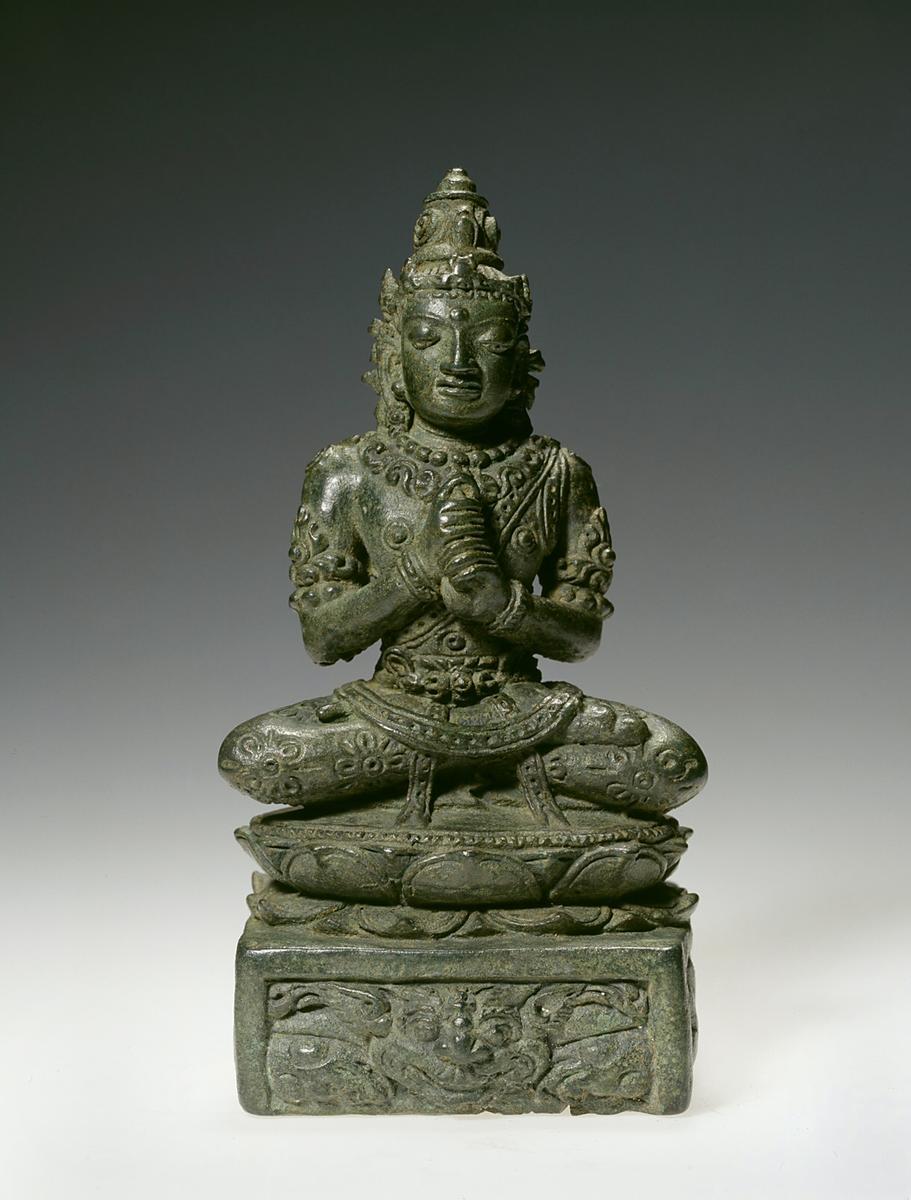 Seated Buddha, probably Vairochana
Place of OriginJava or Sumatra, Indonesia; Java or Sumatra
Buddhist Bronzes from Indonesia
“Many kings in the islands of the Southern Ocean admire and believe Buddhism. In the city I visited, Buddhist priests number more than 1,000, whose minds are bent on learning and good practices.”*
So reported a Chinese Buddhist monk when he stopped at the Indonesian island of Sumatra in the 680s on his way home from visiting India’s holy sites.
For the next five hundred years Buddhism, in its Mahayana and Vajrayana traditions, flourished in parts of Indonesia, particularly the island of Java. In fact, Java produced, particularly in the 800s, some of the most complex, ambitious, and beautiful Buddhist monuments of all time. Despite the fact that the majority of the Indonesian population is Muslim today, Borobudur remains a popular tourist destination and a marker of cultural pride.
*Adapted from J. Takakusu’s 1896 translation of A Record of the Buddhist Religion as Practised in India and the Malay Archipelago by the monk Yijing.
The hand position of this figure is rare in Southeast Asian Buddhist art. In Korea and Japan this position, with the right hand wrapped around the forefinger of the left, identifies a figure as Vairochana, the supreme central buddha of some schools of Buddhism. Another Indonesian bronze with the same hand position as this one is inscribed with the name of Vairochana, so the identification here seems firm.

