
侧边栏

14世纪西藏木雕鎏金大日如来坐像(伦敦V&A博物馆)
尺寸:高20.3cm
年代:14世纪
质地:木雕(carved wood with gilding and lacquer)
风格:西藏
来源:伦敦V&A博物馆
参阅:外部链接
鉴赏:
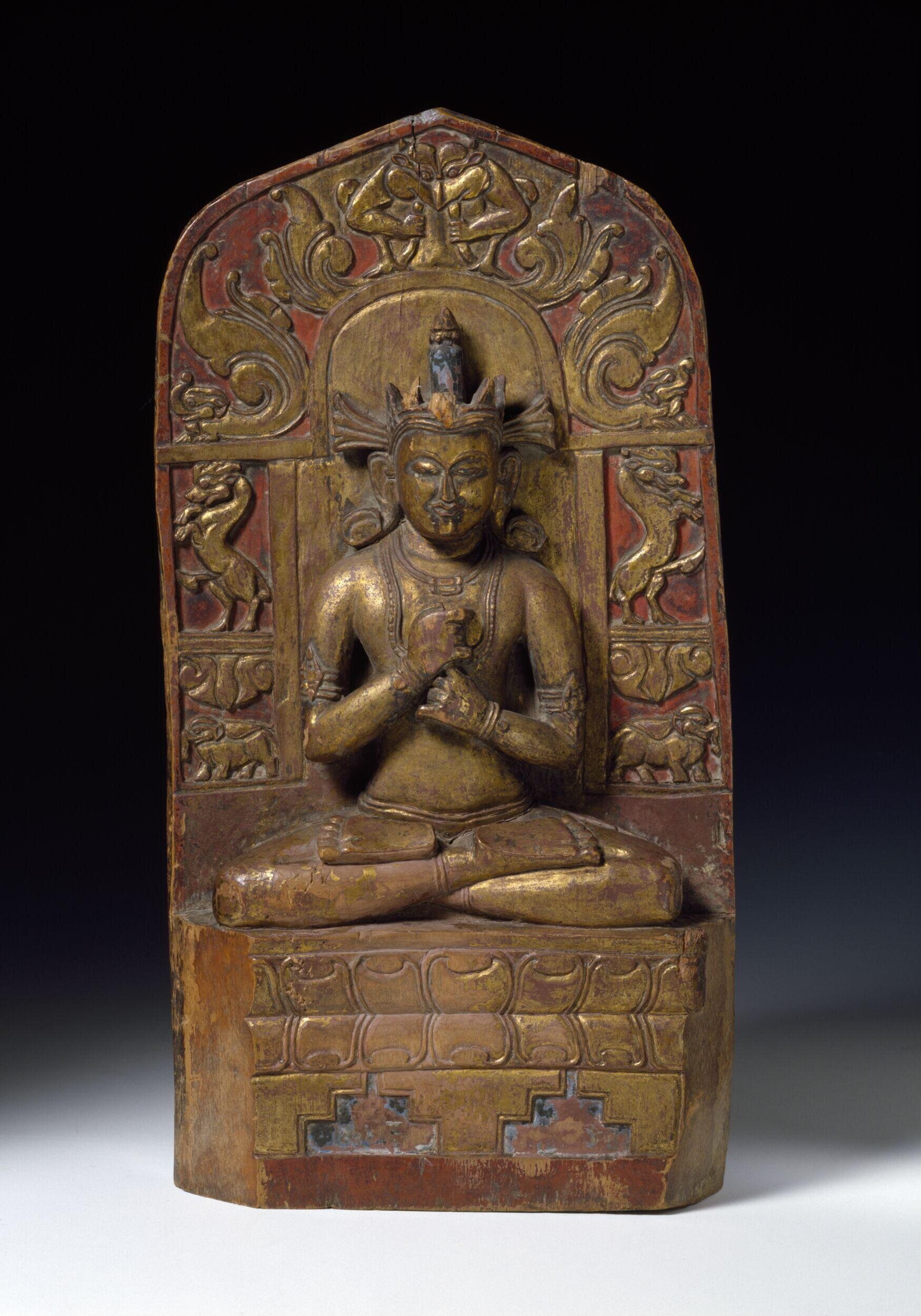
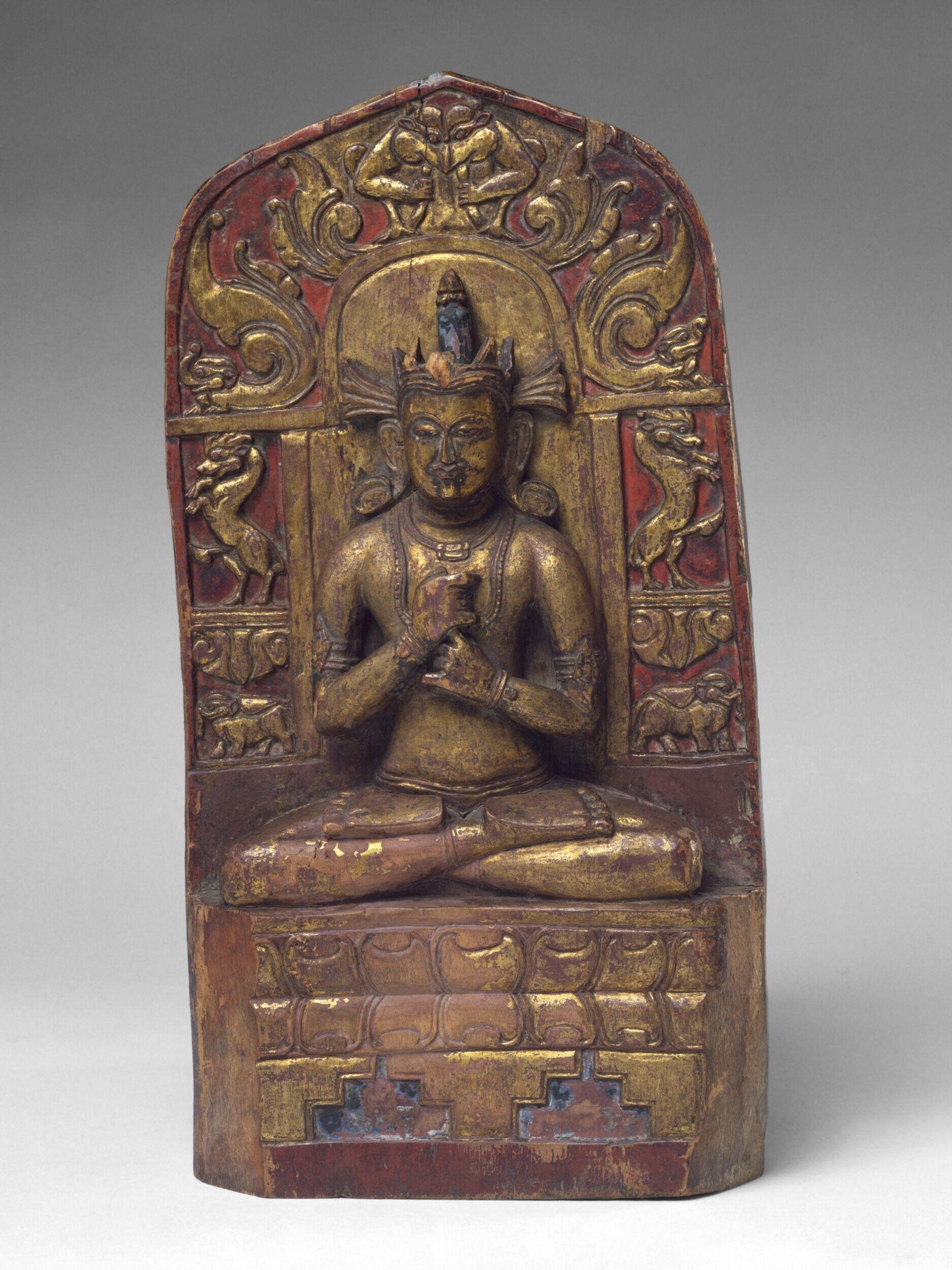 This is a relief image of Vairochana, the central figure in the mandala of the five transcendent meditational Buddhas. Each Buddha in the Tibetan tradition has a symbol, colour and directional location, and each is associated with the transformation of a negativity into an aspect of wisdom. Vairochana is associated with the transformation of anger, has the wheel as his symbol and is shown, as here, making the Dharmachakra, the gesture (or mudra) of teaching. The image is an early one and, together with the throne surround decorated with elephants and mythical animals, still shows affinities to north and east Indian art of the Pala dynasty.
Vairochana
1300–1400
Of the five meditational Buddhas worshipped in Tibet,Vairochana was the central and most important. He represents emptiness (a quality of enlightenment) and helps vanquish ignorance. This depiction is based on Indian prototypes. The throne back is formed by elephants and rearing mythical creatures (yalis). Above there is a protective kirttimukha head.
Painted and partly gilded wood
Tibet
Museum no. IM.20-1910

