
侧边栏

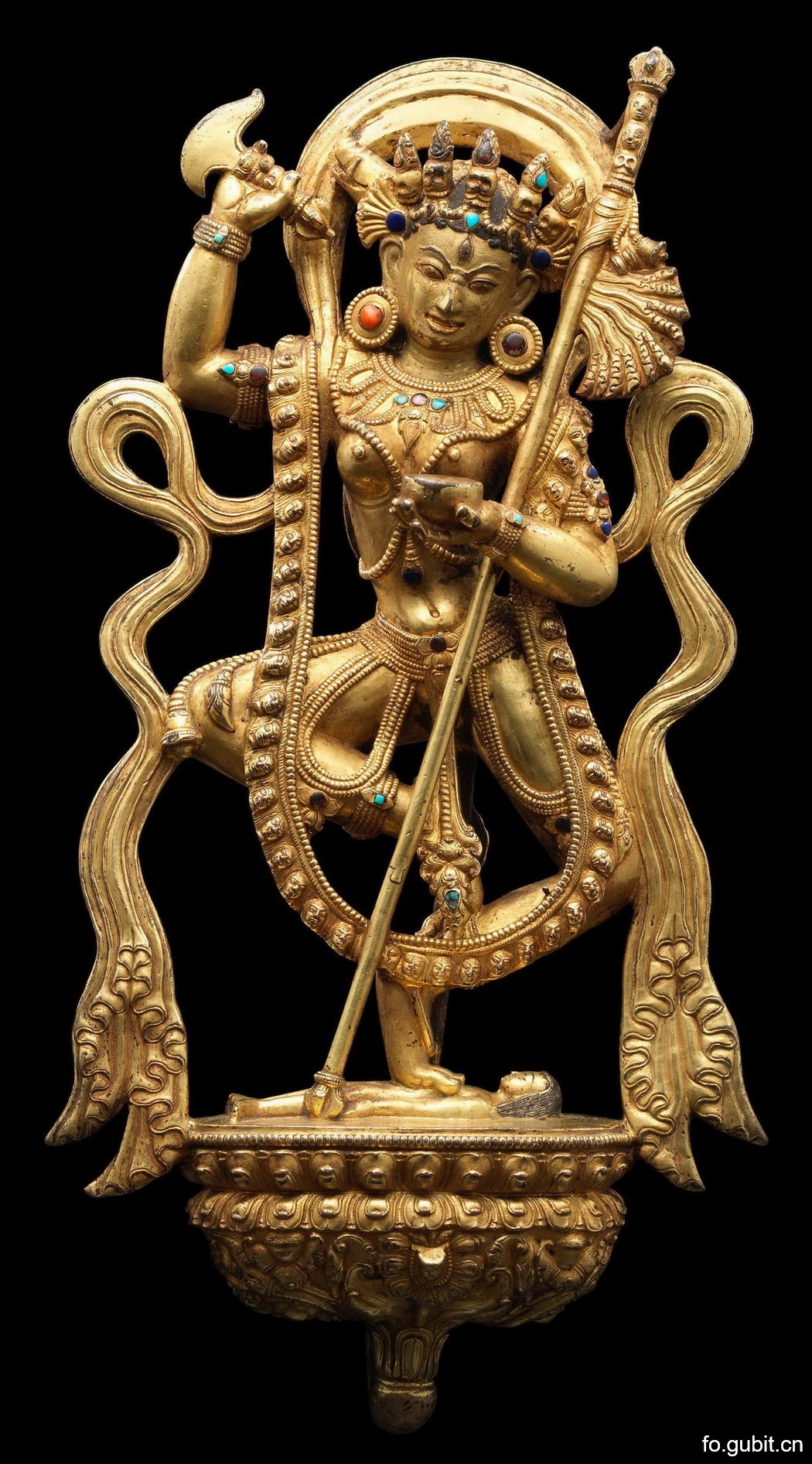
14世纪西藏丹萨替寺铜鎏金金刚亥母(纽约邦瀚斯)
尺寸:高41.3cm
年代:14世纪
质地:铜鎏金
风格:西藏 丹萨替寺
来源:拍卖会
成交:487,500美元(2017.03)
参阅:纽约邦瀚斯
鉴赏:
 Artemis注:
可以参看非常相似的一尊: 14世纪西藏丹萨替寺风格铜鎏金金刚亥母(佛罗里达大学哈恩艺术博物馆)
A GILT COPPER ALLOY FIGURE OF VAJRAVARAHI
DENSATIL, 14TH CENTURY
Himalayan Art Resources item no.2403
16 1/4 in. (41.3 cm) high
丹薩替 十四世紀 銅鎏金金剛亥母像
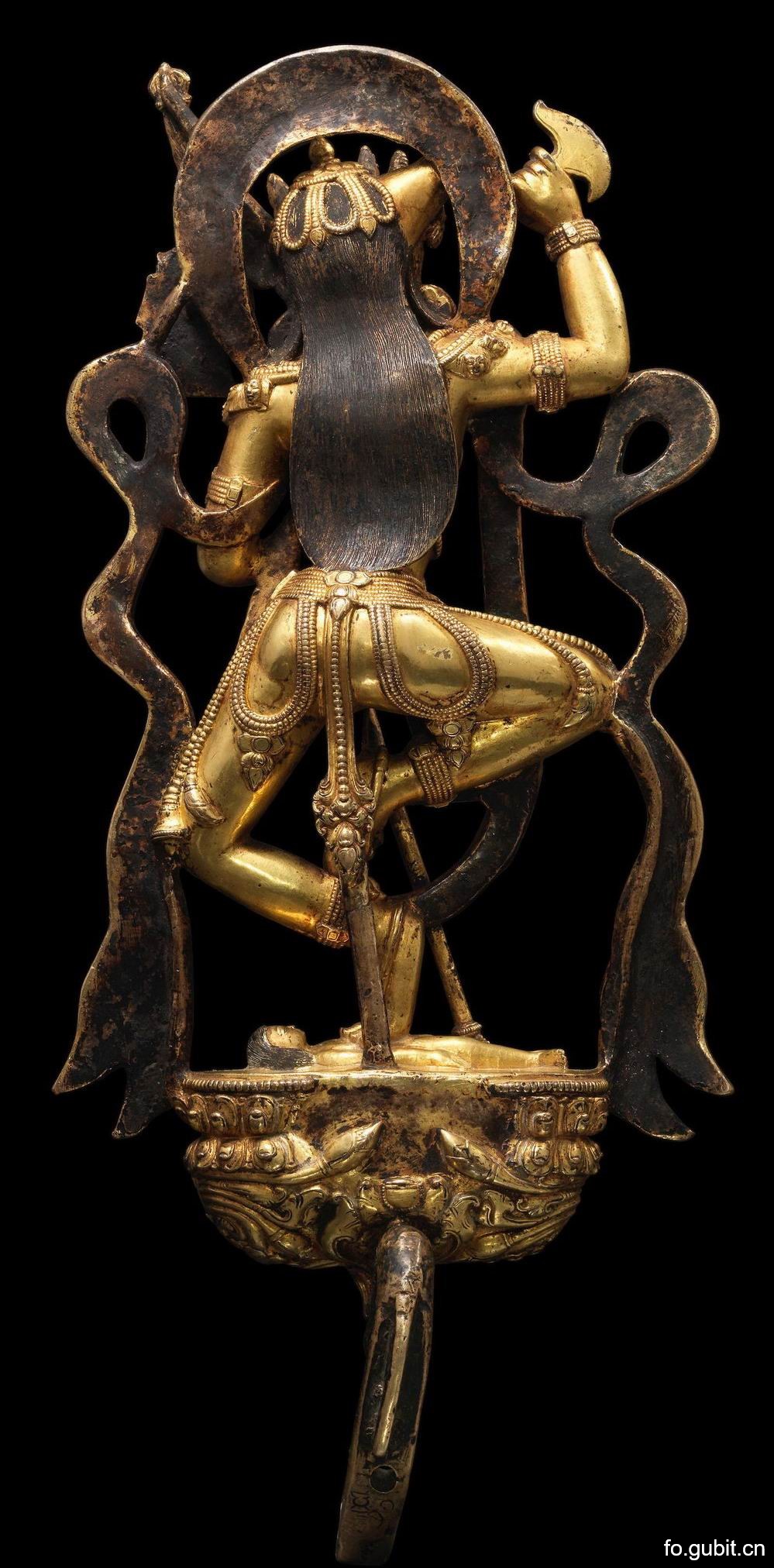
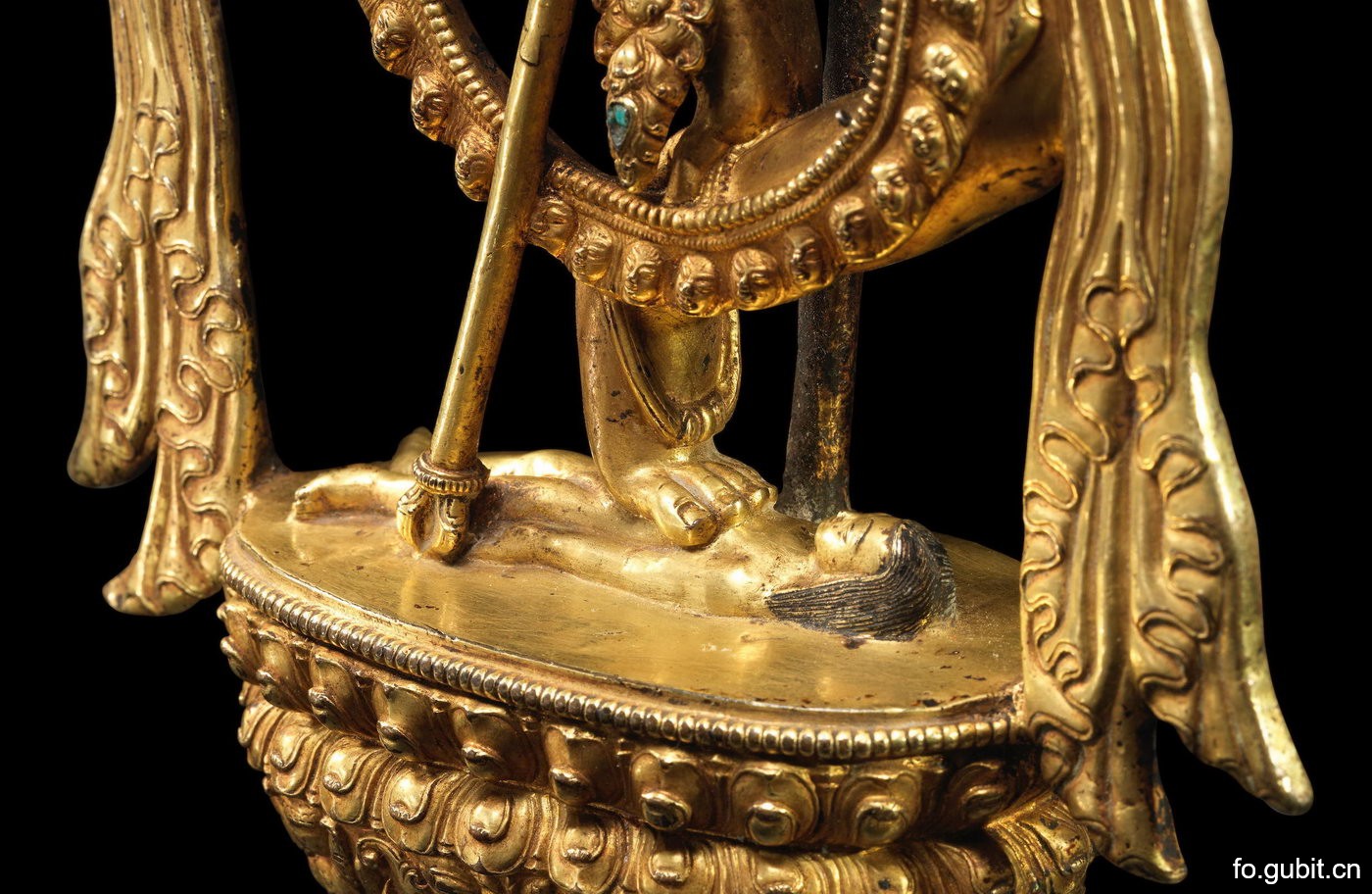
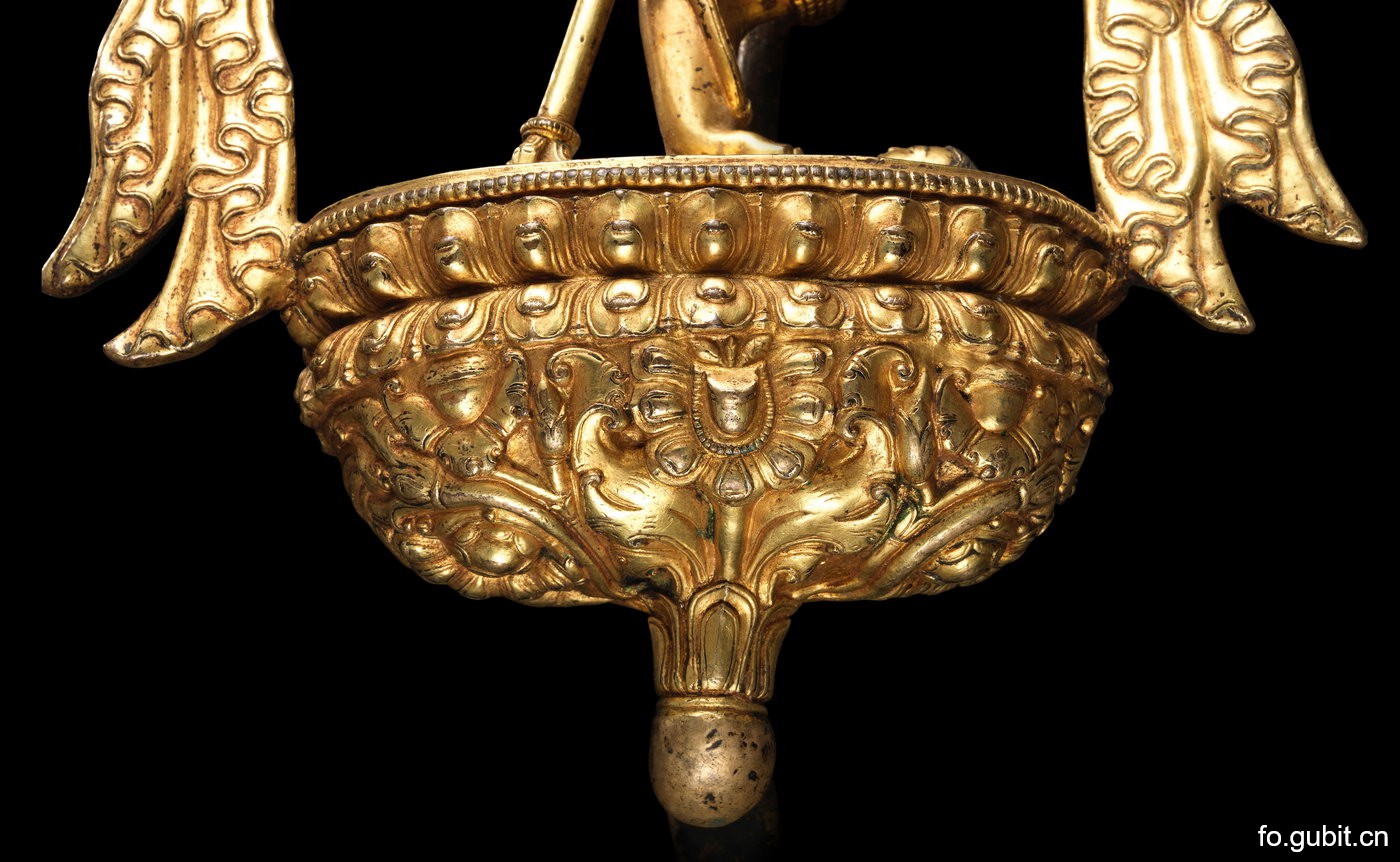
这位女神(指金刚亥母)的优雅与从容,令人难以察觉这尊在西藏铸造的纽瓦尔(Newari)杰作实为实心浇铸、分量沉厚。她将重心从容地落在弯曲的脚趾上,压向下方一具俯卧人躯的胸膛。她的天杖(vajra-pommeled staff)从金刚杵形杖端升起,悬垂着微小的手摇鼓、铃铛和随风飘摆的丝穗。其标志性的小母猪头从冠冕后方斜向探出——正是这猪首表明她为伟大的变化尊胜乐金刚(Chakrasamvara)的明妃——其角度与她右手高举的钺刀相呼应。她周身佩戴着丹萨替(Densatil)风格特有的钏镯,由层叠的珠链串成并以半宝石镶嵌扣合。丝绸披帛垂落身侧,薄薄的衣缘以极其精密的铸造工艺呈现——这一细节使得本尊造像较之近年市场上其他同类作品尤为出众。其下方,一座华丽的莲台从带叶花茎中升起,花茎又源自一未鎏金的楔榫——此榫原用于将她固定在西藏某座最辉煌的佛塔之上。
在文化DGM(Cultural Revolution,1966-1976)期间丹萨替寺(Densatil Monastery)被毁之前,极少有外人能一睹其全盛时期的辉煌。所幸,朱塞佩·图齐(Giuseppe Tucci)在1948年邀请摄影师P.F. 梅莱(P.F. Mele)一同考察,后者以黑白胶片记录下了寺院的壮丽。图齐如此描述丹萨替著名的八座“八吉祥多门塔”(tashi gomang stupas)——一种由噶举派(Kagyu order)创造的塔型:
“那些佛塔……布满了无休无尽的雕刻与浮雕。大乘佛教的整个奥林匹斯圣山似乎都汇聚于此。当我用手电筒的光束扫过佛塔时,众多造像仿佛跃然而生,金光闪烁,在较暗的色调与深邃的阴影映衬下轮廓分明……那些威猛的本尊像,如同披甲武士般坚实粗犷,与环绕在某些最古老佛塔上部、像花环般欢快舞动的女性形象形成了鲜明对比。”
丹萨替寺建于大成就者帕摩竹巴(Phagmodrupa,1110-1170)的圆寂之地。此后围绕他所形成的教派,直至16世纪一直是藏中最强大的势力之一,并将他们的护持奉献给了这位敬爱上师的寺院。帕摩竹巴最重要的弟子之一——直贡·仁钦贝(Jigten Gonpo Richen Pel,1143-1217)——构思了丹萨替佛塔的原型,他邀请纽瓦尔艺术家来到他自己的直贡梯寺(Drigung Monastery),以实现其关于胜乐金刚天宫及2800尊眷属众的愿景。
梅莱拍摄的照片中展示了众多与本拍品几乎相同的“舞动”金刚亥母实例(参见Czaja & Poser,《丹萨替的金色幻影》,纽约,2014年,第158-9页及164-5页,图34、35)。作为胜乐金刚的明妃,此寺正是这位女神的恰当归宿——她自身亦被尊奉为密法修持的护法神。流散于外的实例分藏于各博物馆及私人收藏,但鲜有像梅莱照片中那样与本尊如此接近者。这些实例包括:同书第166-171页,编号42-44;佳士得纽约,2006年9月17日,拍品1723号;苏富比纽约,1999年9月16日,拍品46A号;以及2002年3月21日,拍品78号。另有一例陈列于北京首都博物馆(Capital Museum)。
The goddess' grace and poise belie the density of this solidly cast masterpiece of Newari production in Tibet. She centers her weight effortlessly on flexed toes pressed into the chest of a prone human below. From its vajra pommel, her staff rises with dangling miniature drum, bell, and silk tassels flailing in the wind. Her diminutive sow's head, which identifies her as the consort of the great transformative deity Chakrasamvara, juts out from behind her tiara at an angle matching the raised ritual knife in her right hand. She is bedecked with bangles characteristic of the Densatil style, formed of stacked beaded chains clasped by a setting of semi-precious stones. Her silk mantle cascades at her sides with thin hems cast with consummate precision – a detail for which the present example excels compared to others sold in recent years. Below her, an ornate lotus rises from leafy stems that extend from an ungilded tang, which would have fixed her to one of Tibet's most glorious monuments.
Few outsiders were able to glimpse Densatil Monastery in all its glory before it was destroyed during the Cultural Revolution (1966-76). Thankfully, Giuseppe Tucci invited the photographer P.F. Mele on an expedition in 1948, during which he captured its splendor in black and white film. Tucci describes Densatil's famous eight tashi gomang stupas – a type created by the Kagyu order:
“Those chortens [stupas]…were smothered with a wealth of carvings and reliefs that knew no limits. The whole Olympus of Mahayana seemed to have assembled on those monuments. As I cast the light of my torch on the chortens, the several figures sprang into life, glittering with gold, outlined and set off by darker hues and deep shadows…The hard, rugged images [of protector deities], like mail-clad warriors, sharply contrasted with the buoyancy of some female images gamboling festoon-like around the upper part of some of the oldest chortens.”
Densatil was built on the final resting place of the great master Phagmodrupa (1110-70). The sects that subsequently formed around him became among the most powerful in Central Tibet up until the 16th century, conferring their patronage on the monastery of their beloved guru. It was one of his foremost pupils, Jigten Gonpo Richen Pel (1143-1217), who conceived of the prototype for the Densatil stupas, inviting Newari artists to realize his vision of Chakrasamvara's heavenly realm populated by a retinue of 2,800 deities at his own Drigung Monastery.
Mele's photographs show numerous examples of 'gamboling' Vajravarahis almost identical to the present lot (see Czaja & Poser, Golden Visions of Densatil, New York, 2014, pp.158-9 & 164-5, figs.34 & 35). As Chakrasamvara's consort, it is a fitting place for the goddess, worshiped in her own right as a protector of esoteric practices. Dispersed examples are held in museums and private collections, though few appear to match those photographed by Mele so closely. These include examples published in ibid., pp.166-71, nos.42-4, and sold at Christie's, New York, 17 September 2006, lot 1723; Sotheby's, New York, 16 September 1999, lot 46A; and 21 March 2002, lot 78. A further example is on display at the Capital Museum, Beijing.
Provenance
Private Asian Collection

