
侧边栏

6-7世纪印度笈多风格合金铜释迦牟尼佛立像(洛杉矶艺术博物馆)
尺寸:39.37 x 17.15 x 10.16 cm
年代:6-7世纪 笈多时期
质地:合金铜
风格:印度 笈多
来源:洛杉矶艺术博物馆
参阅:外部链接
鉴赏:
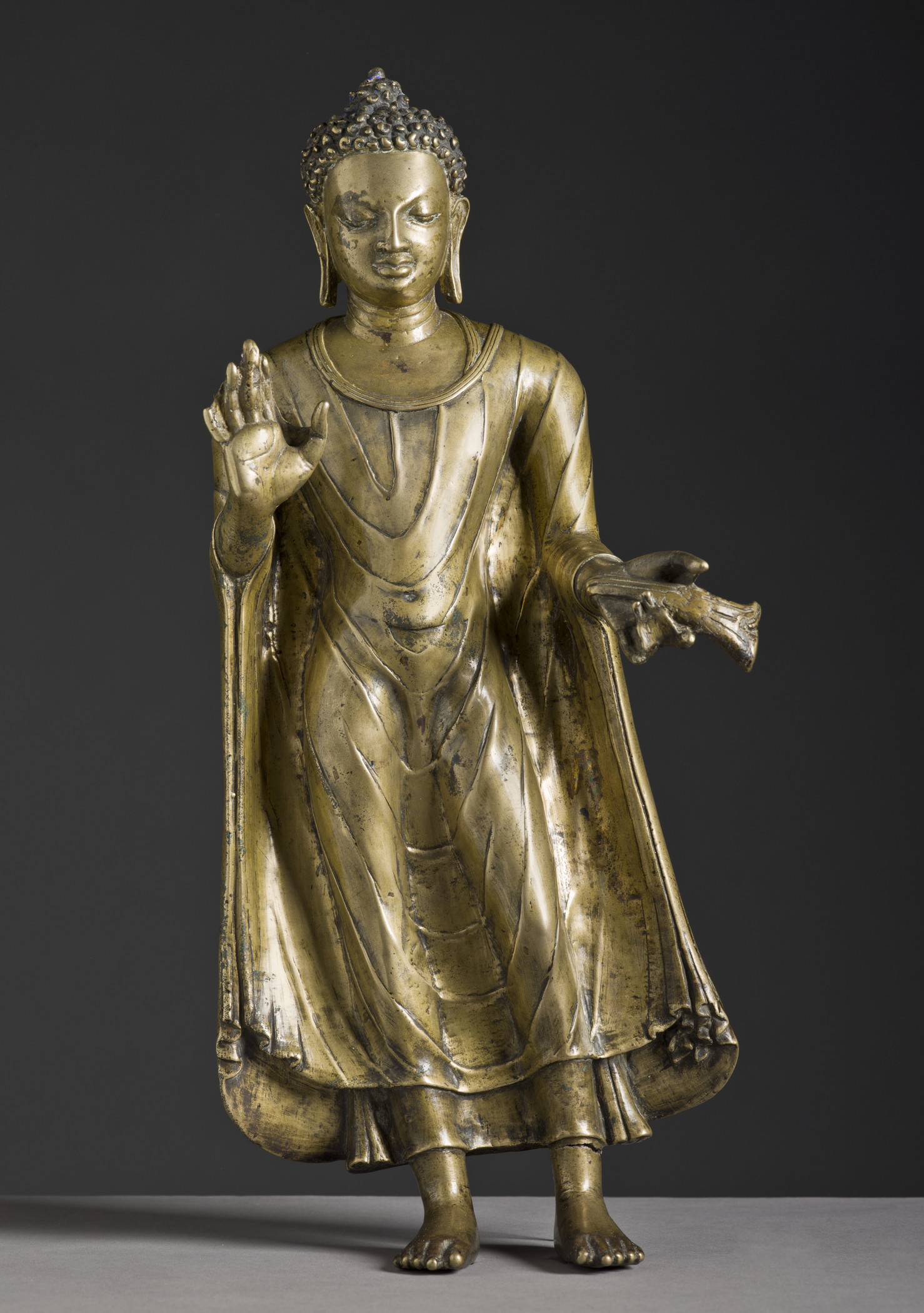
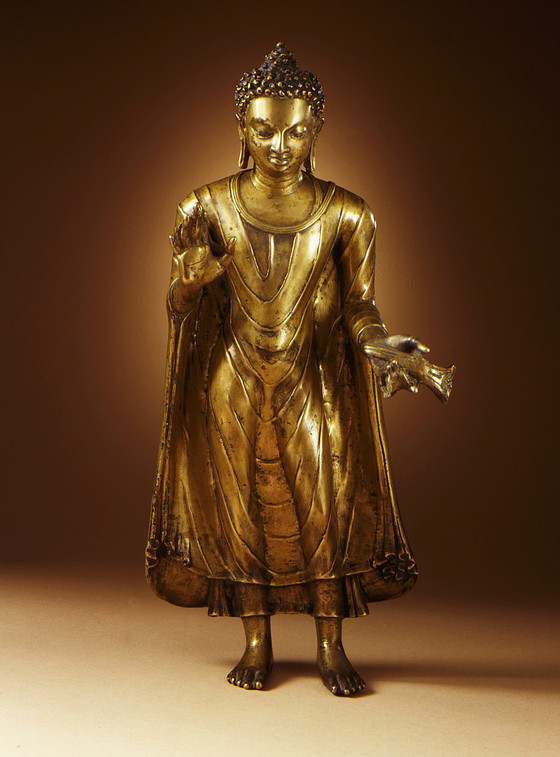 Buddha Shakyamuni
India, Uttar Pradesh, late 6th century
笈多王朝在北印度的统治开启了一个漫长时代(公元320-600年),其间艺术繁荣、社会昌盛、文化成就斐然。这一时期的两大艺术中心——秣菟罗与鹿野苑,缔造了被后世尊为印度古典样式的雕塑风格。这尊表现释迦牟尼佛的造像,以静谧庄严的面容,完美体现了笈多艺术中优雅形制与内在灵性的平衡。尽管笈多统治者信奉印度教,他们仍积极护持佛教发展。君王与信众通过虔诚功德积累福报:兴建寺庙、委托或制作佛像(如此尊造像)、或进行礼拜供奉。
此尊佛像融合了佛教两大根本理想:圆满瑜伽士与转轮圣王。既具瑜伽士柔韧轻盈的体态、冥思的目光与沉静的面容,又兼备圣王的青春气象、雄健肩背、坚实躯体及手足缦网相。古老的造像传统将佛陀的人形与自然相连:修长的眼眸如游鱼,螺发似蜗壳,左肩与手臂的轮廓宛若象鼻。此雕塑可能创作于北印度,深受秣菟罗与鹿野苑风格影响。造像长期供奉于藏地寺院,青丝被施以深靛蓝彩绘。僧衣上规律排列的线刻褶纹是秣菟罗造像的常见特征,而衣料的通透感、面部与身体的精妙比例、以及重心微移至右腿的姿态,则令人联想到鹿野苑雕塑的风韵。
Gupta rule in northern India initiated a long era (320-600) of peace, prosperity, and artistic accomplishment. From the two main artistic centers of the period, Mathura and Sarnath, issued the sculpture now regarded as forming the classical Indian style. This image of the historical Buddha Sakyamuni, with its serene countenance, embodies the Gupta balance of elegant form and inner spirituality. Although the Gupta rulers were Hindu, they actively patronized Buddhism. Kings and devotees gained spiritual merit by pious acts: building temples, commissioning or making images of Buddha, such as this one, or worshiping them. This Buddha embodies two ideals basic to Buddhism, the perfect yogi and the universal ruler. He possesses the yogi's supple, almost buoyant body and contemplative gaze and facial expression, and the ruler's youth, strong shoulders, firm body, and webbed hands and feet. Time-honored traditions of portrayal connect the Buddha's human form with nature; his long eyes are shaped like fish, his curls like snail shells, and the profile of his left shoulder and arm is like the trunk of an elephant. This sculpture was probably made in northern India and was influenced by Mathura and Sarnath styles. The image, long preserved in a Tibetan monastery, received there the dark indigo paint on its locks. The striated, schematic folds of the robe were common to Mathura figures, while its transparency as well as the delicate proportions of face and body and the slight weight shift to the right leg are reminiscent of Sarnath sculpture.

