
侧边栏

15世纪西藏索南坚赞风格铜鎏金十一面观音千手观音立像(纽约邦瀚斯)
尺寸:高67.7 cm
年代:15世纪(1430年)
质地:铜鎏金
风格:西藏中部 索南坚赞
来源:拍卖会
成交:1,212,500美元(2018.03)
参阅:外部链接
鉴赏:
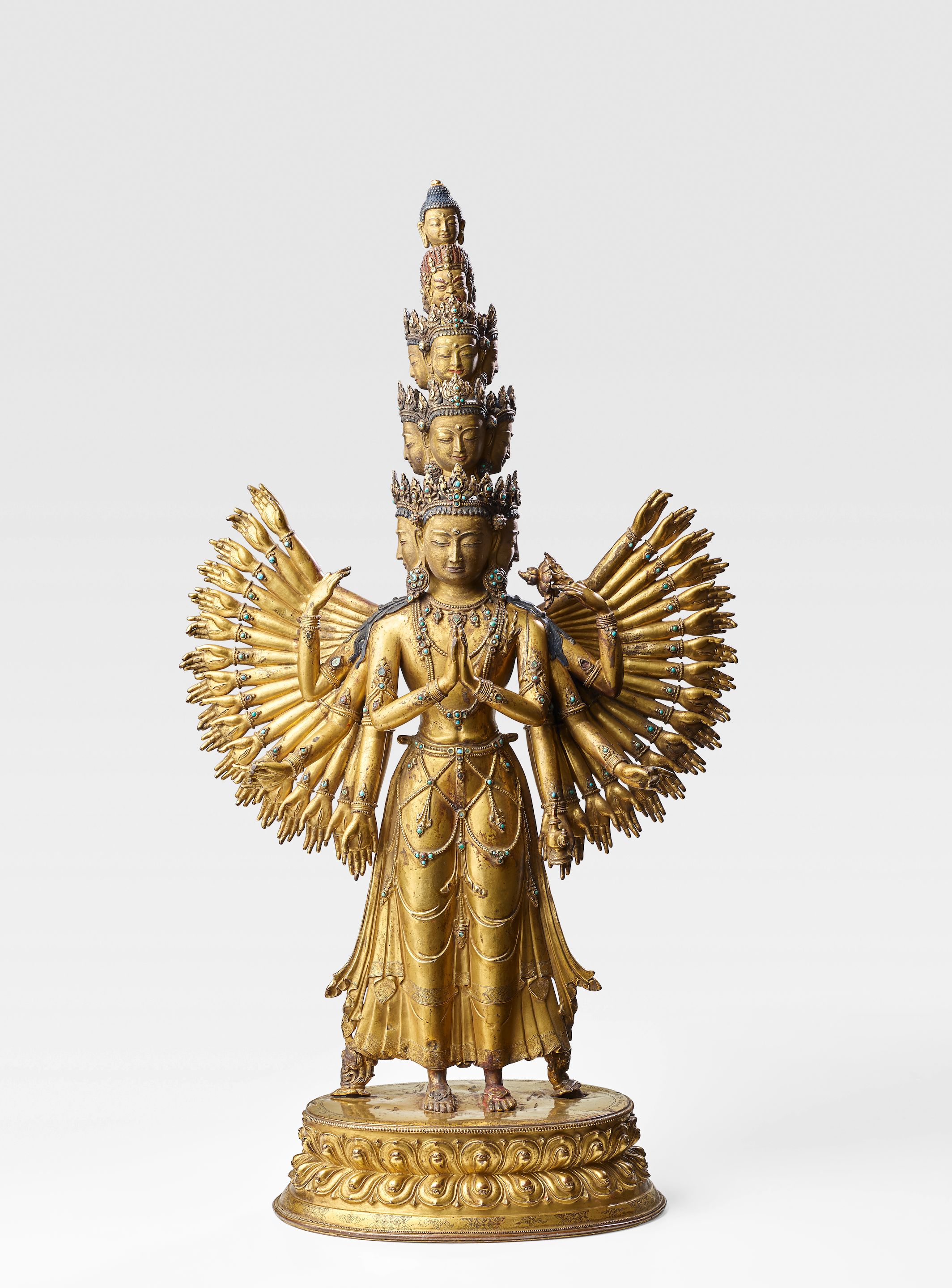
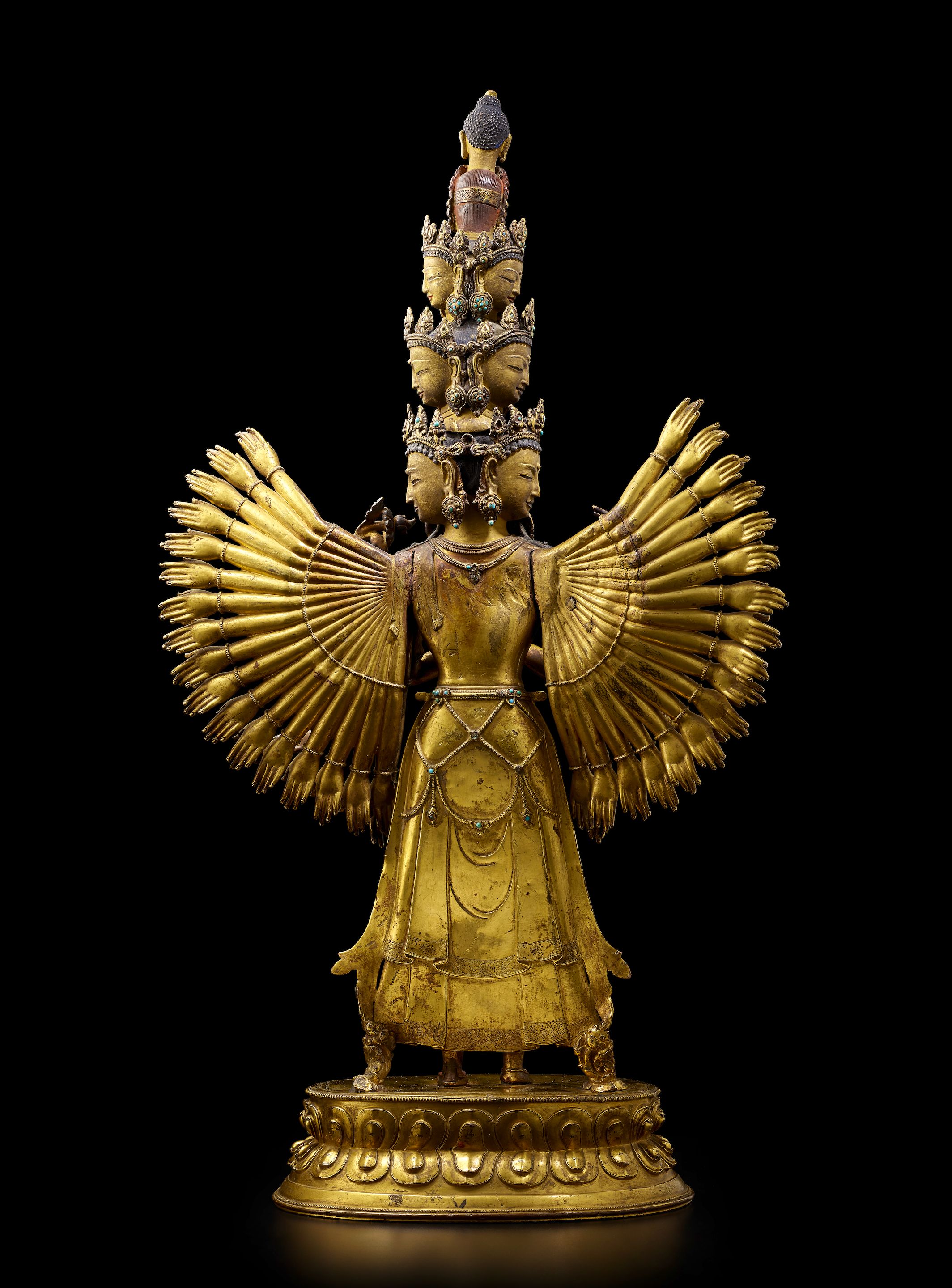
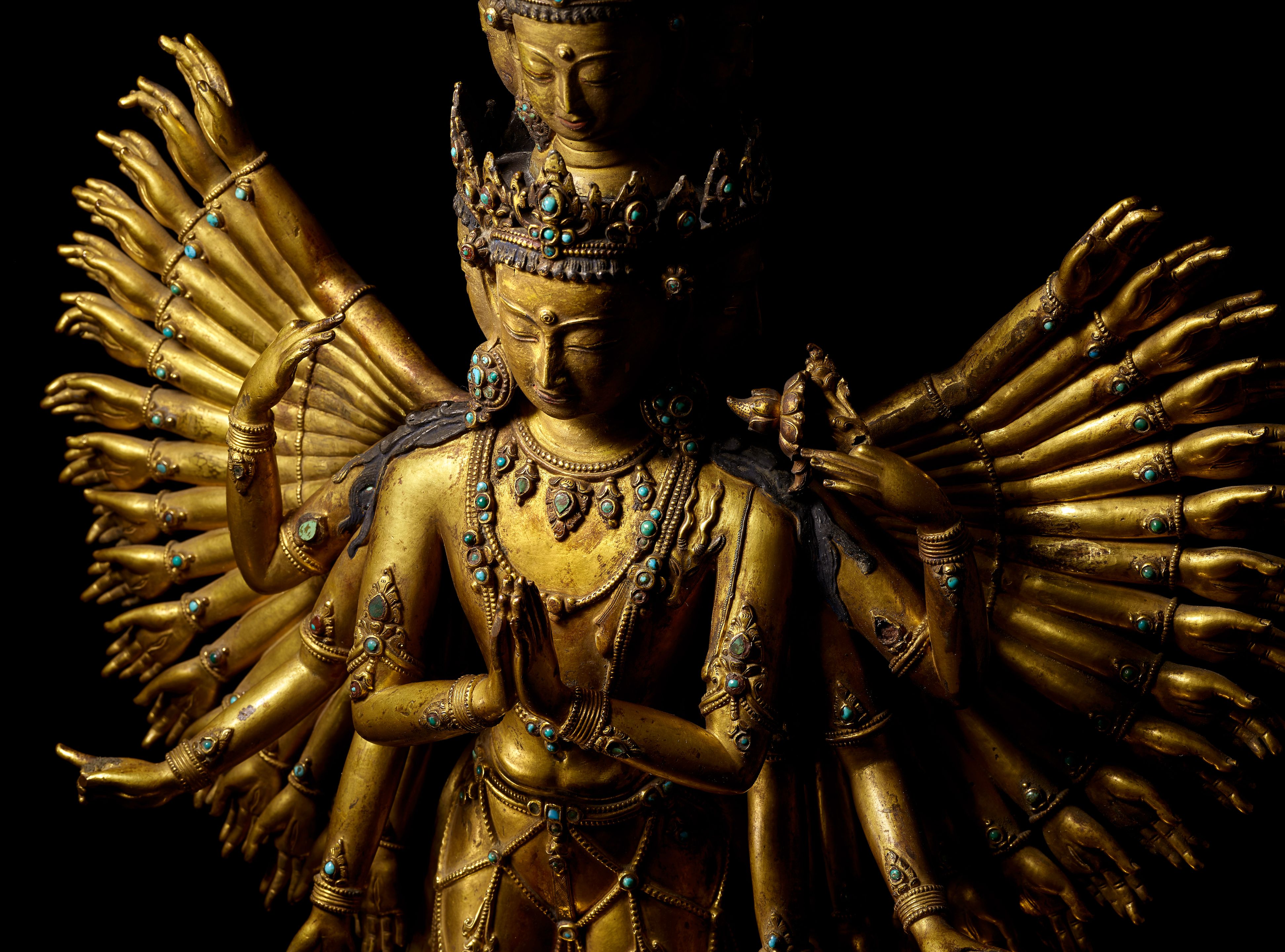
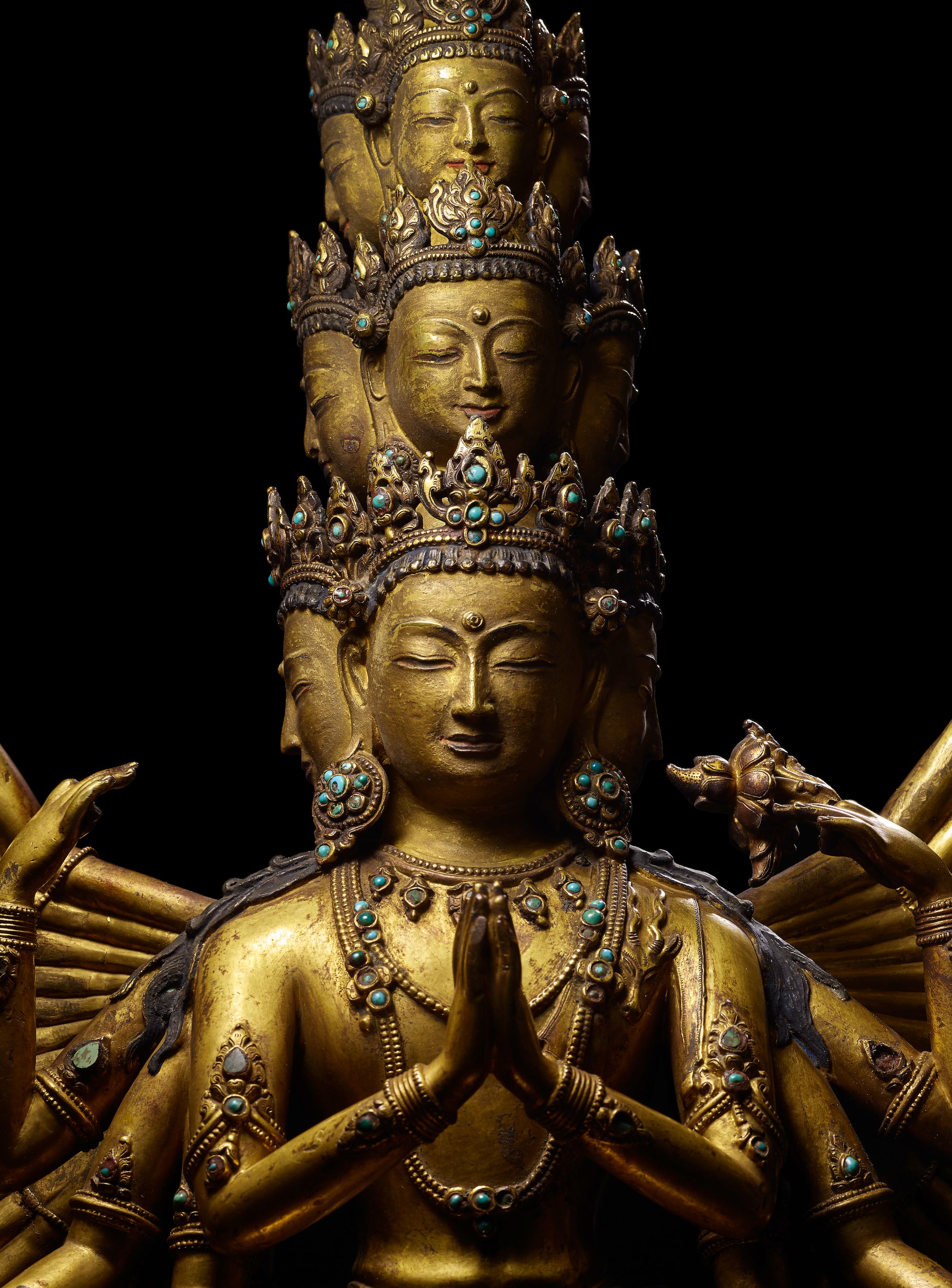
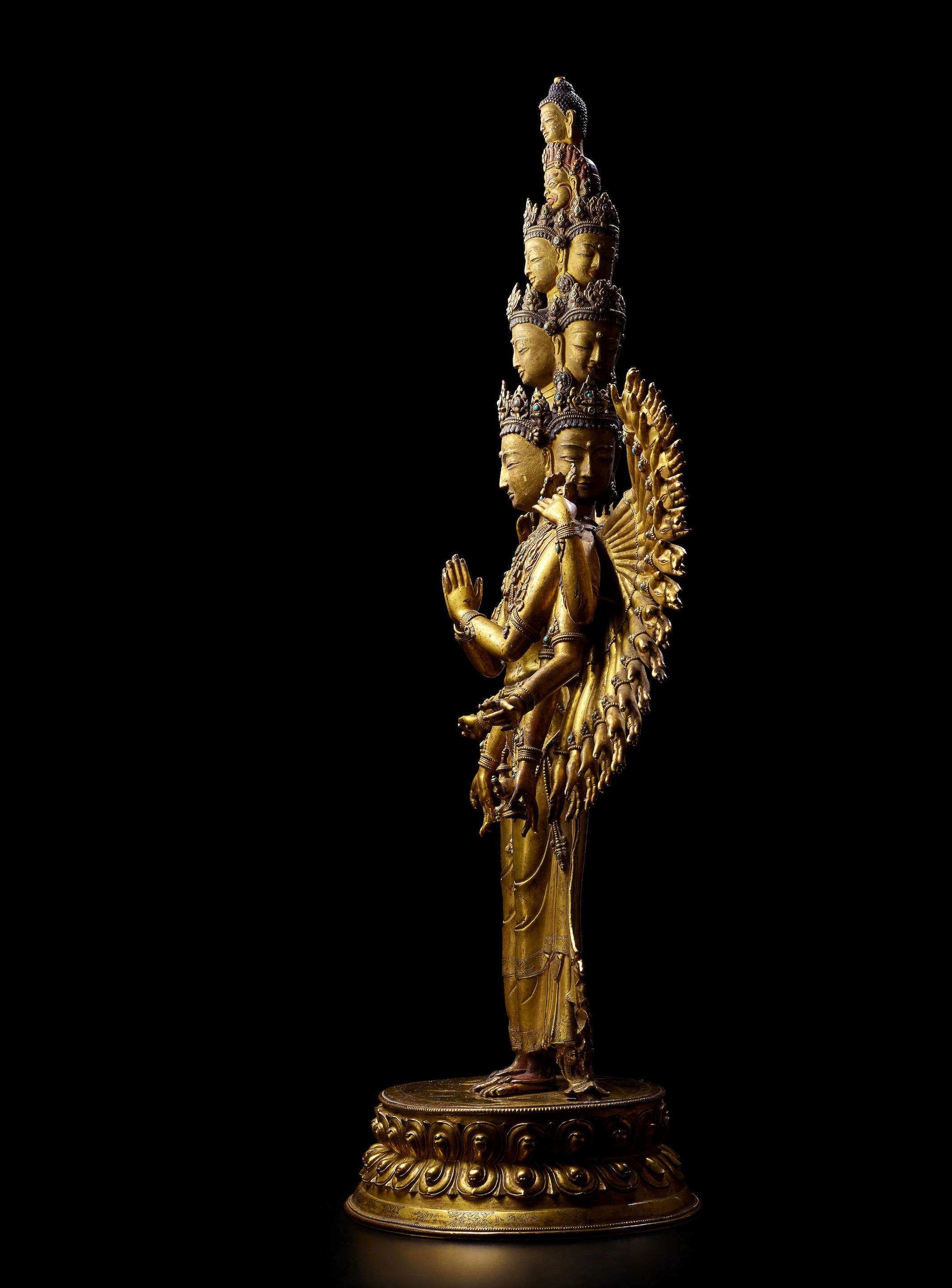
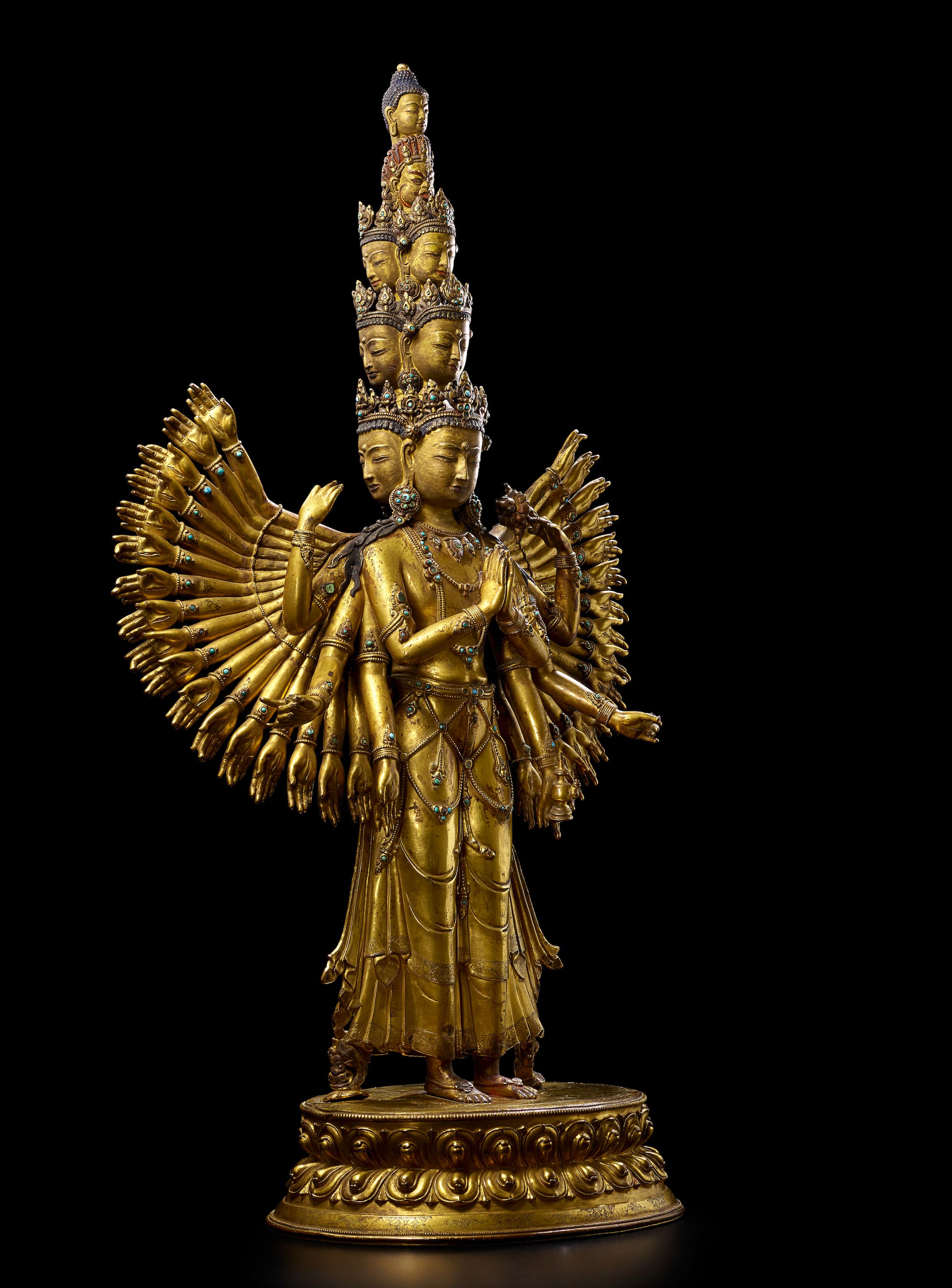
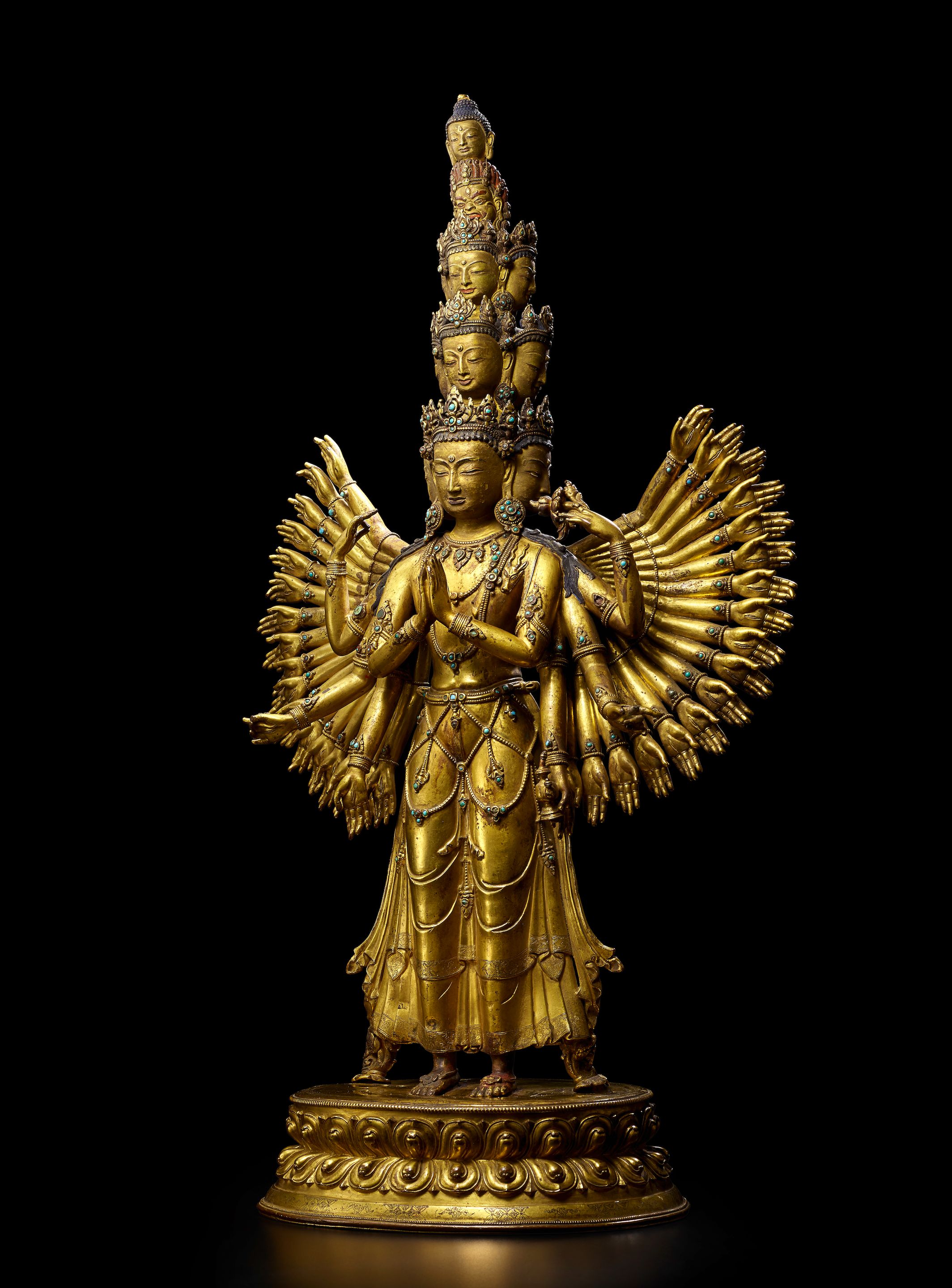

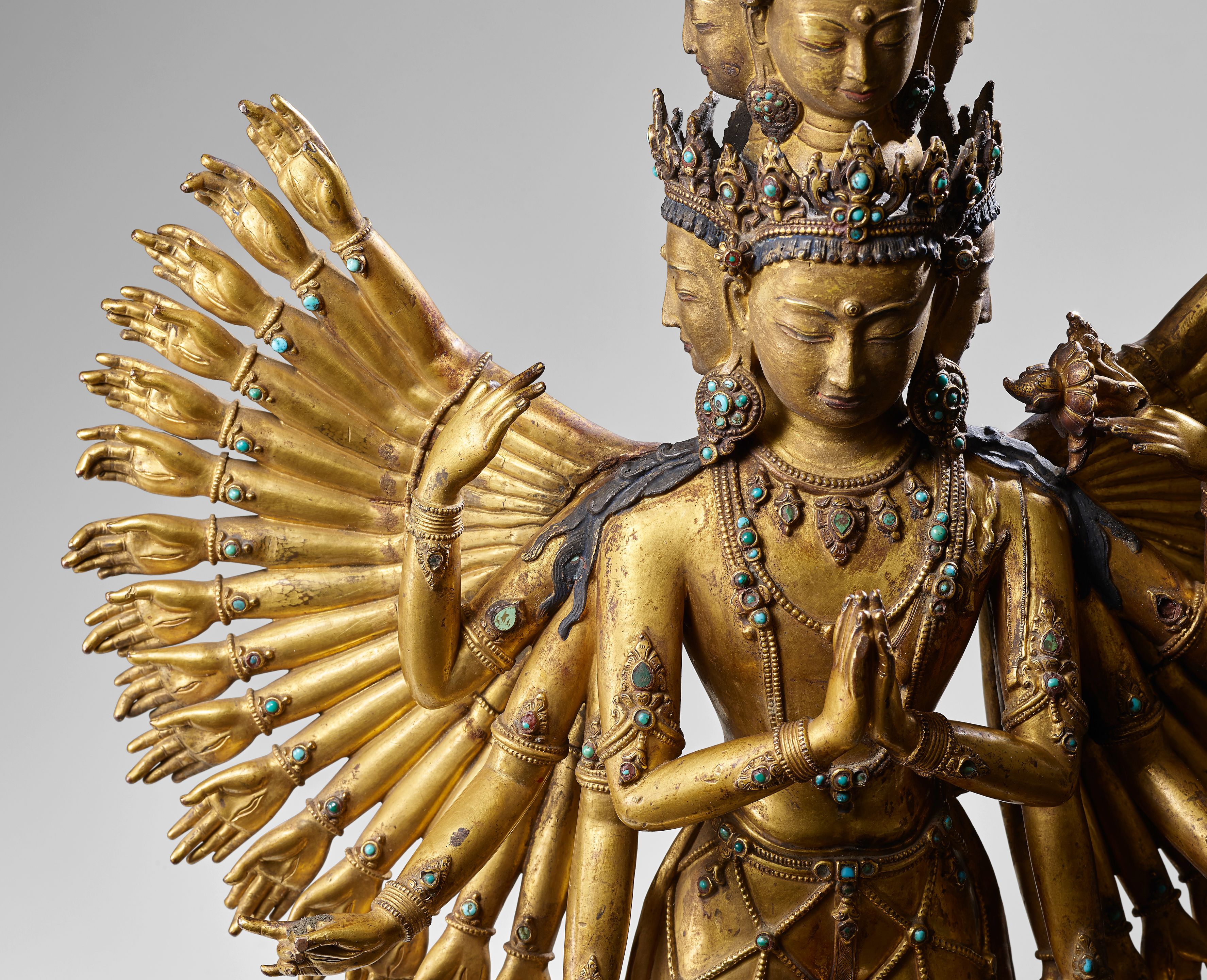
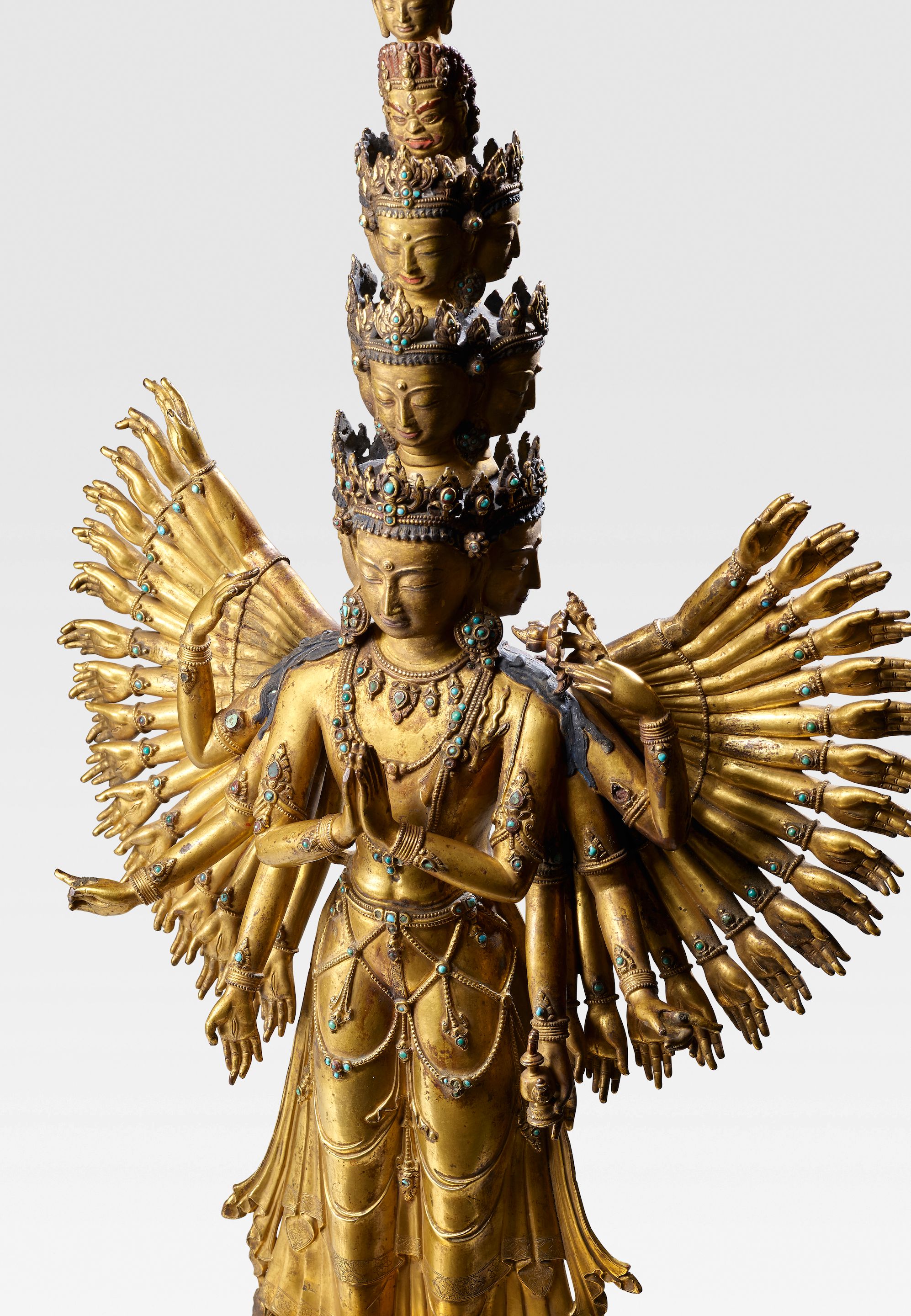
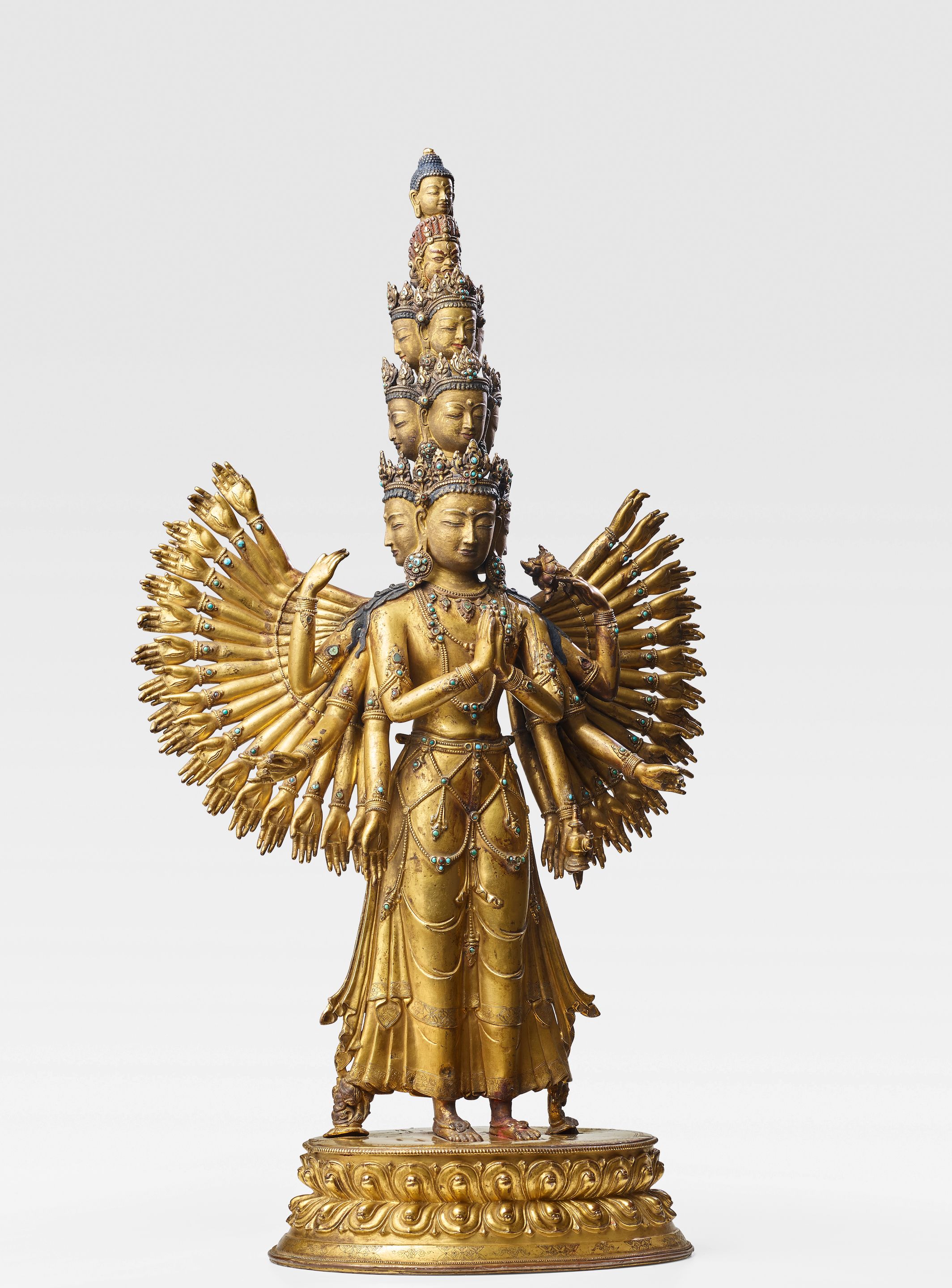
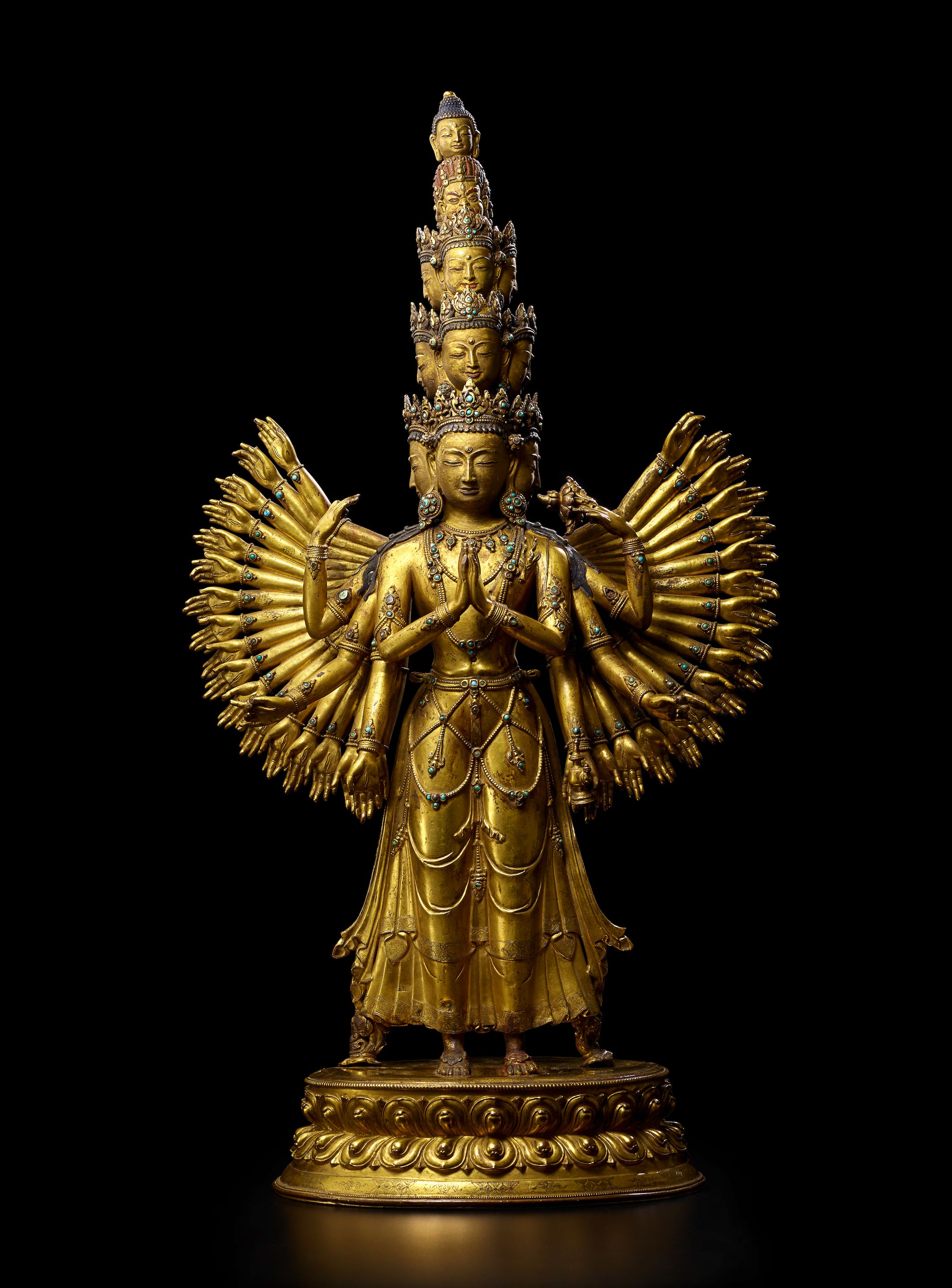 铜鎏金十一面千手观音像
索南坚赞(Sonam Gyaltsen,活跃于15世纪)作,西藏中部,约1430年
喜马拉雅艺术资源网编号:61516
高26 1/8英寸(67.7厘米)
著录
《Apollo》,伦敦,1968年6月,第CLX页。
《Apollo》,伦敦,1977年8月,第167页,图10。
乌尔里希·冯·施罗德(Ulrich von Schroeder),《Indo-Tibetan Bronzes》,香港,1982年,第452-453页,第124D号。
来源
Oriental Antiques Ltd,伦敦,1968年之前
苏富比,伦敦,1977年5月9日,拍品167号
英国私人收藏,1977-2014年
索南坚赞所作之仁钦观音(Jamchen Avalokiteshvara)
与杰夫·瓦特(Jeff Watt)合撰,2018年2月
这尊以大悲观世音菩萨最高身形呈现的宏伟造像,凝聚了西藏十五世纪鎏金铜像铸造传统的高峰,是索南坚赞(Sonam Gyaltsen,活跃于15世纪)在西藏中部仁钦寺(Jamchen monastery)落成之际(约1430年)亲手制作的核心杰作。
值得注意的是,所有这些细节都在造像的漫长铭文中得以记载。随着对铭文研究的深入,另一位具名艺术家浮出水面——这尊铜像所揭示的工艺大师索南坚赞的发现,促使我们重新思考西藏艺术史领域的范式转换,即摒弃那套愈发可疑的“无处不在的匿名西藏工匠”的叙事。
尽管此前未被归入任何名下的作品,但其他显然出自索南坚赞之手的作品长期以来一直被众多国际博物馆视为珍贵藏品,因其反映了西藏古典鎏金造像的时代精神。这些作品与本尊铜像有着毋庸置疑的可比性,而后者首次为揭示这位雕塑大师的身份提供了关键线索。
其铭文还揭示了仁蚌王朝(Rinpung dynasty,15-16世纪)非凡的赞助活动——该王朝在西藏艺术史的大众圈层中迄今鲜有讨论,其权力中心位于西藏中部的日喀则,主要赞助萨迦派。铭文提到了一位著名的萨迦派上师:佐努嘉乔(Zhonnu Gyalchog);两位兄弟:诺布桑布(Norbu Zangpo)和白桑(Palzang);以及艺术家:索南坚赞。铭文以藏文乌坚体(U-chen)刻于莲花底座顶端周缘,内容如下:
༄༄།སྭསྟི། སྤྱན་རས་གཟིགས་དབང་དངོས་གྲུབ་འབྱུང་གནས་འདི། རྒྱལ་སྲས་གཞོན་ནུ་རྒྱལ་མཆོག་བཀས་བསྐུལ་ནས། མི་དབང་ནོར་བཟང་དཔལ་བཟང་སྐུ་མཆེད་ཀྱིས། ལྷག་བསམ་དག་པས་འཕགས་སྡེའི་མཆོད་གནས་བཞེངས། བསོད་ནམས་རྒྱལ་མཚན་ལག་པས་རྩེ་ལས་འཁྲུངས། དགེ་བས་འགྲོ་ཀུན་ཀུན་མཁྱེན་མྱུར་ཐོབ་ཤོག།
十五世纪之交,藏省(Tsang province)的日喀则(Shigatse)是西藏第二繁华的城市。帕木竹巴(Phagmodrupa)家族的内斗使得当地仁蚌家族得以夺取城市控制权并建立自己的王朝,延续至1565年。诺布桑布(Norbu Zangpo,1403-1466)——在造像铭文中称为“诺桑”(Norzang)——是仁蚌王朝的第三代君主,也是最有权力的一位,在位时间为1435至1466年。因其相对重要的地位,诺布桑布也简称为“仁蚌巴”(Rinpungpa)。其弟白桑的事迹鲜为人知,但铭文中将二人并提的事实暗示诺布桑布尚未登基,从而将其年代定于1435年之前。
铭文中所描述的造像创作背景也印证了诺布桑布尚未登基这一推断。兄弟二人皆为佐努嘉乔(Zhonnu Gyalchog,生于14世纪;tbrc.org编号P1943)的弟子。佐努嘉乔是著名的萨迦派上师,以其修心论著而闻名。他是杰宗喀巴(Je Tsongkapa,1357-1419)的直传弟子。铭文中的“圣众供养处”无疑指的是日喀则附近的仁钦曲德寺(Jamchen Chode monastery),该寺由佐努嘉乔和诺布桑布于约1427/1430年创建或扩建(参见Czaja,《Medieval rule in Tibet》,维也纳,2013年,第481-484页)。铭文记载此像是这一工程的高潮时刻所作,因此我们可以将其年代精确地定为约1430年,与该艺术家可能属于仁钦寺内同一或相邻图像程序的类似铜像同期。该寺传统上属于萨迦派,但后来年久失修,经五世达赖喇嘛洛桑嘉措(Lobzang Gyatso,1617-1682)修缮后改宗格鲁派,并更名为江巴林(Jampa Ling)。
最后,铭文明确表明这尊宏伟造像出自索南坚赞之手。迄今为止,尚无其他关于他的历史记录广为人知。我们只能推断他在十五世纪第二季度前后活跃于大日喀则地区。此外,他在仁钦寺的工作很可能为他赢得了相当的声誉——即便他的名声当初并未为他争取到这一显赫的委托。
这尊大型造像表现的是十一面千手观音(Avalokiteshvara Sahasrabhuja Ekadasamukha)——以千手千眼遍观十方、救度一切众生的世主。自雅砻王朝第一位法王松赞干布(Songtsen Gampo,604-650)以来,观音一直是西藏最重要的本尊神,化现着精神与世俗的双重统治。此处他以至高无上的宇宙身形显现,以多头多臂表达其无限的能力。其图像学遵循巴莫(Palmo)或觉沃(Jowo)传统,除最上一面为忿怒相外,其余诸面皆为寂静相。尽管观音菩萨广受欢迎且地位尊崇,但十一面千手观音的存世实例极少,且尚无如此体量的私人收藏。
对这尊精妙铸造的杰作进行深入的形式分析,可以揭示出索南坚赞雕塑风格的若干惯用特征,归纳如下。此像在偏红的铜合金之上施以精美的鎏金。莲花台座整体铸造完成,足沿上方的饰带上刻有叶纹图案。其莲瓣塑造精美,对称卷曲的丰满内瓣尖呈旋涡状,置于饱满的外瓣之内,外瓣尖端锐利,两侧衬以锯齿状錾刻的莲萼。底座未封底,但下方足沿留有鎏金边缘,表明索南坚赞可能对其装藏盖板也施以鎏金。
其造像的面容纤巧灵动而不失饱满,四肢关节圆润。每一根手指的解剖结构都得到精心刻画,且每根手指的姿态各不相同。长发自然垂落于肩臂,同时更显著地梳理为宝冠前浓密的圆形卷曲厚刘海。就这尊寂静观音而言,菩萨身着丝衣,下方紧裹双腿,两侧垂坠以凸显其厚重与华丽。这些衣袍在宽大的裙边或区域刻有精细纹样,其余部分则留作素面,作为镶嵌于每件宝饰中的精美绿松石的金色背景。
索南坚赞对璎珞的处理方式尤为独特且精致。每颗镶嵌的宝石都经过精确切割,呈圆形或泪滴形(除腰带中央的矩形饰物外)。尽管宝石镶嵌于每件宝饰之中——其构成在西藏艺术中是统一的(宝冠、臂钏、璎珞裙等)——但宝石本身较小(尤其是与丹萨替(Densatil)同时期作品相比),如星星般点缀于灿烂的金色落日之上。
主尊四肢上的手镯、臂钏以及宝冠叶片是索南坚赞手笔最具指示性的特征。这些元素都有一个共同的基础形式,且越靠近头部则变得愈发丰富复杂。以手镯为例,从联珠纹边缘伸出三片莲瓣,莲瓣中央是一枚镶嵌绿松石的尖头五叶形饰片。在臂钏上,这一基本元素变得更大、更精细,增加了额外的绿松石和环绕最初三片莲瓣的枝叶纹,下方还有一串联珠链悬挂着莲花托举的绿松石坠饰。移至宝冠,同样的元素再次出现,但此时五叶形饰片更加尖锐并以透雕方式呈现,三片莲瓣两侧饰以更长的枝叶纹,而中央冠叶则额外镶嵌了四颗绿松石。此外,其珠宝璎珞裙最下方的垂饰也以同样的叶片纹样收尾。上述臂钏上摆动着的莲花托举绿松石坠饰是索南坚赞作品的另一个标志性特征,并在璎珞裙上重复出现。
最后,就许多人所认同的造像最重要的特征而言,索南坚赞似乎塑造了一张完美构合的面孔,具有独特而神秘的表情,唤起了该尊神难以言喻的精神气质——就本尊而言,那是一张面容俊美的寂静安详之脸,带着安抚人心的慈悲微笑。
博物馆和私人收藏中的许多作品长期以来被认为与此相似,现在根据它们与上述索南坚赞作品特征指标的明显一致性——尤其是在仁钦观音铭文的印证之下——可以确定归于索南坚赞名下。其中最主要的包括:
• 一尊秘密文殊(Guhyamanjuvajra)和一尊大威德金刚(Vajrabhairava),原属泛亚收藏(Pan Asian Collection)和贝尔蒂·阿施曼(Berti Aschmann)收藏,现藏里特贝尔格博物馆(Rietberg Museum)(图1及图2;乌利希(Uhlig)《On the Path to Enlightenment》,苏黎世,1995年,第168-171页,第113及114号);
• 一尊阎魔敌(Yamantaka),属JPHY收藏,发表于冯·施罗德《Indo-Tibetan Bronzes》,香港,1981年,第451页,第123E号,其双层莲花台座及刻纹与本尊最为接近;
• 一尊密集金刚(Guhyasamaja),藏于北京故宫博物院清宫收藏,发表于《故宫博物院藏文物珍品全集 60:藏传佛教造像》,香港,1998年,第192页,第183号;
• 一尊满贤夜叉(Purnabhadra),藏于费城艺术博物馆(Philadelphia Museum of Art,藏号2001-44-1);
• 一尊胜乐金刚(Chakrasamvara),保存于西藏,发表于冯·施罗德《Buddhist Sculpture in Tibet》,第II卷,香港,2001年,第964页,第232A号;
• 另一尊胜乐金刚,由邦瀚斯(Bonhams)纽约于2015年3月16日售出,拍品18号;
• 一尊大轮金刚手(Mahachakra Vajrapani),亦见于本次拍卖(拍品3034号)。
尽管学者们对这些造像中的大部分究竟应定为十五世纪还是十六世纪存在争议,但仁钦观音像成为了关键锚点,使我们最终能够相对确定地将它们重新归于同一时期。更重要的是,上述这组造像很可能在其原始语境中共同出现,作为同一坛城造像的一部分,或作为仁钦寺更宏大的造像体系的一部分。这尊观音像的体量是任何可比作品的两倍多,且是唯一带有题记铭文的已知作品,很可能曾立于佛殿中央的整体造像组合中心。这也与观音菩萨在藏传佛教神系中的中心地位以及此处所呈现的宇宙形态相吻合。
然而,我们的铭文只透露了这么多,索南坚赞也可能接受委托为西藏各地的不同寺院制作造像。我们也不应草率得出结论认为他只局限于一种媒介。例如,他也可能从事绘画。他的十一面千手观音像象征性地表现了一千只手臂,但实际数量为四十二只——包括完整的八只主臂和三十四只环绕手臂。这是一种罕见的配置,已知的另一例或许是江孜白居塔(Gyantse Kumbum)二层的一幅壁画(图3),该塔位于距日喀则不超过60英里的萨迦派飞地之内。江孜白居塔始建于1427年,与索南坚赞为仁钦寺创作造像的年代相当。这种时间、地理、教派和图像学的重叠,至少足以让我们考虑:索南坚赞是否也可能参与了白居塔某些令人惊叹的艺术创作。
希望在这件杰作和这则初步铭文之外,能有更多信息浮现,帮助我们更好地理解索南坚赞的作品,及其与他无疑知晓并可能回应的流行风格之间的关系——例如夏鲁寺(Shalu monastery)具有叶纹饰带的帕拉风格壁画、直贡梯寺(Drigung)和丹萨替寺的鎏金吉祥多门塔(tashi gomang),以及永乐宫廷的宫廷风格。此外,他与其他艺术大师之间的关系——如师承与学徒,或是他在十五世纪藏省艺术赞助蓬勃发展的背景下可能与之合作的同代人——也值得探究。这件具有里程碑意义的造像促使我们推定:只要我们持续探寻,这些历史人物终将浮出水面。对其铭文的解读,使此像跻身西藏历史上任何时期最重要的存世造像之列,它确认了一位我们如今不得不将其列入喜马拉雅艺术传奇巨匠行列的艺术家。
THE JAMCHEN AVALOKITESHVARA BY SONAM GYALTSEN
Written in collaboration with Jeff Watt, February 2018
Encapsulating the crescendo in Tibet's gilt bronze casting tradition occurring in the 15th century, this magnificent sculpture of the Lord of Compassion in his supreme form is a central masterpiece by the hand of Sonam Gyaltsen (active 15th century) made around 1430, upon the completion of Jamchen monastery in Central Tibet.
Remarkably, all of these details are mentioned in the sculpture's lengthy inscription. With yet another named artist coming to light from the study of inscriptions, the discovery of the master craftsman Sonam Gyaltsen provided by this bronze prompts us to consider a paradigm shift in the field of Tibetan art history, away from the ever-more questionable narrative of the ubiquitous 'anonymous' Tibetan artisan.
Although previously unattributed, other pieces now clearly by Sonam Gyaltsen have long been lauded among the prized possessions of numerous international museums for reflecting the zeitgeist of classical Tibetan gilded sculpture. They draw unmistakable comparison with the present bronze, which provides the key to revealing the master sculptor's identity for the first time.
Its inscription also brings to light the phenomenal patronage of the Rinpung dynasty (15th-16th centuries), as yet little discussed in Tibetan art history's popular circles, whose seat of power was in Shigatse, Central Tibet, and who mostly patronized the Sakya order. It names a famous Sakya teacher: Zhonnu Gyalchog; two brothers: Norbu Zangpo and Palzang; and the artist: Sonam Gyaltsen. Written in Tibetan U-chen script along the top of the lotus base's circumference, it reads:
༄༄།སྭསྟི། སྤྱན་རས་གཟིགས་དབང་དངོས་གྲུབ་འབྱུང་གནས་འདི། རྒྱལ་སྲས་གཞོན་ནུ་རྒྱལ་མཆོག་བཀས་བསྐུལ་ནས། མི་དབང་ནོར་བཟང་དཔལ་བཟང་སྐུ་མཆེད་ཀྱིས། ལྷག་བསམ་དག་པས་འཕགས་སྡེའི་མཆོད་གནས་བཞེངས། བསོད་ནམས་རྒྱལ་མཚན་ལག་པས་རྩེ་ལས་འཁྲུངས། དགེ་བས་འགྲོ་ཀུན་ཀུན་མཁྱེན་མྱུར་ཐོབ་ཤོག།
“This source of the attainments of Lord Avalokiteshvara, requested by the bodhisattva Zhonnu Gyalchog, [fulfilled] by the ruling brothers Norzang and Palzang, with pure motivation to build a place of worship for noble beings, [then, this sculpture was made] by the hands of Sonam Gyaltsen: May the accumulation of merit lead all beings to quickly attain the omniscient stage.”
At the turn of the 15th century, Shigatse in Tsang province was the second most prosperous city in Tibet. Infighting within the ruling Phagmodrupa family allowed the local Rinpung clan to seize control of the city and establish their own dynasty, lasting until 1565. Norbu Zangpo (1403-66), referred to as 'Norzang' in the sculpture's inscription, was the third and most powerful monarch of the Rinpung dynasty, and ruled between 1435 and 1466. Because of his comparative importance, Norbu Zangpo is also simply known as 'Rinpungpa'. Less is known about his brother Palzang, but the fact that the two are mentioned together in the inscription suggests that Norbu Zangpo had not ascended the throne yet, placing its date before 1435.
The events leading to the creation of the sculpture described in the inscription also corroborate that Norbu Zangpo had yet to ascend the throne. The brothers were students of Zhonnu Gyalchog (b. 14th century; tbrc.org no.P1943), a prominent Sakya lama recognized for his treatises on mind training. He was a direct pupil of Je Tsongkapa (1357-1419). The 'place of worship' in the inscription undoubtedly refers to Jamchen Chode monastery near Shigatse, which was either founded or enlarged by Zhonnu Gyalchog and Norbu Zangpo in c.1427/1430 (cf. Czaja, Medieval rule in Tibet, Vienna, 2013, pp.481-4). The inscription records that the sculpture was created at the culmination of this project, thereby allowing us to narrowly date it to c.1430, along with similar bronzes by the artist that were possibly part of the same or adjacent iconographic programs within Jamchen monastery. The monastery was Sakya by tradition, but later fell into disrepair, being renovated, converted to Gelug, and renamed Jampa Ling by the Fifth Dalai Lama, Lobzang Gyatso (1617-82).
Lastly, the inscription unequivocally states that this spectacular sculpture was created by Sonam Gyaltsen. No other historic record of him is broadly known to date. We can only infer that he flourished by the second quarter of the 15th century, working at that time in the region of Greater Shigatse. Moreover, it is likely that his work at Jamchen monastery would have won him considerable renown, if his fame had not already secured him this prestigious commission in the first place.
The large sculpture depicts Avalokiteshvara Sahasrabhuja Ekadasamukha - the All Seeing, All Sided Lord with One Thousand Hands and Eleven Faces, who looks in every direction to save all creatures. Since the first Dharma King of the Yarlung Dynasty, Songtsen Gampo (604-50), Avalokiteshvara has been the primary tutelary deity of Tibet, incarnating spiritual and political rule. Here he appears in his supreme cosmic form expressing his infinite capacity with a multitude of heads and arms. The iconography follows either the Palmo or Jowo traditions of depicting the deity with benign expressions except for the penultimate wrathful head. Despite the popularity and central status of Avalokitesvara, very few examples in the form of Sahasrabhujalokeshvara Ekadasamukha are extant, and none of this scale are known to be held in private hands.
A close formal analysis of his superbly cast masterpiece reveals a few idiomatic features of Sonam Gyaltsen's sculptural style, surmised as follows. The sculpture is exquisitely gilded over a pinkish copper alloy. The lotus base is completed in the round and includes engraved patterns of foliate imagery on a band above the foot rim. Its petals are exquisitely modeled with symmetrically curling plump inner corolla terminating in curlicue tips, set within swelled outer petals with pointed tips, in turn flanked by jagged chased sepals. While surviving unsealed, a gilded edge to the foot rim underneath suggests that Sonam Gyaltsen may have gilded his consecration plates.
The physiognomy of his deity is slender and nimble, but not attenuated, and with rounded joints between the limbs. Great care is taken to portray the anatomy of every finger, always modeled in a position different from the next. Hair descends naturalistically in long tresses over the shoulders and arms, but is also more distinctively arranged into a thick fringe of rounded curls before the crown. In the case of this benign Avalokiteshvara, the deity wears silk garments that hug the legs below, but also drape on the sides to accentuate their weight and sumptuousness. These garments are also engraved with fine patterns on a broad hem or section, but otherwise left plain as a golden backdrop for the fine turquoise jewelry inlaid into each item of regalia.
Sonam Gyaltsen treats jewelry in a particularly unique and refined manner. Each inset stone is small and precisely cut in a round or teardrop shape, except for a rectangular central belt ornament. While inset into every piece of regalia, the components of which are uniform in Tibetan art (crowns, armbands, aprons, etc.), the stones are small (especially if one were to compare them to contemporaneous work at Densatil) and twinkle, like stars peppering a brilliant golden sunset.
The designs of bracelets and armlets on the deity's primary limbs, as well as his crown leaves are a most telling indicator of Sonam Gylatsen's hand. Each shares a common denominator that becomes richer and more complex as they near the head of the deity. Starting with the bracelet, from the band's beaded edge extend three lotus petals bearing a piece of inset turquoise at the center of a pointed five-lobed leaf. At the armlets this basic element is larger and more elaborate, supplemented with an additional piece of turquoise and foliate sprays framing the three initial lotus petals, and a further lotus-borne turquoise pendant hanging from a beaded chain below. Moving to the crown, the same element appears again, but now the five-lobed leaves are more pointed and rendered in openwork, while longer sprays flank the three lotus petals, and the central crown leaf is inset with four additional pieces of turquoise. Furthermore, the lowermost swags of his bejeweled apron also terminate with this same leaf motif. The aforementioned lotus-borne turquoise pendant swinging from the armlet is another distinctive marker for Sonam Gyaltsen's oeuvre, and is repeated throughout the apron.
Lastly, to address what many would concede is a sculpture's most important feature, Sonam Gyaltsen appears to depict a perfectly composed face for his subject, with a unique and enigmatic expression that evokes the ineffable spirit of the deity – in the present case, a beautifully-featured calm, gentle face at rest, with a soothing, compassionate smile.
A number of pieces in museum and private collections have long been regarded as similar, but can now be positively attributed to Sonam Gyaltsen given their obvious conformity to the aforementioned indicators of his work, underscored by the Jamchen Avalokiteshvara's inscription.
Chief among these are:
• A Guhyamanjuvajra and a Vajrabhairava, formerly of the Pan Asian and Berti Aschmann Collections, now in the Rietberg Museum (Figs.1 & 2; Uhlig, On the Path to Enlightenment, Zurich, 1995, pp.168-71, nos.113 & 114);
• A Yamantaka in the JPHY Collection, published in von Schroeder, Indo-Tibetan Bronzes, Hong Kong, 1981, p.451, no.123E, which most closely matches the present sculpture's double lotus base with engraved design;
• A Ghuyasamaja in The Qing Palace Collection of the Palace Museum, Beijing, published in Complete Collection of the Treasures of the Palace Museum, 60: Buddhist Statues of Tibet, Hong Kong, 1998 p192, no.183;
• A Purnabhadra in The Philadelphia Museum of Art (acc.#2001-44-1);
• A Chakrasamvara preserved in Tibet, published in von Schroeder, Buddhist Sculpture in Tibet, Vol. II, Hong Kong, 2001, p.964, no.232A;
• Another Chakrasamvara, sold by Bonhams, New York, 16 March 2015, lot 18;
• A Mahachakra Vajrapani also within this sale (lot 3034).
Whereas scholars have debated whether most of these sculptures should be dated to the 15th or 16th century, the Jamchen Avalokiteshvara is the linchpin that finally allows us to reattribute them with relative certainly to a concurrent timeframe. What is more, the group of sculptures mentioned above could well have appeared together in their original context as part of the same sculptural mandala, or as part of Jamchen monastery's broader sculptural program. The Avalokiteshvara, being more than double the size of the any comparable piece, and bearing the only dedicatory inscription known to date, very likely stood at the center of a chapel's ensemble. This would also be congruent with Avalokiteshvara's central position within the Tibetan Buddhist pantheon and cosmic form represented here.
However, our inscription only says so much, and Sonam Gyaltsen could also have been commissioned to produce sculptures for various monasteries throughout Tibet. We should also not jump to the conclusion that he was only confined to one medium. For instance, he might also have painted. His Avalokiteshvara Sahasrabhuja Ekadasamukha represents the Bodhisattva with a thousand arms symbolically, but its actual count is forty-two, with a complete set of eight primary arms and thirty-four encircling arms. This is a rarely seen configuration and perhaps the only other known example is the subject of a mural on the second floor of Gyantse Kumbum (Fig.3), which is part of a Sakya enclave no more than 60 miles from Shigatse. Founded in 1427, Gyantse Kumbum is contemporary with Sonam Gyaltsen's sculpture for Jamchen. This overlap of timing, geography, clergy, and iconography is enough for us to at least consider that Sonam Gyaltsen might have also been responsible for some of the incredible artistic products of Gyantse Kumbum.
More information beyond this masterpiece and this initial inscription will hopefully come to light to help us better understand Sonam Gyaltsen's work and its relationship to the prevalent styles he would no doubt have been aware of and perhaps responding to, such as the Pala style murals of Shalu monastery with their foliate banded jewelry, the gilded tashi gomang stupas of Drigung and Densatil monasteries, and the imperial style of the Yongle court. Also, his relationship to other master artists, such as teachers and apprentices, or contemporaries that he might have collaborated with in catering to the great flourish in artistic patronage within Tsang Province in the 15th century. This pivotal sculpture begs us to presume these historic persons can be found the longer we look for them. The reading of its inscription promotes it to one of the most important surviving sculptures from Tibet of any period, identifying an artist we are now compelled to include among the legendary giants of Himalayan art.

