
侧边栏

13世纪西藏合金铜空行观音(静息观音)(香港邦瀚斯)
尺寸:高15.9 cm
年代:12-13世纪
质地:错银错红铜
风格:西藏
来源:拍卖会
成交:7,878,000港元(2026.05)
参阅:外部链接
鉴赏:
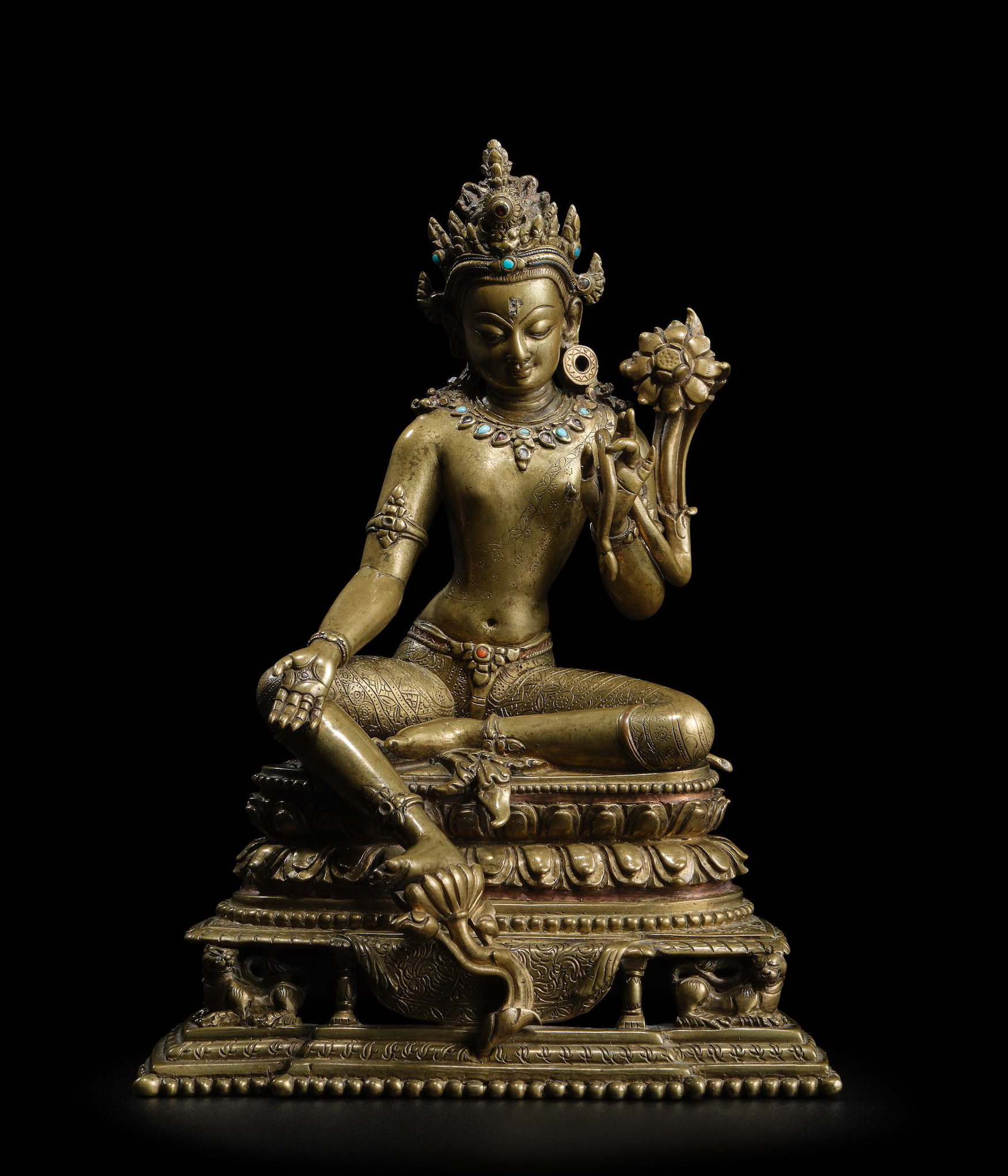
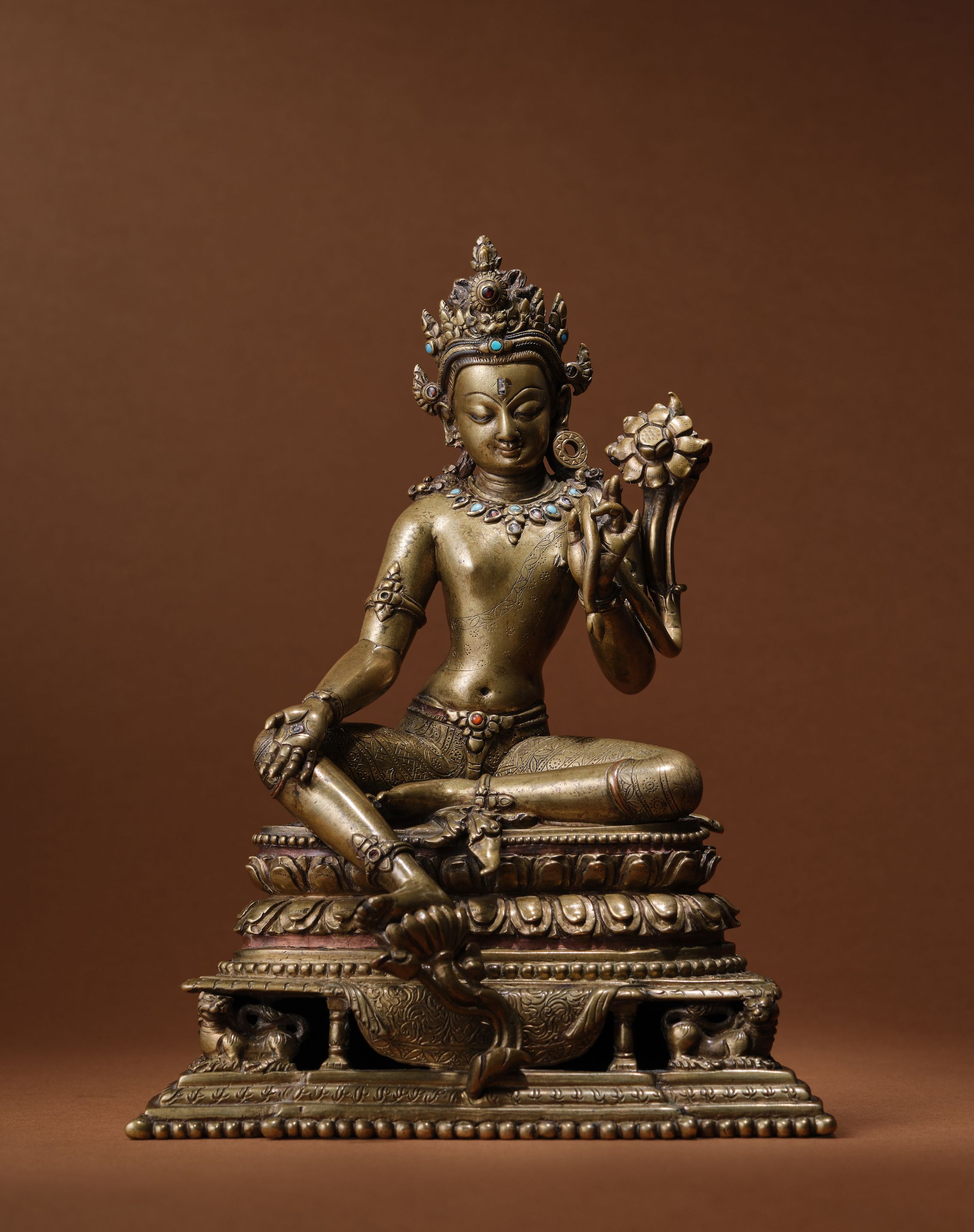
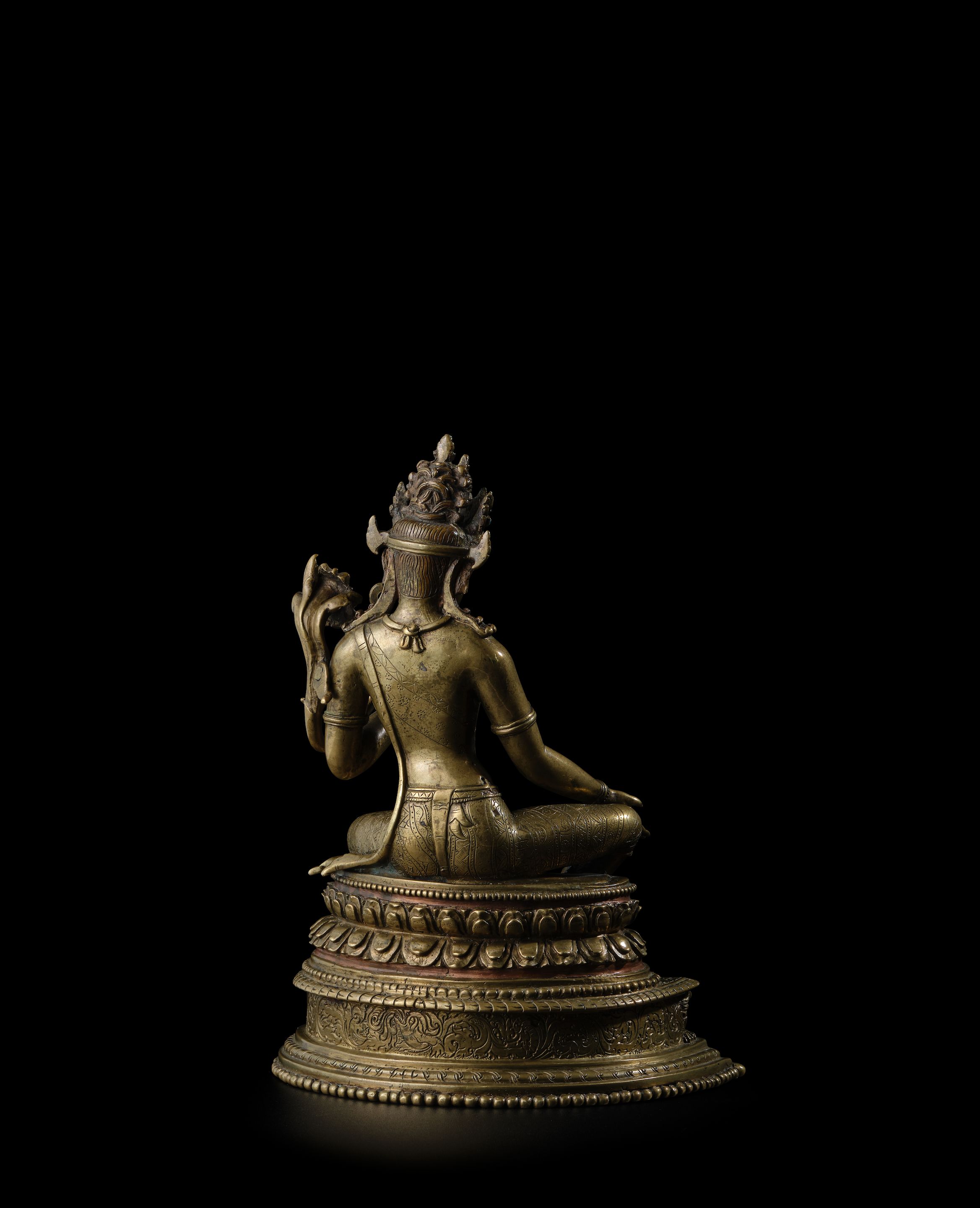
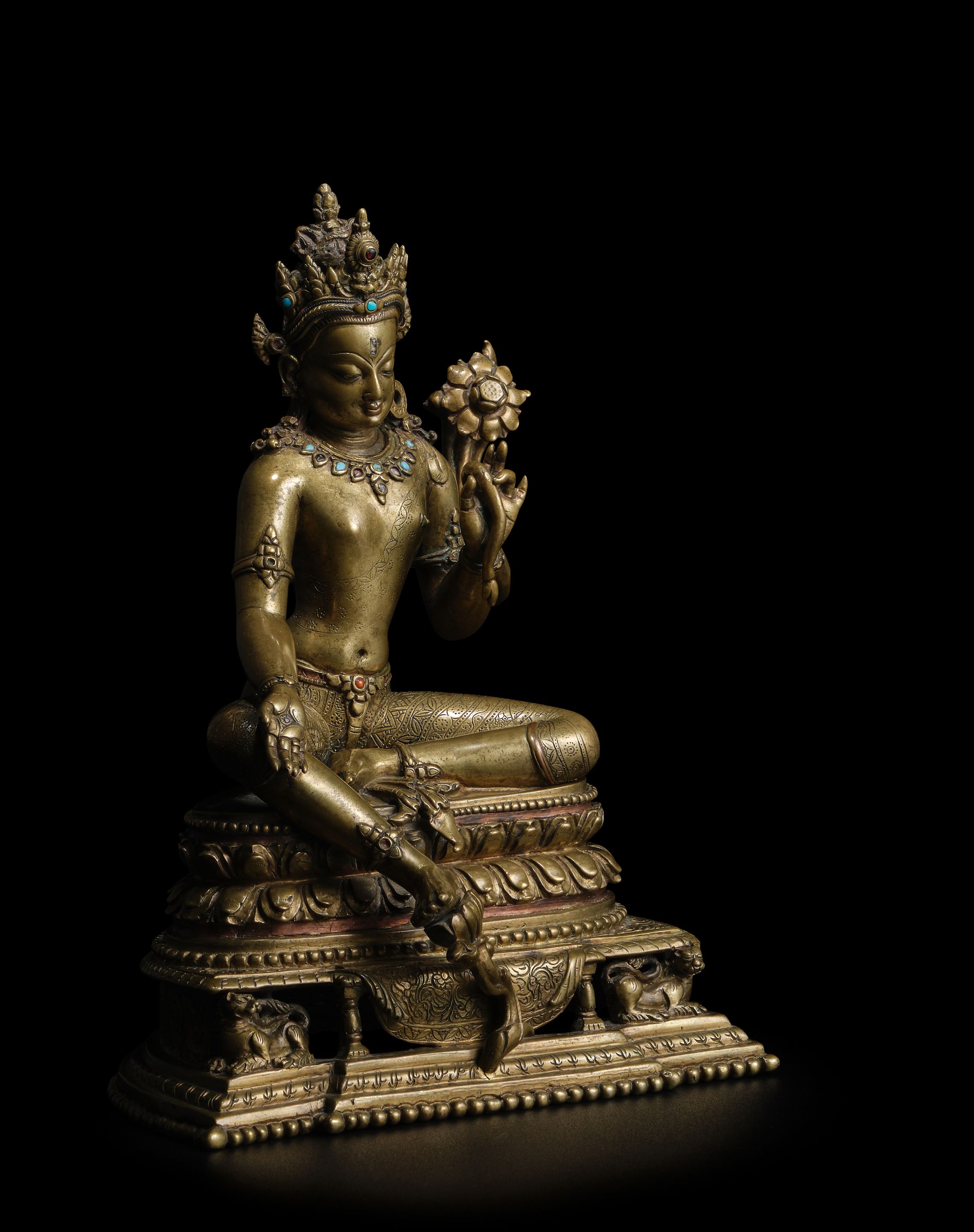
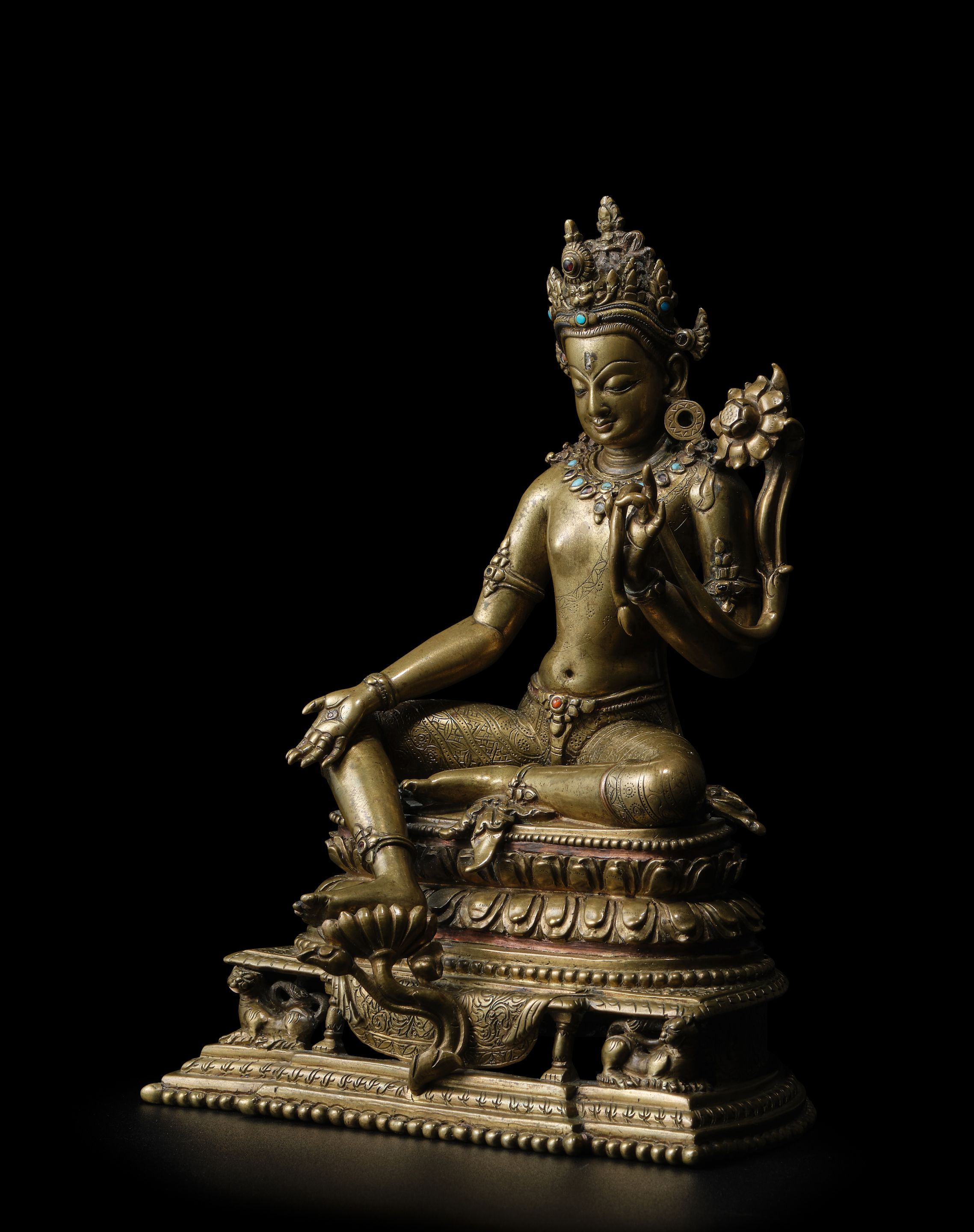
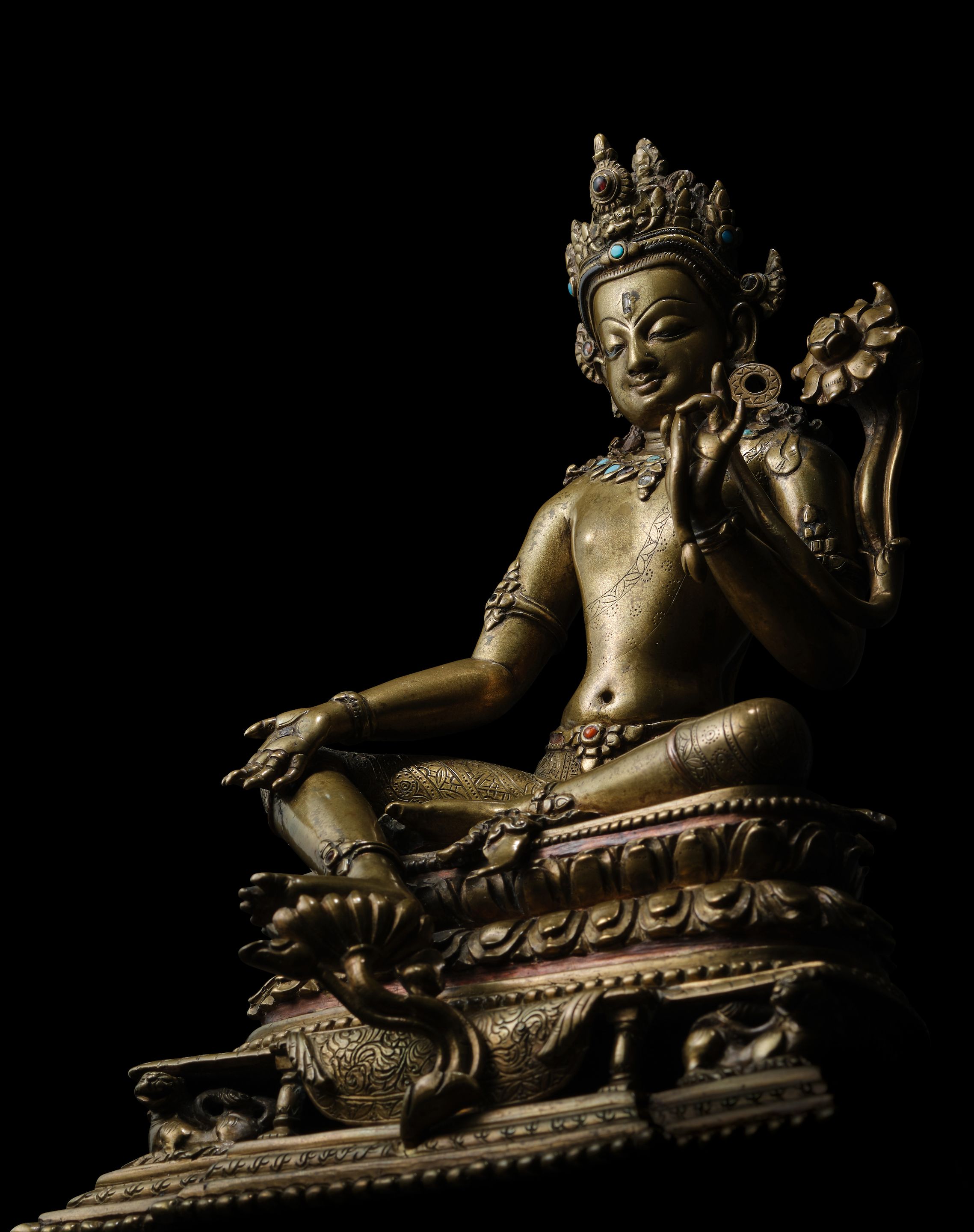
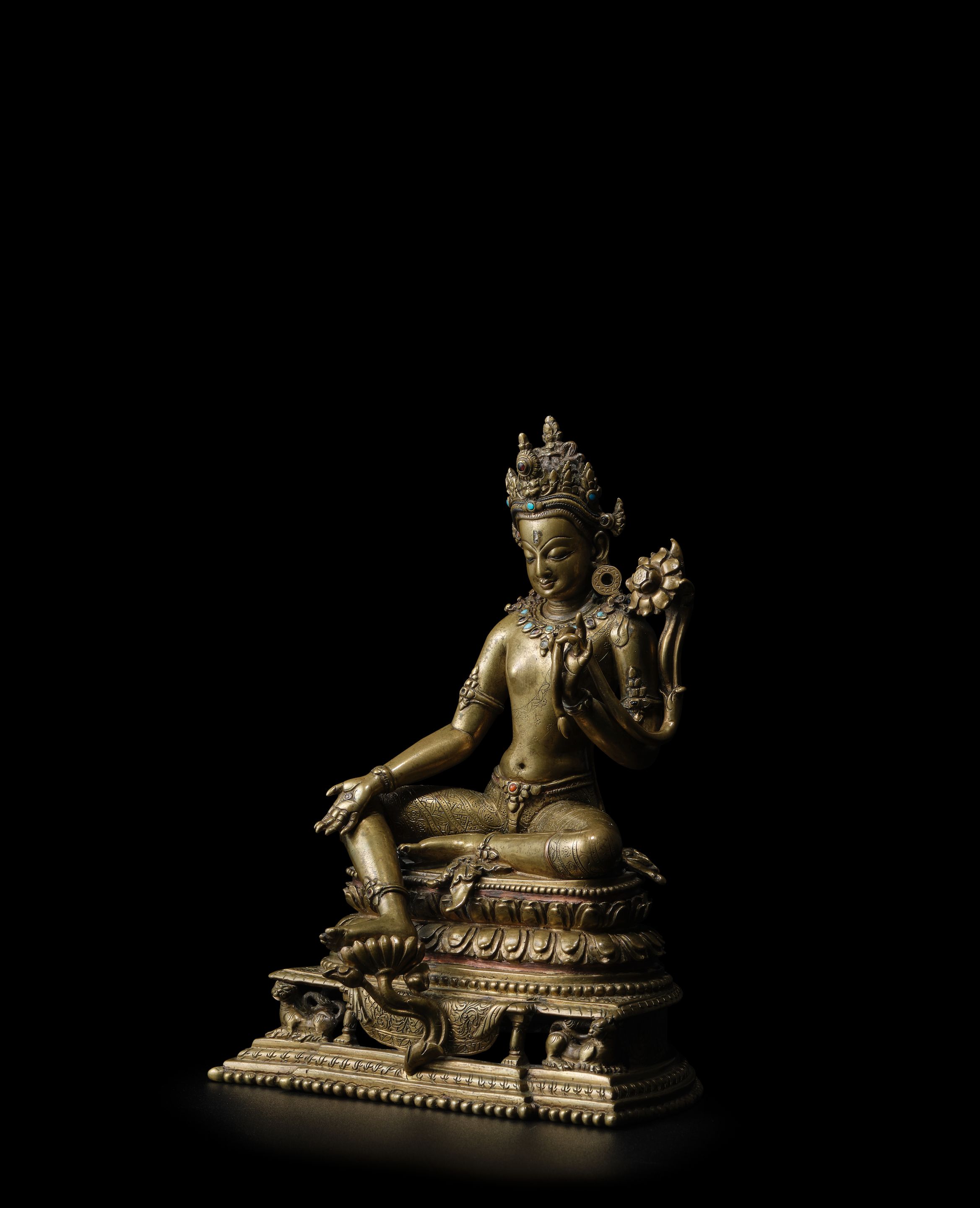
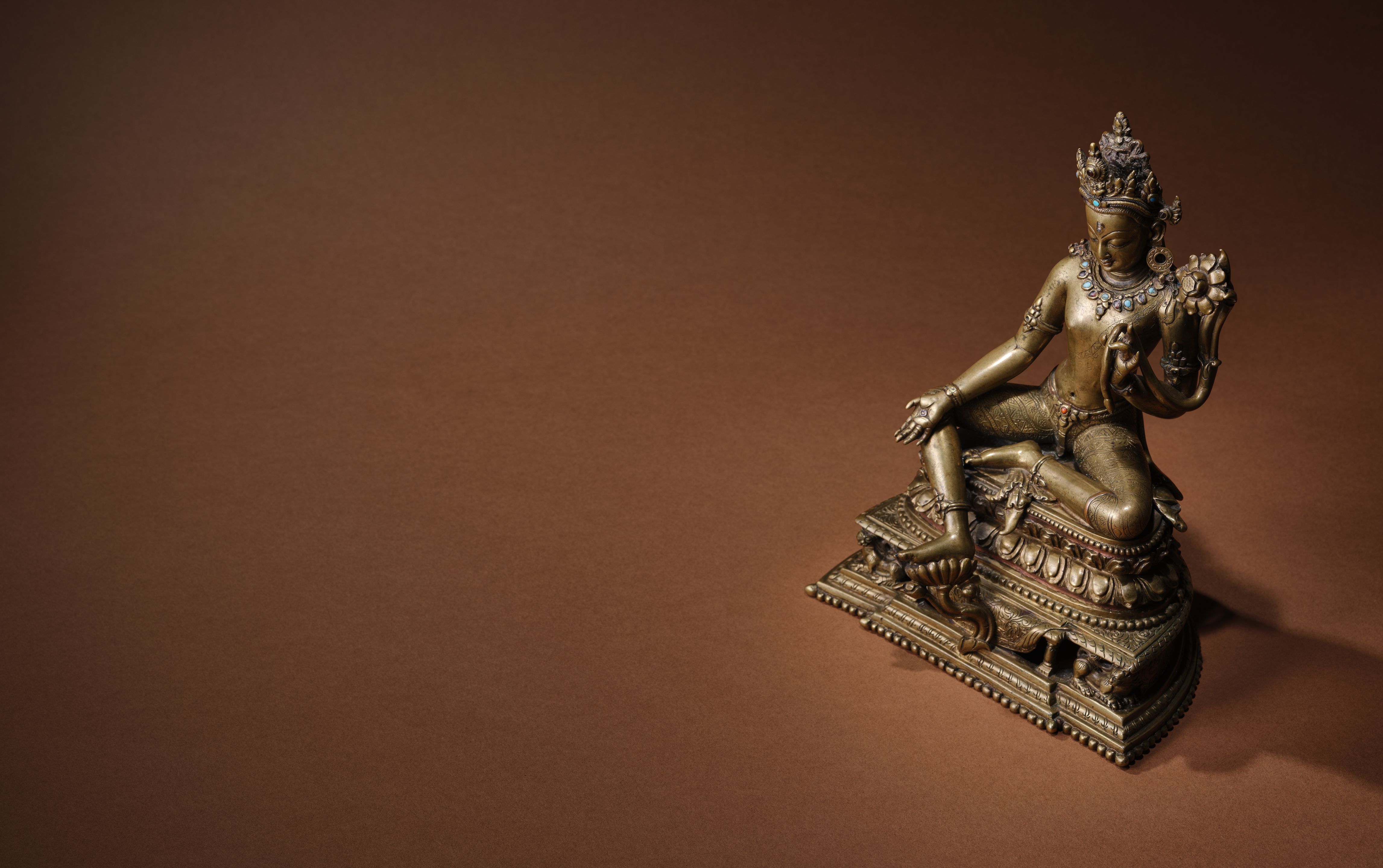
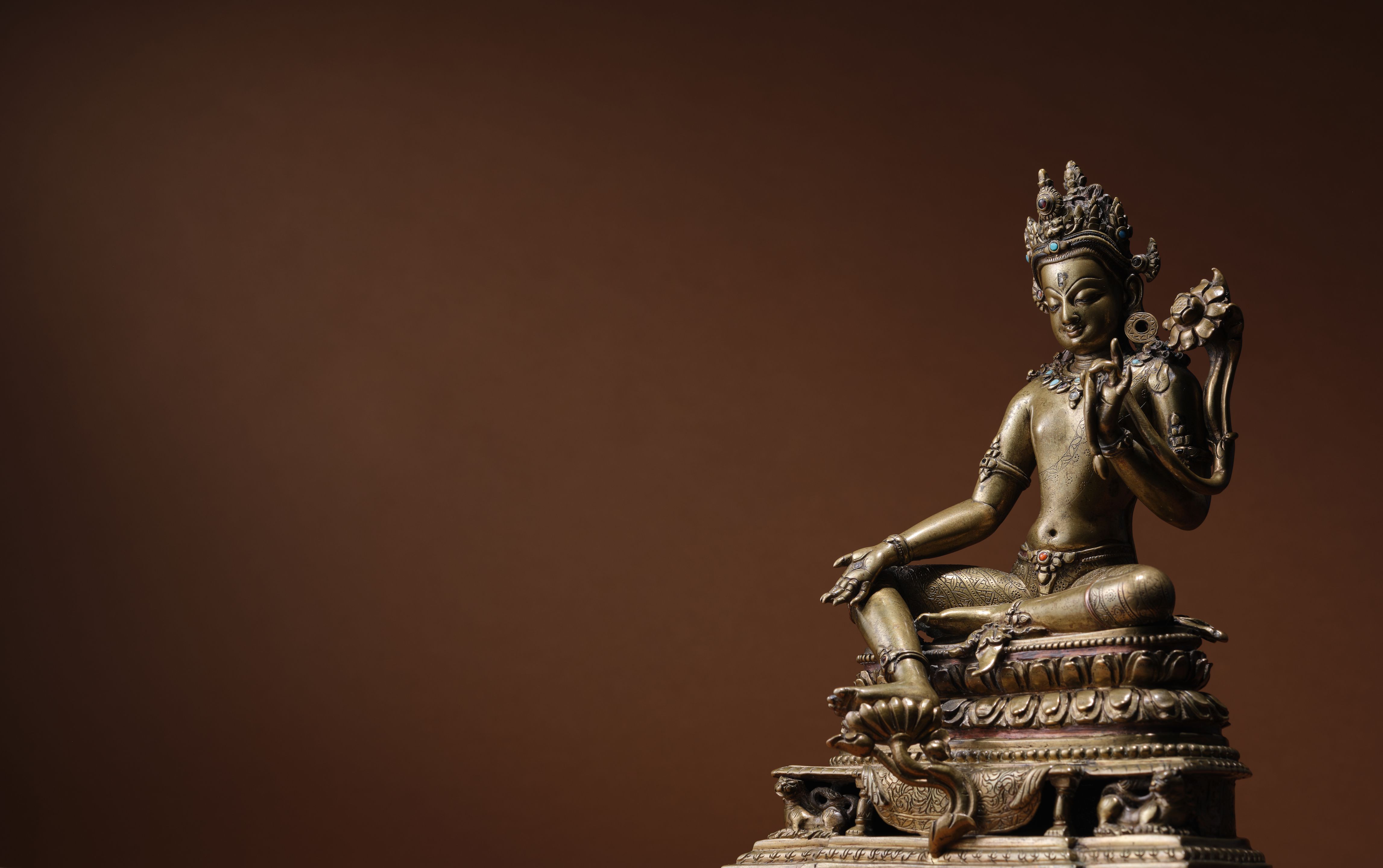
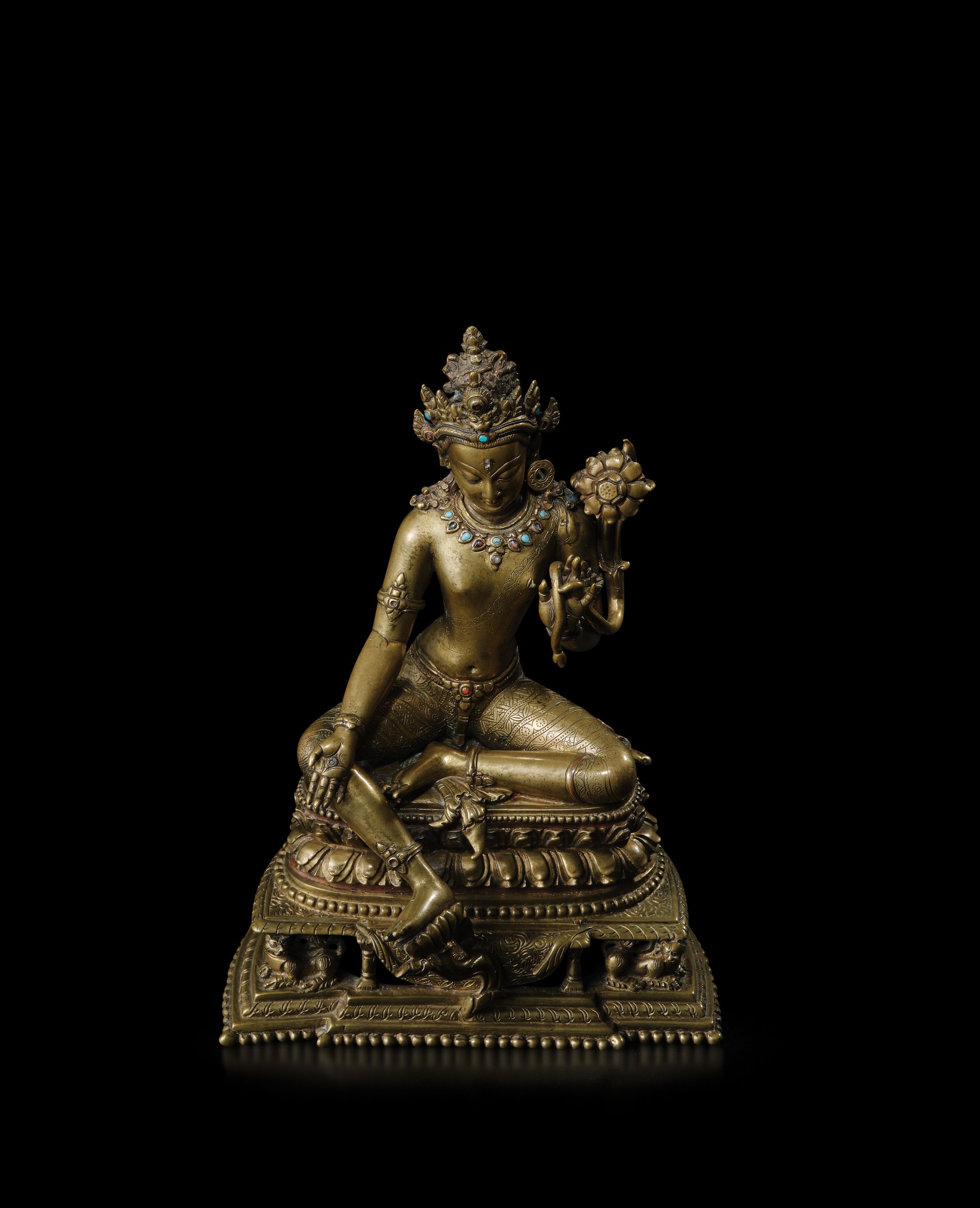 A SILVER AND COPPER INLAID COPPER ALLOY FIGURE OF KHASARPANA LOKESHVARA
TIBET, 12TH/13TH CENTURY
Himalayan Art Resources item no. 8841
西藏 十二/十三世纪 错银错红铜静息观音(空行观音)铜像
来源:
Alice and Nasli Heeramaneck Collection, New York
Christian Humann (Pan-Asian Collection), acquired from the above in 1972
On loan to the Los Angeles County Museum of Art
Sotheby's, New York, 5 October 1990, lot 73
Ulrich von Schroeder, Switzerland, 1991
Private Swiss Collection
这尊殊胜的空行观音(Khasarpana Lokeshvara)造像,是早期西藏雕塑史上的杰作。它由技艺超群的纽瓦尔(Newari)工匠以帕拉(Pala)风格精妙铸就,很可能是受当时西藏重要施主委托而作。人物塑造中那无与伦比的精妙,明确无误地揭示了纽瓦尔大师的手笔;然而,与那些为尼泊尔本地供奉而造、通常采用温润富铜合金的作品不同,此像所用的是黄铜质感非常明显的合金——这种对金属配方的偏好,在东北印度和西藏更为常见。
空行观音,意为“翱翔于空中的世间自在之主”,是观世音菩萨的一种化身,体现了息灭烦恼、净化业障的力量。这尊精美的雕塑表现的是菩萨以游戏坐姿(lalitasana)安住,右腿舒展,轻踏于一朵盛开的莲花之上,左腿则向内盘起。其右手结施予印(varada mudra),赐予福佑;左手结说法印(vitarka mudra),轻柔地持着一朵于肩侧盛开的莲花莲茎——这朵莲花象征着每一位众生从无明中升起、觉悟成佛的潜能。菩萨容颜宁谧,仪态从容,散发着祥和优雅的气质。以此慈悲之相,空行观音抚慰着众生的苦难,引领修行者趋向内心的安宁与精神的清明。
呼应着精雅的帕拉艺术语言,空行观音安坐于双层束腰式莲座之上,莲座边缘饰有连珠纹,莲座下方则为半圆形须弥山(Sumeru)台座。台座四角,有狮形瑞兽承托着宝座。这种独特的台座样式——以一对狮子分列于敷搭着台布的宝座两侧为特征——可追溯至8至10世纪的帕拉铜像。同样鲜明、深峻的连珠纹边缘,也是12世纪帕拉作品的一个标志性特征。此外,整体的雕塑处理手法——最显著的是莲瓣边缘那嵌有铜料的凹陷条带——与拉萨布达拉宫珍藏的11至12世纪帕拉风格释迦牟尼佛造像有着极为相近的平行例证。这些共有的特征,强化了帕拉美学对此尊造像的深刻影响,并确认了它在喜马拉雅铜像铸造这一卓越传承中的重要地位。
此像还以其精美的金属镶嵌工艺而更显卓绝,彰显了帕拉晚期传统的创造性巧思与登峰造极的技艺。银料镶嵌的眼睑低垂的双目,赋予菩萨禅定的宁谧;白毫相与宝冠同样饰有银质镶嵌。与此同时,铜料镶嵌勾勒出雕刻精细的禅裙(dhoti)边缘与腰带,并为双唇增添了温润的色泽。这些细微的色彩对比,连同镶嵌的各色半透明与不透明的半宝石,共同营造出精巧的色调变幻,突显了雕塑的超凡品质。包括泪珠状项链在内的珠饰,其源流可追溯至帕拉范本。然而,垂饰的朝向则显示出一种更贴近纽瓦尔审美意趣的感知。三角形的臂环同样坚定地植根于帕拉风格的造型语汇。这些璀璨的点缀,共同为这尊圣像注入了一种精工雕琢、超凡脱俗的优雅气韵。
其他一些特征则体现了一种引人注目的创造性融合,汲取了独特的纽瓦尔美学。圆润饱满的面庞——塑造出宁静的表情与低垂的凝眸——反映出一种尤为柔和且内敛的审美意趣。更高、更宽的前额,同样标志着一种有别于帕拉风格的相貌特征,而与纽瓦尔的传统更为契合。一个有力的比较可见于苏黎世瑞特堡博物馆(Rietberg Museum)藏的一尊14世纪文殊菩萨鎏金铜像——一尊被认定为西藏作品、但明确无误地以纽瓦尔工艺制作而成的造像。除了同样高耸的前额,那尊像的宝冠中央也是一片圆形的莲叶置于饕餮(kirtimukha)之上——这与帕拉风格偏好均匀的三角形莲瓣形成了对比。与此尊造像宝冠样式紧密相关的例证,见于同卷著录中的一尊尼泊尔观世音菩萨像。
此尊造像身着雕刻精细的禅裙,饰以花叶与几何纹样;一条薄透的飘带则轻柔地搭覆于胸前,飘带上点缀着细腻的米粒纹(rice-grain pattern)——这是纽瓦尔艺术中常见的纹饰。整体而言,造型塑造极为柔和,赋予此像一种雅致细腻、静谧高华的气质,而这正是深植于纽瓦尔雕塑传统中的审美意趣。
此尊造像在对帕拉美学与纽瓦尔精雅风格的融会贯通中达到了高超的境界,加之其超凡的工艺水准和保存异常完好的细节,共同构成了早期西藏铜像铸造的一座高峰。它将印度范本、纽瓦尔工艺与西藏赞助和谐地融为一体,生动体现了这一时期塑造喜马拉雅艺术的活跃的跨文化潮流。此外,在喜马拉雅地区,站姿的莲花手观音(Padmapani Lokeshvara)远比坐姿的空行观音常见得多,这使得此像不仅是工艺卓绝之作,更是极为珍罕的瑰宝。凡此种种,均奠定了它作为一盏明灯的独特意义,照亮了中古佛教世界那些充满活力的艺术、信仰与文化交流。
若置于早期西藏金属雕塑的更广阔发展脉络中审视,此像在西藏艺术史的一个形成时期,作为一尊专为藏地施主铸造的、极其精美的铜像,显得尤为突出。它对帕拉范本与纽瓦尔工艺审慎而智慧的融合,反映了塑造喜马拉雅艺术的动态文化交流;而其精细的细节处理与精妙的镶嵌工艺,则印证了其创作所达到的高度技艺水平。更重要的是,以其尤为强调慈悲与宁谧而著称的空行观音铜像,在喜马拉雅地区远不如站姿的莲花手观音常见,这更使得此尊造像成为了工艺卓绝与珍罕难遇的双重例证。它罕见的图像学特征、一丝不苟的工艺以及早期的年代,使其在由更广泛的喜马拉雅艺术潮流所塑造的西藏佛教艺术赞助作品中,卓然出众,成为一件尤为精绝的典范。
This extraordinary depiction of Khasarpana Lokeshvara stands as a masterpiece of early Tibetan sculpture, superbly executed in the Pala style by Newari craftsmen of exceptional skill, likely working under commission from prominent Tibetan patrons. The superlative refinement of the figural modeling unmistakably reveals the hand of a Newari master; yet, unlike works intended for worship in Nepal—which are typically cast in a warm, copper‑rich alloy—the present example is formed from a distinctly brassier bronze, a metallurgical preference more commonly embraced in Northeast India and Tibet.
Khasarpana Lokeshvara, “the Lord of the World who glides through the air”, is a form of Avalokiteshvara, embodying the power to pacify afflictions and purify karmic obscurations. This refined sculpture shows the Bodhisattva in lalitasana, the right leg extended on a blossoming lotus and the left drawn upward. His right hand rests in varada mudra, offering blessings, while his left rises in vitarka mudra, gently holding the stem of a lotus blooming above his shoulder—a symbol of each being's potential to rise from ignorance and awaken to Buddhahood. His serene, composed features radiate calm grace, and through this compassionate form Khasarpana Lokeshvara soothes suffering and guides devotees toward inner peace and spiritual clarity.
Echoing the refined Pala idiom, Khasarpana Lokeshvara is seated upon a double‑tiered, waisted lotus base with beaded rims, set above a semi‑circular Sumeru platform. At the corners, leonine figures appear to support the throne. This distinctive base type—characterized by lions flanking a draped throne cloth—can be traced to Pala bronze sculpture of the 8th–10th centuries (cf. von Schroeder, Indo‑Tibetan Bronzes, 1981, pp. 258–63). The prominent, deeply articulated beaded rims likewise reflect a hallmark feature of 12th‑century Pala works (see, for example, ibid., pp. 283 & 289, nos. 69D & 72B; and von Schroeder, Buddhist Sculptures in Tibet, Vol. I, 2001, p. 319, no. 110C). Furthermore, the overall sculptural treatment—most notably the lotus petals edged with recessed bands of inlaid copper—finds close parallels in 11th/12th‑century Pala sculptures of Shakyamuni preserved in the Potala Collection, Lhasa (ibid., p. 267, nos. 85C & 85E; note that no. 85C [fig. 1] bears a Sanskrit dedicatory inscription reaffirming its Indian origin). These shared features underscore the profound influence of Pala aesthetics on the present figure and affirm its place within this distinguished lineage of Himalayan bronze casting.
The work is further distinguished by exquisite metal inlay redolent of the creative ingenuity and consummate craftsmanship of the late Pala tradition. The heavy‑lidded eyes, rendered in silver, impart a meditative serenity; the urna and crown are likewise embellished with silver inlay. Copper inlay, meanwhile, traces the hems of the finely incised dhoti and the belt, and adds warmth to the lips. Together with the inset opaque and translucent semi‑precious stones, these subtle chromatic contrasts create a sophisticated interplay of tones that underscores the exceptional quality of the sculpture. The jewelry, including the teardrop necklace, traces its lineage to Pala prototypes (cf. ibid., pp. 250–257, nos. 78A–81A). Yet the orientation of the pendants suggests a sensibility more closely aligned with Newari interpretation (cf. von Schroeder, Indo‑Tibetan Bronzes, 1981, pp. 351–353, nos. 91D, 92B & 92F). The triangular armbands likewise remain firmly rooted in the Pala stylistic vocabulary (cf. von Schroeder, Buddhist Sculptures in Tibet, Vol. 1, 2001, pp. 250–257, nos. 78A–81A). Together, these luminous accents infuse the sacred figure with an air of refined, otherworldly grace.
Other features exemplify a compelling creative synthesis that draws upon distinctly Newari aesthetics. The full, rounded face—modeled with a serene expression and downcast gaze—reflects a notably soft and restrained sensibility. The taller, broader forehead likewise marks a physiognomic departure from the Pala style and aligns more closely with Newari conventions. A telling comparison may be found in a 14th‑century gilt bronze figure of Manjushri in the Rietberg Museum, Zürich (Uhlig, On the Path to Enlightenment, 1995, p. 113, no. 64), a sculpture attributed to Tibet yet unmistakably executed with Newari workmanship. In addition to its similarly elevated forehead, that figure also wears a crown with a central rounded leaf surmounting a kirtimukha—a contrast to the Pala preference for uniformly triangular leaves (cf. von Schroeder, Buddhist Sculptures in Tibet, Vol. 1, 2001, pp. 250–257, nos. 78A–81A). For a closely related crown type, see a Nepalese Avalokiteshvara illustrated in the same volume (p. 97, no. 51).
The present sculpture also wears a finely incised dhoti adorned with foliate and geometric motifs, while a transparent sash, delicately stippled with a rice‑grain pattern—a common Newari motif—falls gracefully across the chest. Throughout, the modeling is exceptionally soft, lending the figure an air of refined delicacy and quiet elegance, a sensibility deeply rooted in the Newari sculptural tradition.
In its masterful synthesis of Pala aesthetics and Newari refinement, combined with exceptional technical execution and remarkably well‑preserved details, this sculpture represents a pinnacle of early Tibetan bronze casting. Its harmonious blend of Indian prototypes, Newari workmanship, and Tibetan patronage exemplifies the vibrant cross‑cultural currents that shaped Himalayan art during this period. Moreover, bronze images of Khasarpana Lokeshvara are vastly outnumbered in the Himalayas by depictions of the more common standing Padmapaṇi Lokeshvara, rendering the present example a work of both exceptional craftsmanship and great rarity. Taken together, these qualities affirm its singular significance as a luminous testament to the artistic, devotional, and cultural exchanges that animated the medieval Buddhist world.
Viewed within the broader development of early Tibetan metal sculpture, the present work stands out as an exceptionally refined bronze produced for Tibetan patrons during a formative moment in the region's artistic history. Its thoughtful synthesis of Pala models and Newari workmanship reflects the dynamic cultural exchanges that shaped Himalayan art, while its careful detailing and nuanced inlay testify to the high level of skill employed in its creation. Moreover, bronze images of Khasarpana Lokeshvara, renowned for its heightened emphasis on compassion and serenity, are far less common in the Himalayas than depictions of the standing Padmapani Lokeshvara, making this figure an example of both exceptional craftsmanship and great rarity. Its uncommon iconography, careful workmanship, and early date set it apart as a particularly fine example of Tibetan patronage shaped by broader Himalayan artistic currents.

