
侧边栏

宋代金代木雕彩绘自在观音像(纽约苏富比)
尺寸:H. 67.7 cm
年代:宋代-金代
质地:木雕
风格:中原
来源:拍卖会
成交:214,200美元(2022.09)
参阅:外部链接
鉴赏:
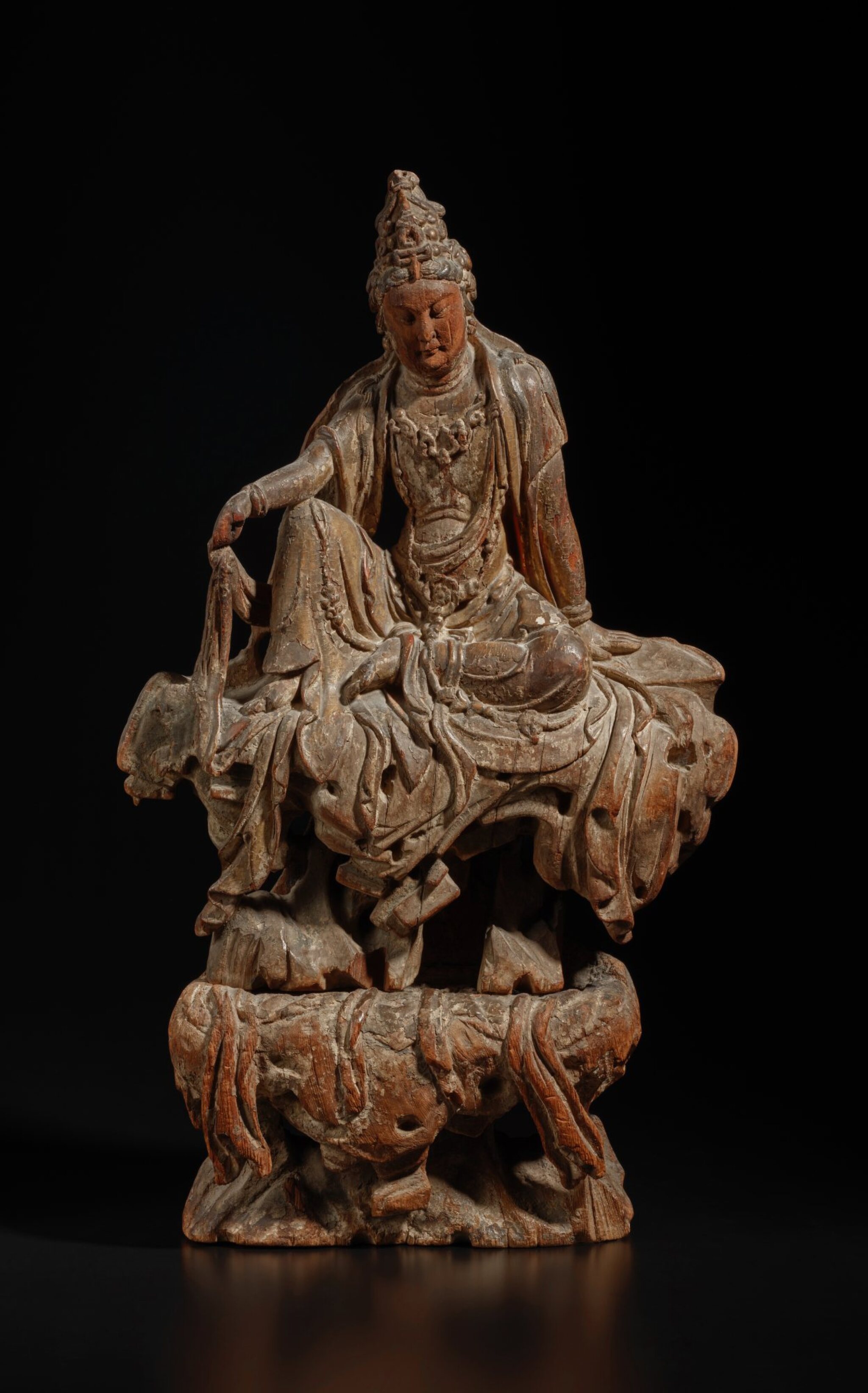
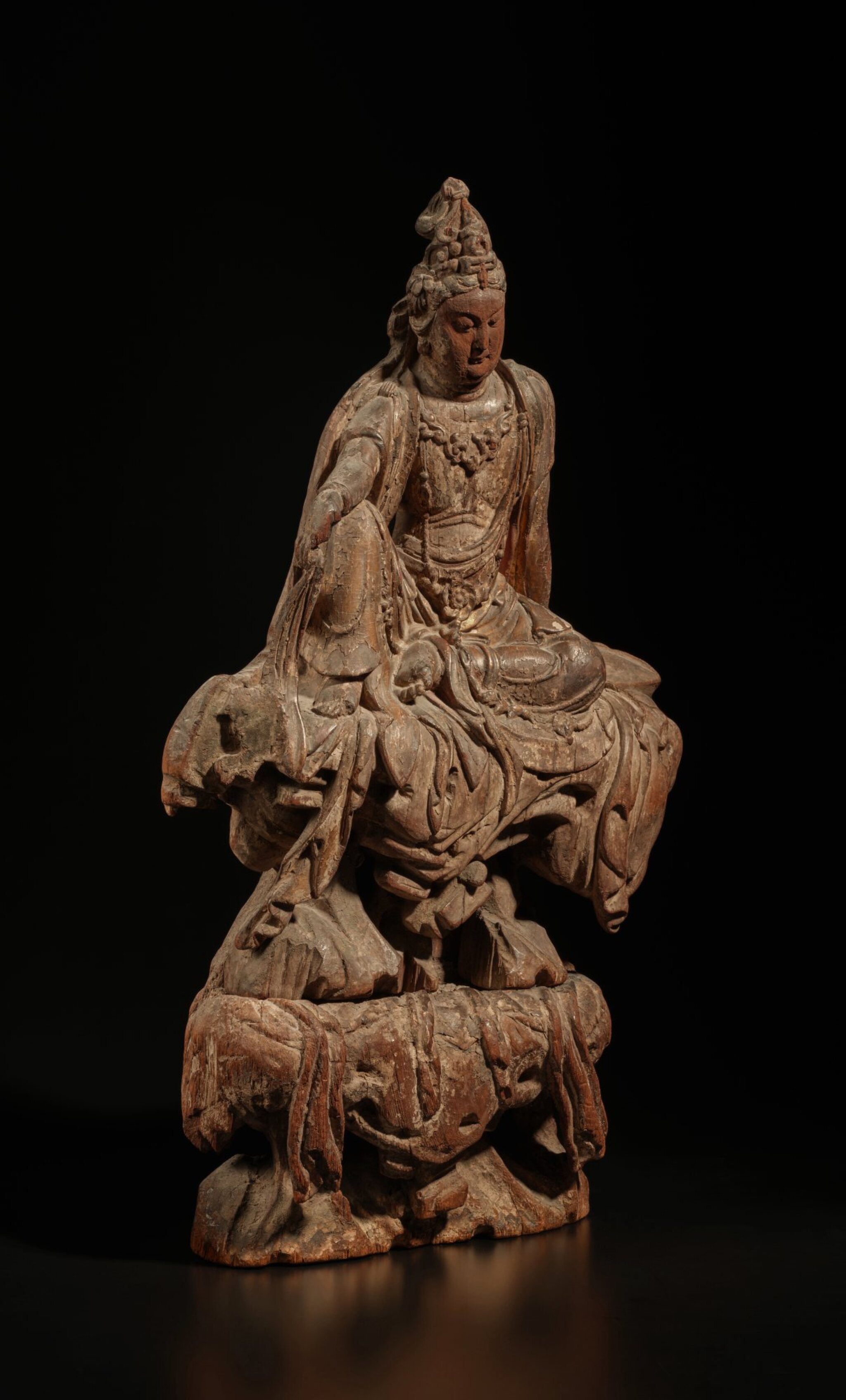
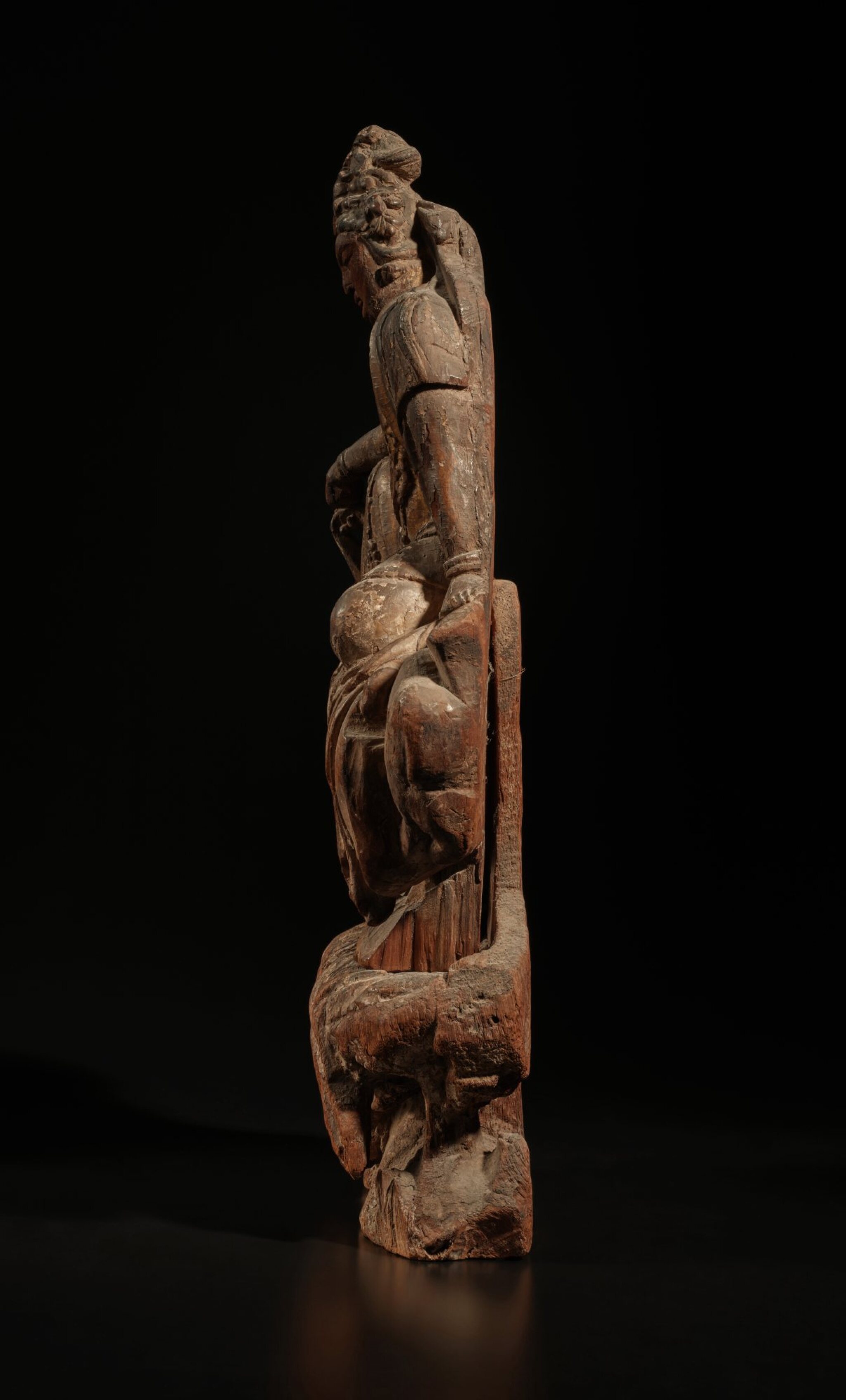
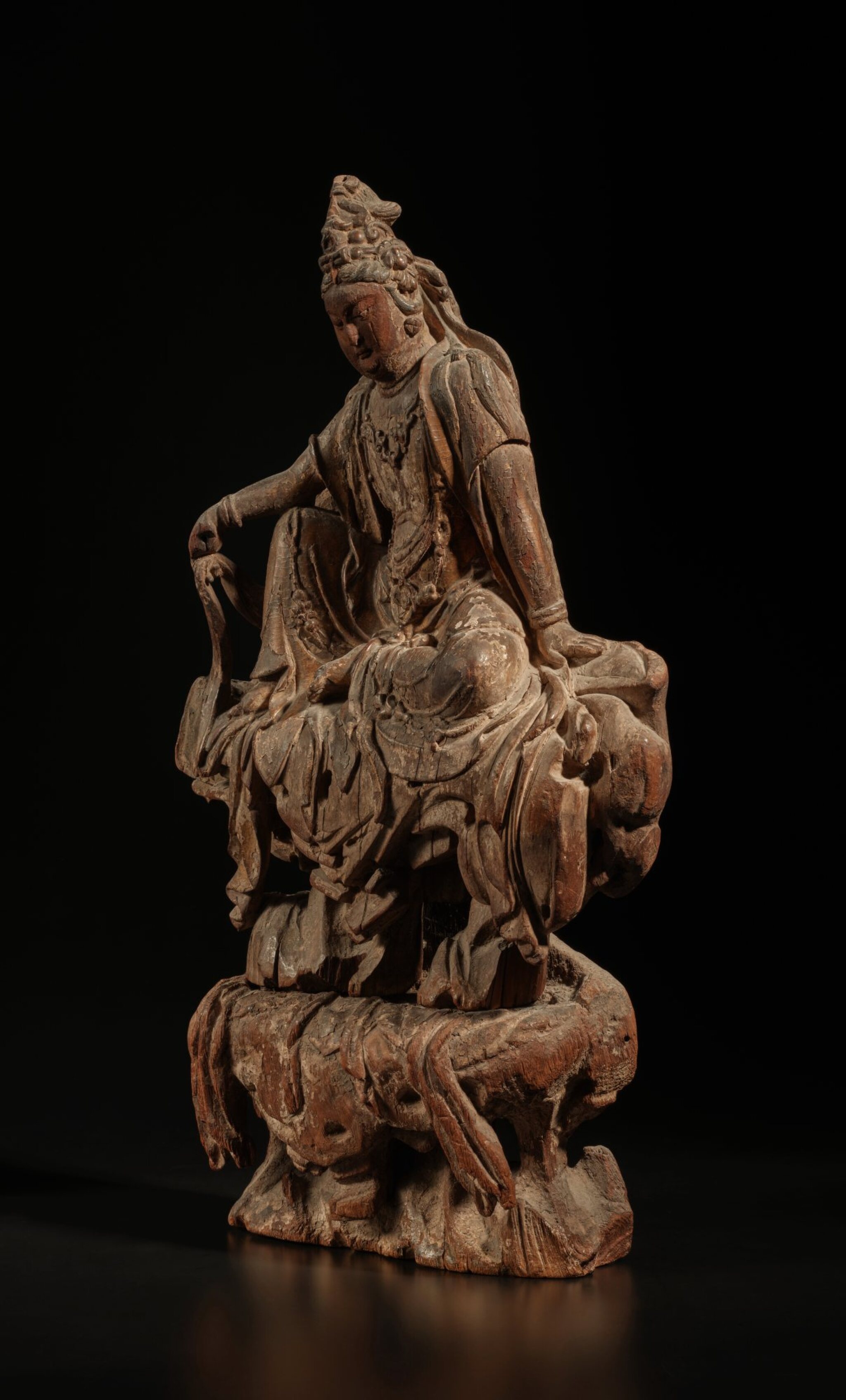
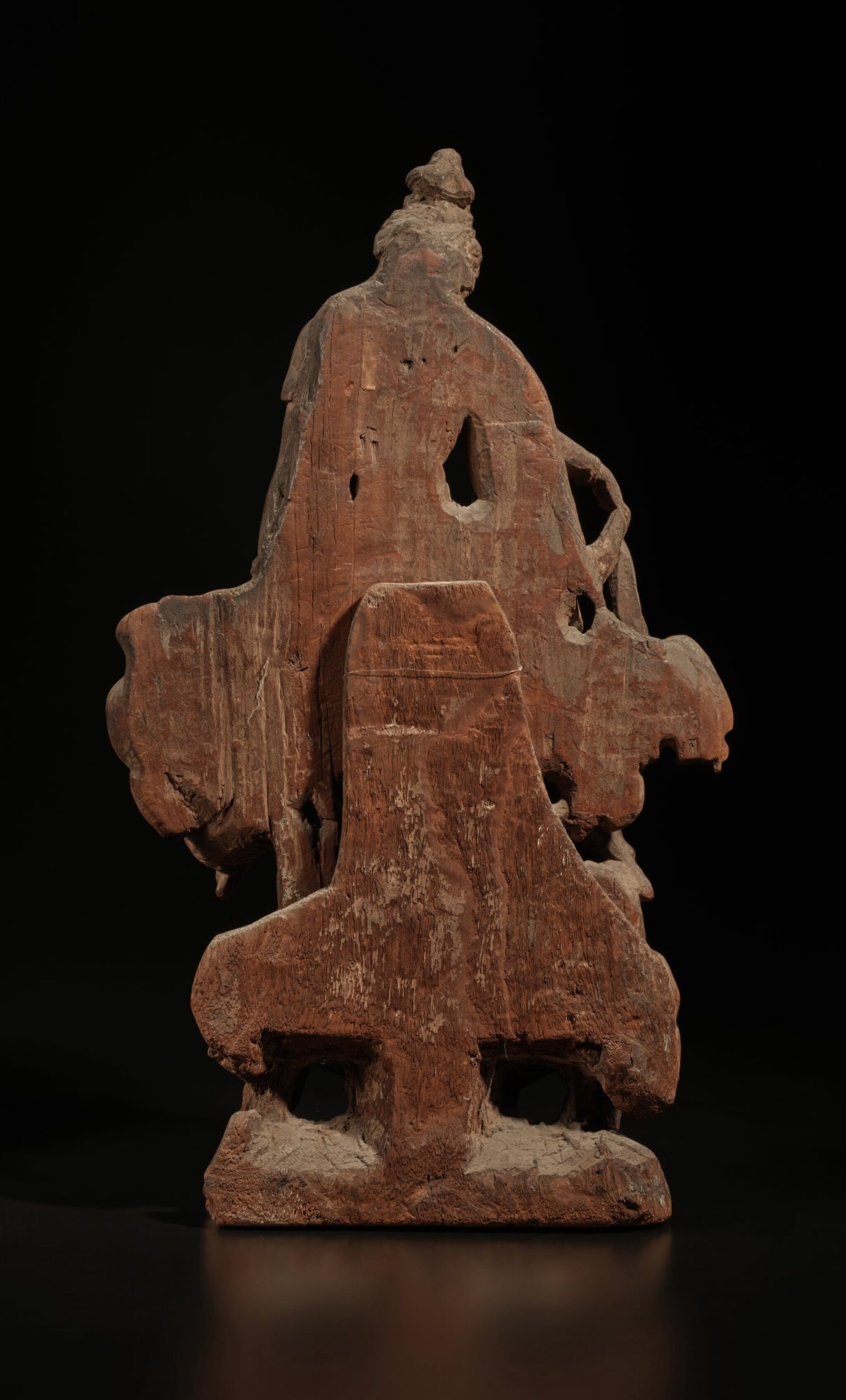
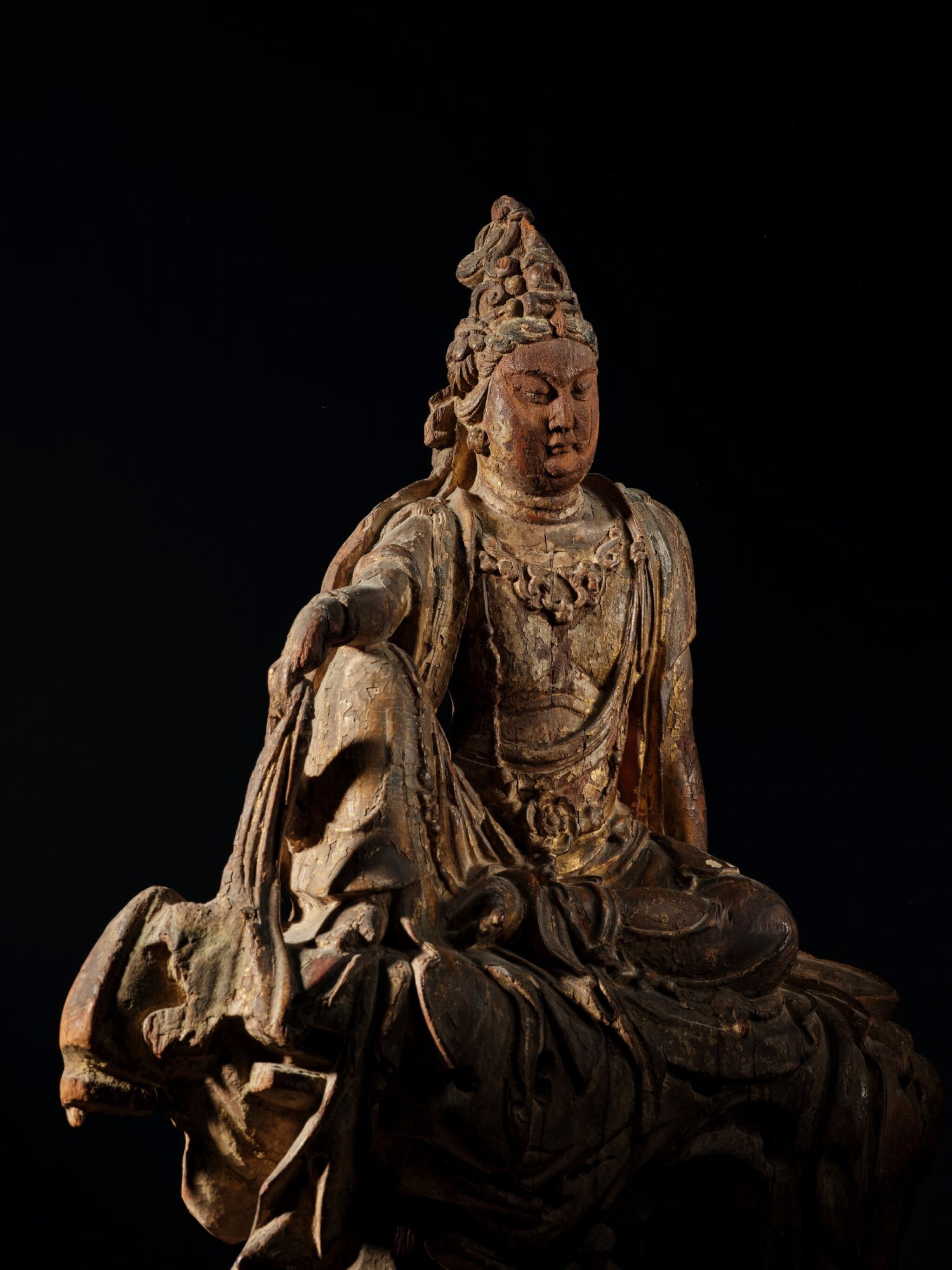
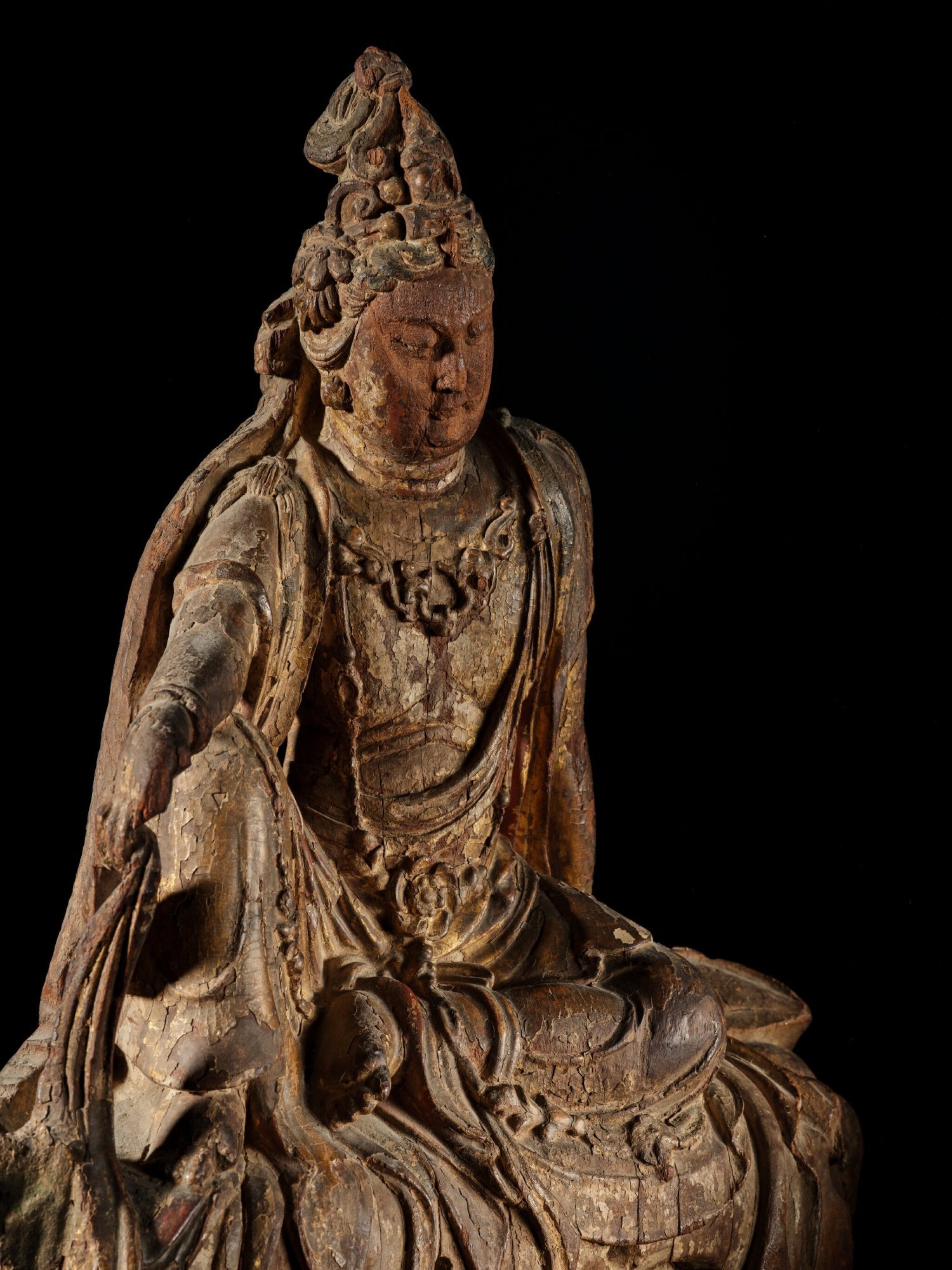
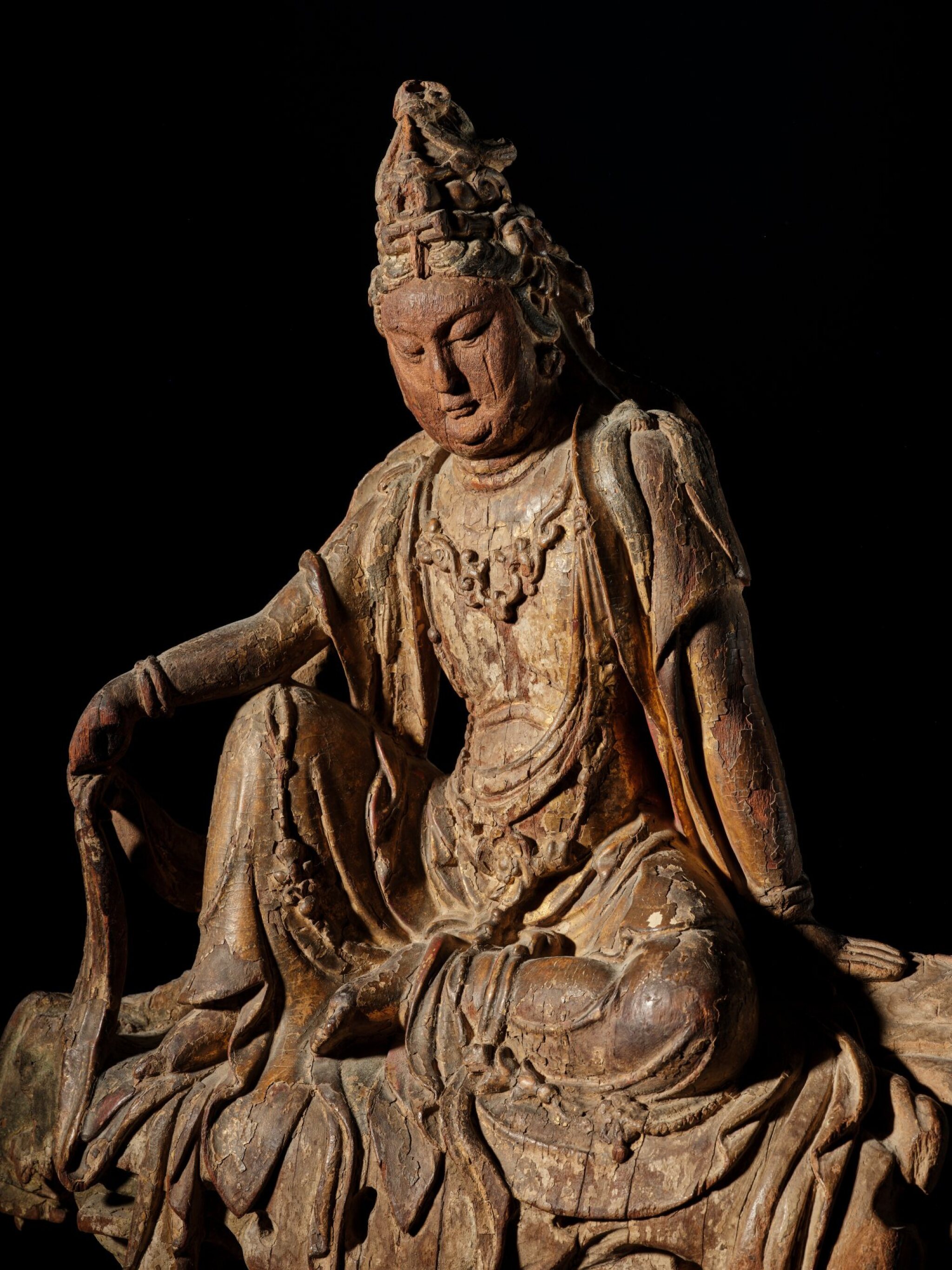 A gilt-lacquered wood figure of Guanyin
Song / Jin dynasty
宋 / 金 木漆金水月觀音坐像
来源:
J.C. Moreau-Gobard, Paris.
C.T. Loo & Cie., Paris, 26th June 1964.
Collection of J.J. Klejman (1906-1995), and thence by descent.
J.C. Moreau-Gobard,巴黎
盧芹齋,巴黎,1964年6月26日
J.J. Klejman (1906-1995) 收藏,此後家族傳承
展览:
Les Antiquaires et les Décorateurs, Paris, 1962.
《Les Antiquaires et les Décorateurs》,巴黎,1962年
This bodhisattva, depicted in the relaxed pose known as ‘royal ease’, with reclining head and slightly bent body, is also known as ‘Water Moon Guanyin’ (Shuiyue Guanyin). Rendered with a calm face with eyes half-closed, the carver of this sculpture skilfully captured the serenity and peacefulness of the deity. This manifestation of Avalokiteshvara was thought to reside on an isolated isle named Potalaka in the mythical South Sea, where the bodhisattva sat and contemplated the moon’s reflection in the water. The reflection refers to the illusory and temporal nature of all phenomena in the human world. The iconography of the bodhisattva sitting leisurely with one hand resting on one knee was popular among Chinese Buddhist statuary of the Song (960-1279), Liao (916-1125) and Jin (1115-1234) dynasties, particularly between the 11th and 13th century. The finest sculptural works of the Song dynasty were carved out of wood and covered with gesso, pigments and gold. This sculpture, still with extensive traces of pigments, is one of the well-preserved examples.
The Philadelphia Museum of Art preserves a wood sculpture of Guanyin (accession no. 1925-99-1) with a figure of similar size supported on a lower rockwork base. See also a similar-sized figure with traces of gilding and painting on the body, sitting atop a pierced rockwork base with swirling waters below, recently sold in our Hong Kong rooms, 1st April 2019, lot 3109. Both these figures, although seated in the ‘royal ease’ posture, sit more upright and straight, making their poses appear less naturalistic as compared to the present figure.
A Water Moon Guanyin in the Metropolitan Museum of Art, New York (accession no. 28.56), seated in a similar posture, but with a more voluminous body, of larger size, and lacking a base, was included in the Museum’s exhibition Arts of Ancient China, New York, 2005, and is illustrated in Hai-wai Yi-chen (xu) / Chinese Art in Overseas Collections, Buddhist Sculpture (II), Taipei, 1990, pl. 140.
这尊菩萨呈“自在坐”之姿,头微倚、身略曲,神态闲适,亦被称为“水月观音”。其面容安详,双目半阖,雕刻者巧妙地刻画出菩萨的宁静与平和。据传,观音的这一化身居于南海中名为“普陀洛迦”的孤岛之上,坐观水中月影。月影喻指人世间一切现象皆如虚幻、无常。这种一腿弯曲、一臂搭于膝上、姿态闲适的观音形象,流行于中国的宋代(960-1279年)、辽代(916-1125年)及金代(1115-1234年),尤其是11至13世纪之间。宋代最出色的雕塑作品多为木雕,表面施以石膏、颜料及金彩。本尊造像仍留有大量彩绘痕迹,是保存完好的典范之一。
费城艺术博物馆藏有一尊木雕观音坐像(馆藏编号1925-99-1),尺寸相近,下承较低之岩座。另有一尊尺寸相似、身留贴金与彩绘痕迹、坐于透雕水纹岩座之上的观音像,近期于2019年4月1日在我司香港拍卖会中售出,拍品编号3109。以上两尊造像虽亦呈自在坐姿,但相较本例,其姿态更显端直,自然生动之感稍逊。
纽约大都会艺术博物馆藏有一尊水月观音坐像(馆藏编号28.56),姿态与本例相近,然身形更为丰硕,尺寸更大,无座,曾于该馆2005年举办的“中国古代艺术”展览中展出,并收录于《海外遗珍(续)·佛教雕塑(二)》(台北,1990年,图版140)。

