
侧边栏

14世纪尼泊尔马拉早期铜鎏金莲花手观音立像(纽约佳士得)
尺寸:高50.5 cm
年代:14世纪
质地:铜鎏金
风格:尼泊尔
来源:拍卖会
成交:399,000美元(2019.03)
参阅:外部链接
鉴赏:
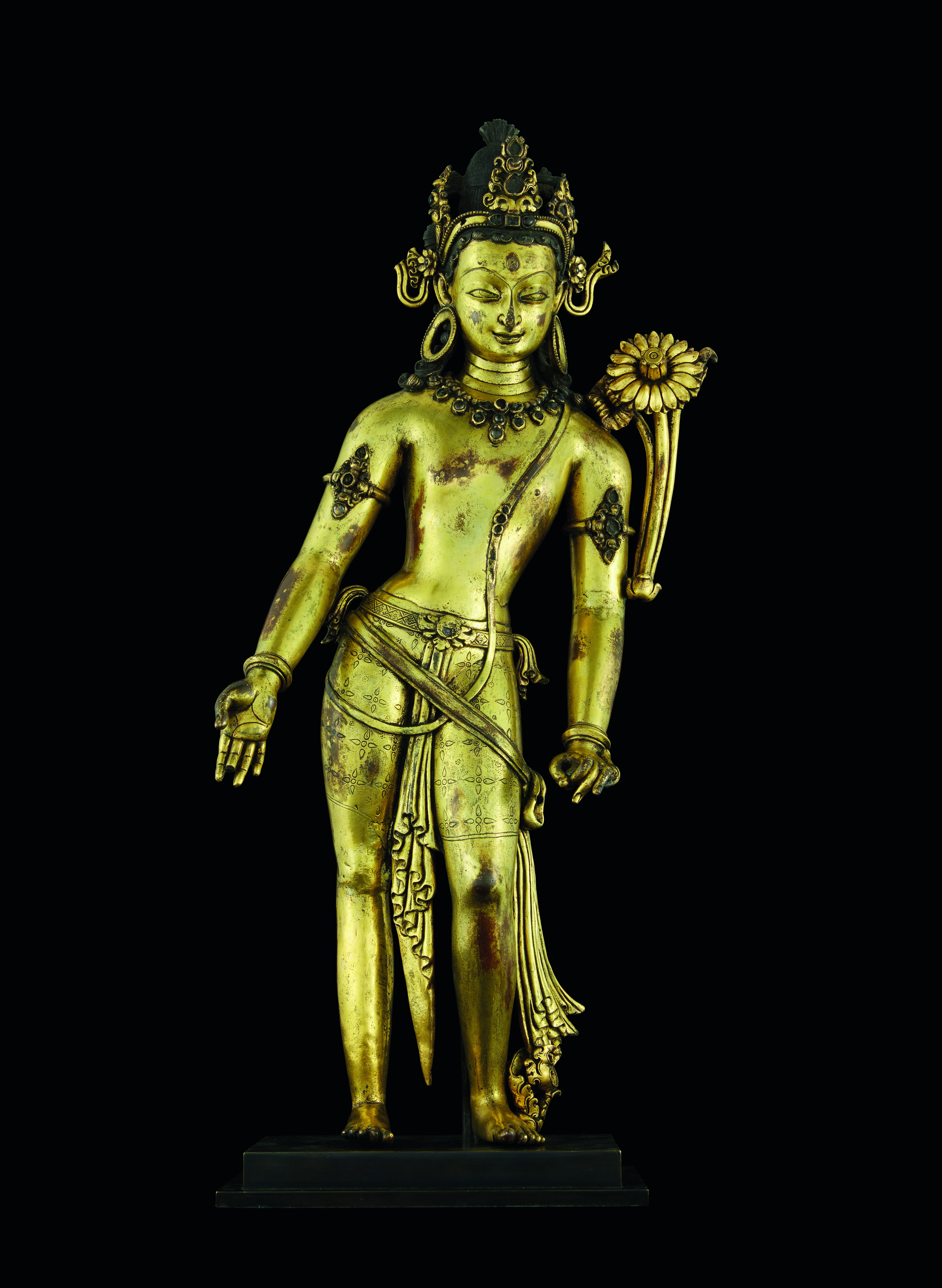
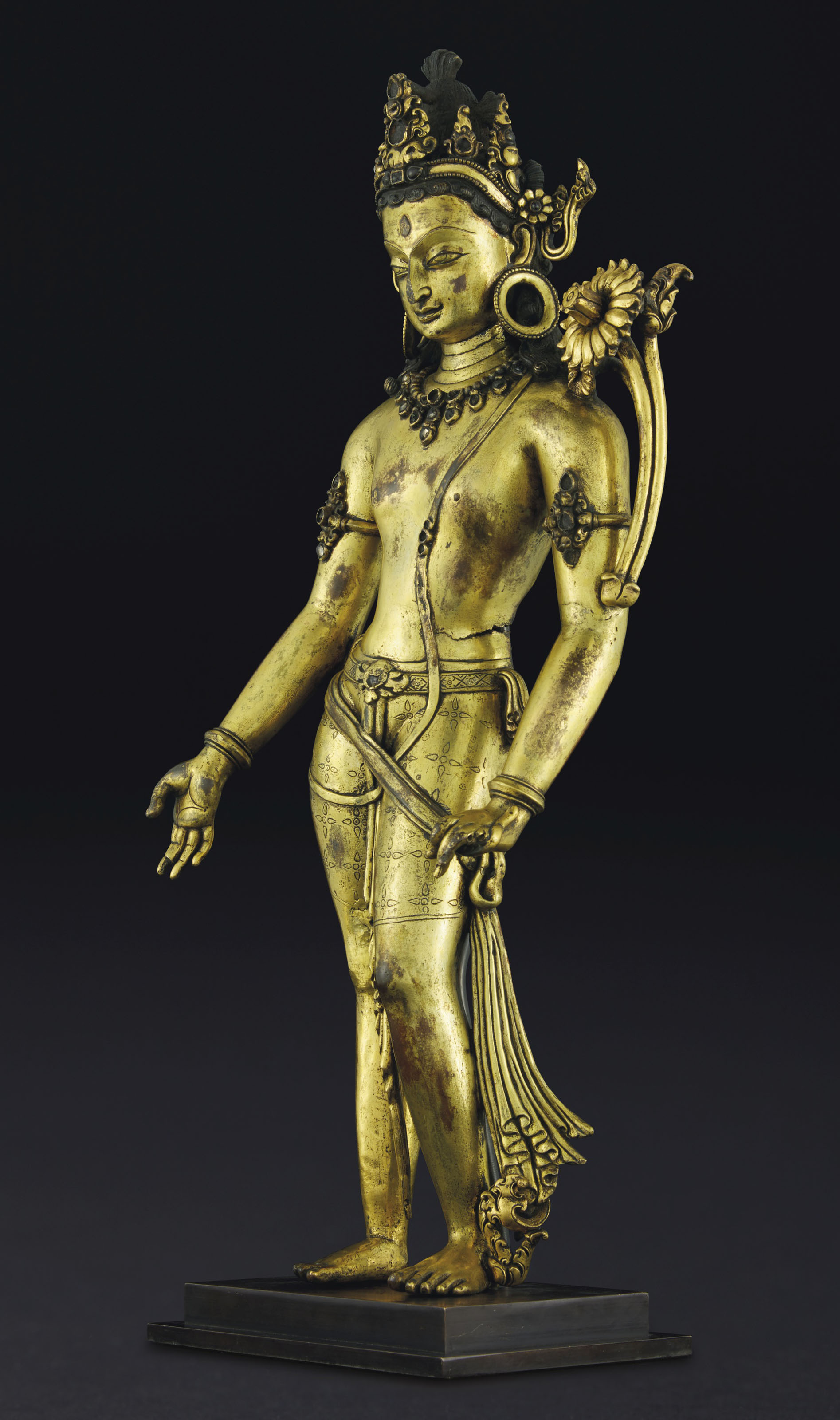
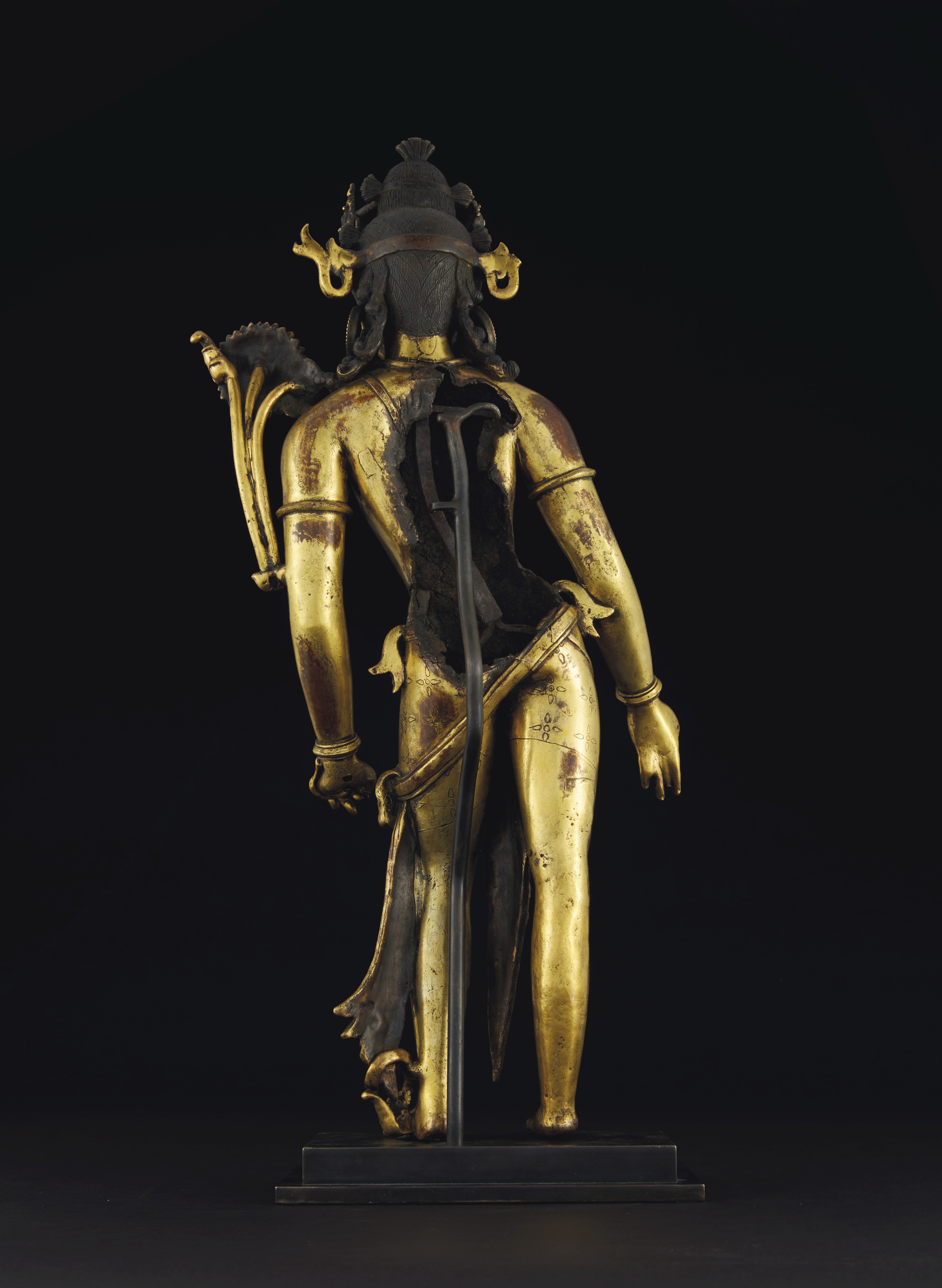 A GILT-BRONZE FIGURE OF PADMAPANI LOKESHVARA
NEPAL, EARLY MALLA PERIOD, 14TH CENTURY
来源:
Acquired in the Hong Kong art market, 1996.
Avalokiteshvara, the “Lord who looks upon the World,” is the bodhisattva of compassion, and one of the principle deities in Mahayana Buddhism. Although he has attained enlightenment like the Buddha, the bodhisattva forgoes his escape from the suffering of rebirth to act as a guide to all living beings until they themselves have achieved nirvana. Worshipped in many guises, here he is depicted as Padmapani Lokeshvara, the “lord that holds the lotus.” Like the lotus, which rises from its murky bed below the water to blossom in the pristine air, Padmapani has detached himself from the pain and impurities of the material world and is enlightened in body, speech, and mind.
Worshipped in Nepal from at least the mid-sixth century, Avalokiteshvara was one of the most popular Buddhist deities in the Kathmandu Valley. Demand for images of this auspicious bodhisattva was great and from an early period, craftsmen throughout the valley were executing works in wood, stone, paint, and bronze. The deity is nearly always depicted standing, in contrast to the Indian tradition of showing him seated. The style is further characterized by the lithe form of the body and the swaying hips, with the head tilted to the side, resulting in a graceful curvilinear form. The dhoti billows in voluminous folds between the legs and is secured across the thighs with a loosely-draped sash, while the sacred thread hangs from the shoulder across the torso and thighs.
The sculpture of the early Malla period, starting from the second half of the twelfth century through the fifteenth century, is characterized by pronounced musculature and elaborate ornamentation. Images of Padmapani Lokeshvara, in particular, have wider and more rounded thighs and broader shoulders. The face of the present example, however, is closely related to a bronze figure of Padmapani Lokeshvara at the Victoria & Albert Museum (acc. no. IM.239-1922), dated to the fourteenth century; both share large hoop earrings, pronounced arching brows, and elongated foliate diadems and chignons.
观音菩萨(Avalokiteshvara),即“观照世间之主”,是大乘佛教中的慈悲菩萨,亦是其主要尊神之一。尽管如同佛陀一般已证悟正觉,此菩萨却甘愿暂离脱离轮回之苦,而作为一切众生的向导,直至他们自身证得涅槃。观音以多种化相受世人礼拜,于此被描绘为莲花手观音(Padmapani Lokeshvara),即“持莲花之世间自在”。正如莲花自水下浊泥中升起,于清净空气中绽放,莲花手已然超脱物质世界的痛苦与染污,于身、语、意皆得觉悟。
尼泊尔对观音的崇拜至少始于公元6世纪中叶,在加德满都谷地,观音是最受欢迎的佛教神祇之一。对这尊吉祥菩萨造像的需求极为巨大,且自早期起,谷地各地的工匠便以木、石、彩绘及青铜等材质制作作品。与印度传统中呈现为坐姿不同,尼泊尔的这尊神祇几乎总被描绘为站立姿态。该风格的进一步特征在于身体的纤巧柔韧与髋部的摆姿,头部微倾,形成优美的曲线形态。裙袍(dhoti)在两腿之间呈饱满的衣褶翻卷飘扬,一条松垂的圣带(sash)横过大腿加以固定,而圣线(sacred thread)则自肩部垂落,横过躯干与大腿。
马拉早期(early Malla period)的雕塑,自12世纪下半叶至15世纪,其特点在于显著的肌肉塑造与繁复的装饰。尤其是莲花手观音像,大腿更显宽阔圆润,肩膀亦更为宽厚。然而,本件作品的面部与维多利亚与阿尔伯特博物馆(Victoria & Albert Museum,藏品编号IM.239-1922)所藏一尊14世纪的莲花手观音青铜像密切相关:两者皆具大型圆环耳珰、显著拱起的弯眉,以及细长的花叶冠冕与高髻。
Himalayan Art Resources (himalayanart.org), item no. 24503.

