
侧边栏

9世纪日本白檀木雕十一面观音菩萨立像(奈良国立博物馆)
尺寸:H. 42.8 cm
年代:8-9世纪
质地:白檀木 一木整雕
风格:日本
来源:奈良国立博物馆
参阅:外部链接
鉴赏:
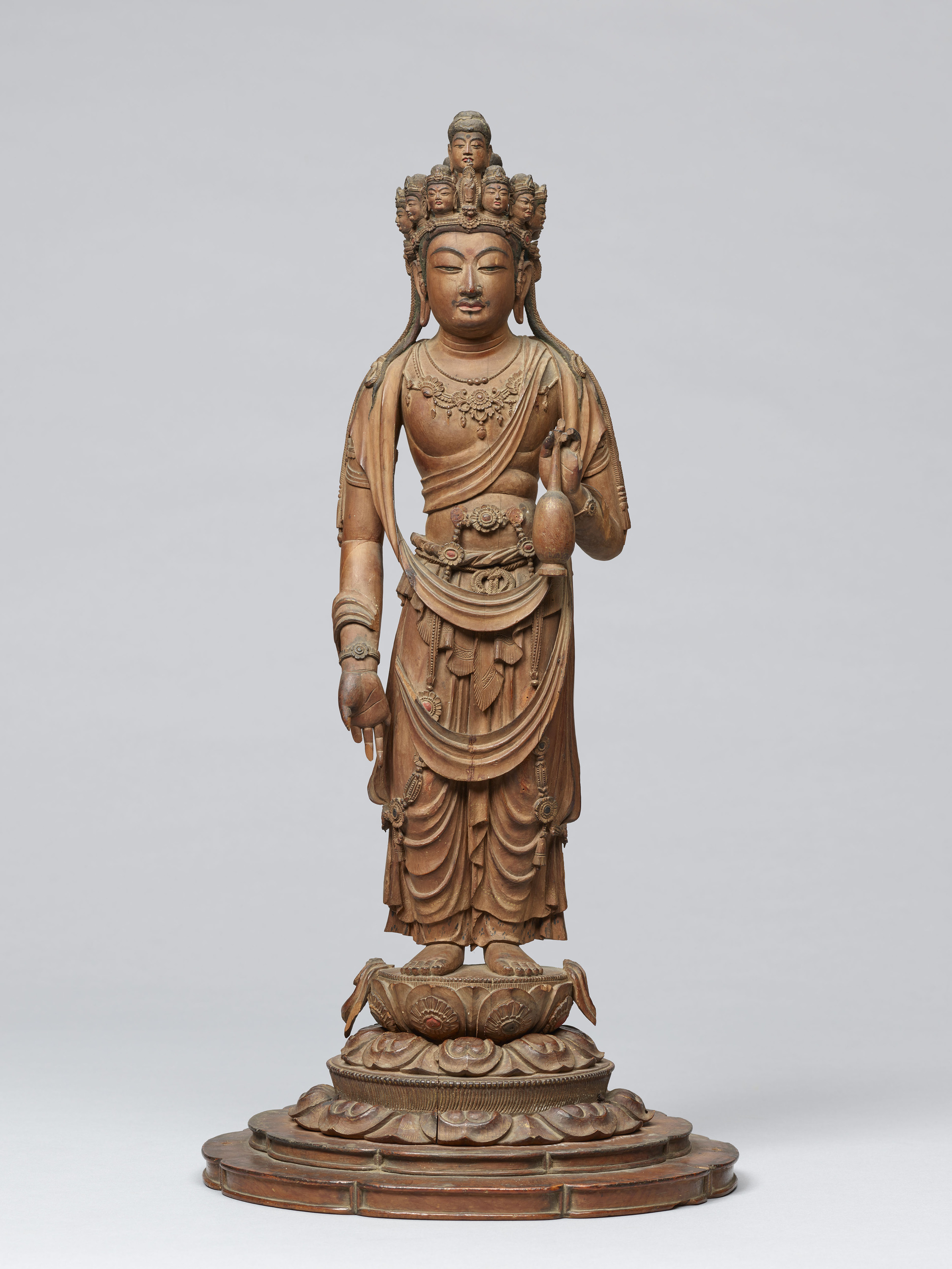 Bodhisattva Ekadaśamukha
“Sandalwood and other fragrant precious woods have been highly valued as an ideal material for making Buddhist images since ancient times. Icons made from fragrant wood are known as ”, “ , and this Eleven-Headed Kannon perfectly exemplifies images of this type in its material and minutely carved details. It is in complete accordance with scriptural instructions for producing images of this iconography, down to its height.”
Buddhist Art Paradise: Jewels of the Nara National Museum. Nara National Museum, 2021.7, p.348, no.46.
十一面观音
自古以来,栴檀等珍贵香木被视为造像之理想材料。以香木雕造之佛像称为“檀像”,本尊十一面观音无论材质抑或精细雕工,均堪称此类造像之典范。像高亦完全符合经典所载之造像仪轨。
——《佛教美术 paradise:奈良国立博物馆珍宝展》,奈良国立博物馆,2021年7月,第348页,第46号
This variety of wood sculpture, known as danzō, exploits to fullest extent the color and fragrance of the medium of sandalwood. The portions that project outward from the main body have been carved from same block of wood. Although the trunk is slight and slender, the boldly executed facial features, the prominently chiseled head, and the bent-armed pose are replete with a powerful expressiveness.
Masterworks from the Nara Buddhist Sculpture Hall at the Nara National Museum. Nara National Museum, 2010, p.141, no.130.
此种称为“檀像”的木雕,最大限度地发挥了白檀木的色泽与芳香。向外突出的部位均与主体由同一块木材雕成。像身虽纤细修长,但面容刻画大胆,头部雕凿饱满,手臂屈伸之姿态,皆充满强劲的表现力。
——《奈良国立博物馆佛教雕刻馆名品选》,奈良国立博物馆,2010年,第141页,第130号
Almost the whole body of this statue, including the ten heads and the image of kebutsu on the main head, the vase in its left hand, and other details were carved from a single piece of sandalwood. Added parts are the topknot on the head, the part of the rosary which is not touching the body (missing), and flower-shaped ornaments on the lotus petals of seat. The platform is also made from a different piece of sandalwood, and a firm column which was carved out from the bottom of the lotus seat is inserted into the platform. The fragrance of sandalwood still surrounds this column. The beautiful surface of the sandalwood is effectively used without coloring, except for the hair, which is painted in navy blue, the rosary which is painted in red and blue, and the vase and costume, which are decorated with designs in gold pigment. The narrow eyes suit the gallant look of the young man, and its standing posture with its waist slightly twisted represents youthful ingenuousness. This is one of the representative examples of sandalwood sculptures made during the early 9th century in the early Heian period.
Masterpieces of Nara National Museum. Nara National Museum, 1993, pp.14-15, no.5.
此像几乎全身——包括十面、主尊头顶化佛、左手持瓶及其他细部——均由单块白檀木雕成。附加部件为头顶发髻、未与躯体相连的数珠部分(已佚)以及莲座花瓣上的花形装饰。台座亦由另一块白檀木制成,莲座底部雕出的坚柱插入台座之中,柱身至今仍散发着白檀香气。
白檀木之优美质感得以充分利用,除头发施绀青、数珠施朱红与青色、持瓶及衣饰以金泥描绘纹样外,其余均未施彩。双目细长,契合青年俊朗之貌;腰肢微扭之立姿,洋溢年少清纯之气。此像为平安时代前期(9世纪初)檀像代表作之一。
——《奈良国立博物馆名品选》,奈良国立博物馆,1993年,第14-15页,第5号
具有坚好无隙白檀木纹理原色和芳香的檀像雕刻精品,大头部和短膝下姿态体现了小像特有表现手法。体形纤细,双臂外张、前臂下垂的动作令人感受到强烈的平安(794-1185)初期风格。虽然是小像,但大五官、深邃脸型的造型情感与同时代新药师寺药师如来像的威容可以说是异曲同工。饰物、持物、天衣等游离身体的部分也与本体雕在一起,镂刻精致。只有大部分的发髻(后方)、右前臂前端以及部分的璎珞等采用其他材质拼接。头发(群青)、唇(朱)、眉目(墨)、璎珞(朱和青)施有色彩,衣服边缘与净瓶绘有金泥花纹,此外雕刻的木纹理均保持原色。台座反花及框的用材与本体不同,莲瓣表面的花饰也使用小材。十一面观音像的头上面(观音佛面上方的面孔)除左面之外,均表情慈祥,右三面露下齿,可知造型标准依据十一面观音经之中北周的耶舍崛多第一译和唐代阿地瞿多的第二译中记录的“似菩萨面,犬牙上突”的规定。而左侧的头上面是与天王脸相似的怒容,一般认为与唐玄奘所译(第三译)“嗔怒面”相对应。本像的头上面基本依照旧译本,但部分采用新译本,这一点值得留意。檀香木自古以来作为雕刻佛像的木材,尤为珍贵。该造像就是所谓的檀木像,其特点在于对佛像细部上的细致雕刻。本品是根据佛经上所说的十一面观音的造像方法进行制作的,包括像体大小等数据。

