
侧边栏

14世纪尼泊尔铜鎏金莲花手观音菩萨立像(伦敦V&A博物馆)
尺寸:高: 93cm 重: 150kg (approx.)
年代:14世纪
质地:铜鎏金
风格:尼泊尔
来源:伦敦V&A博物馆
参阅:外部链接
鉴赏:
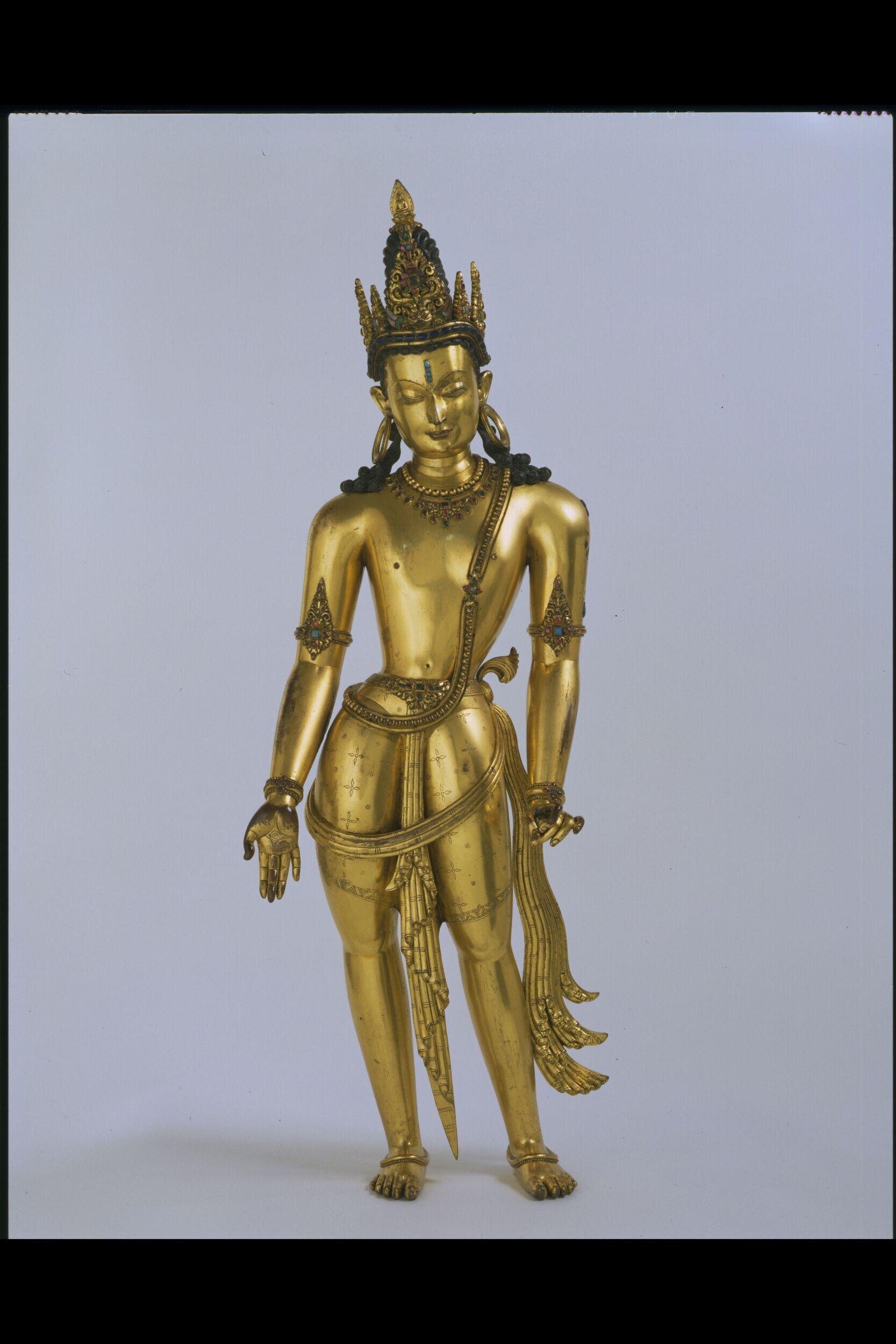
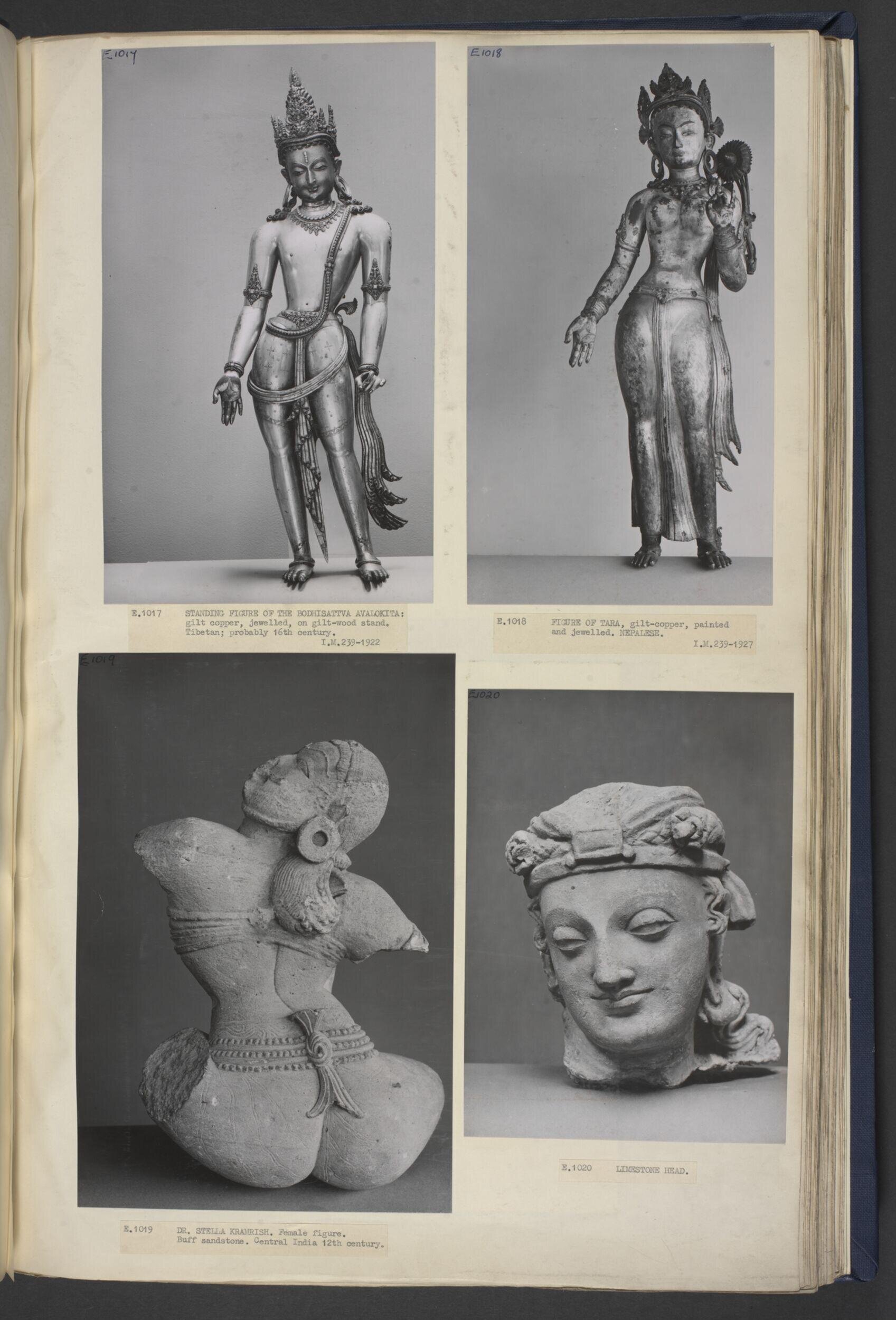
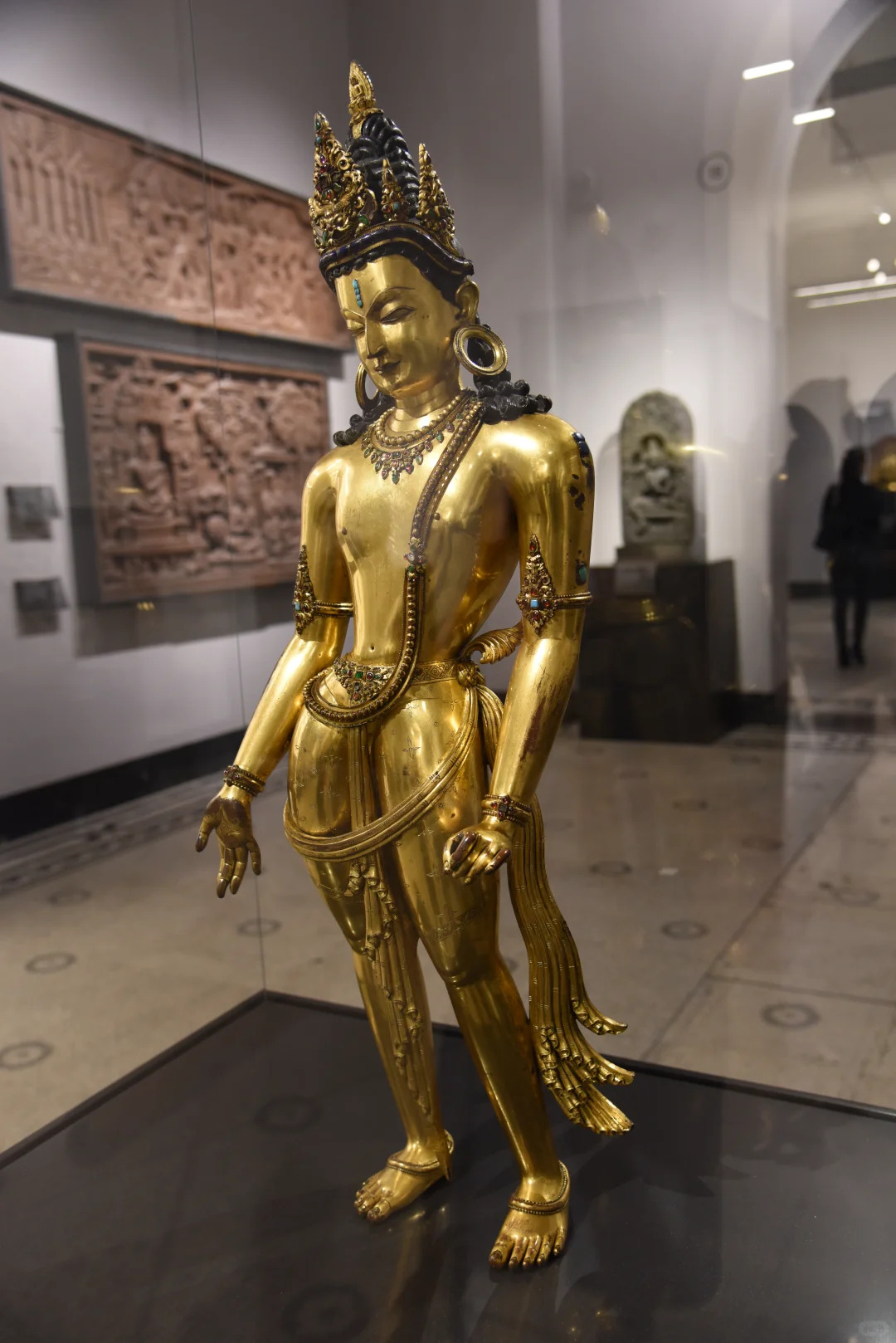
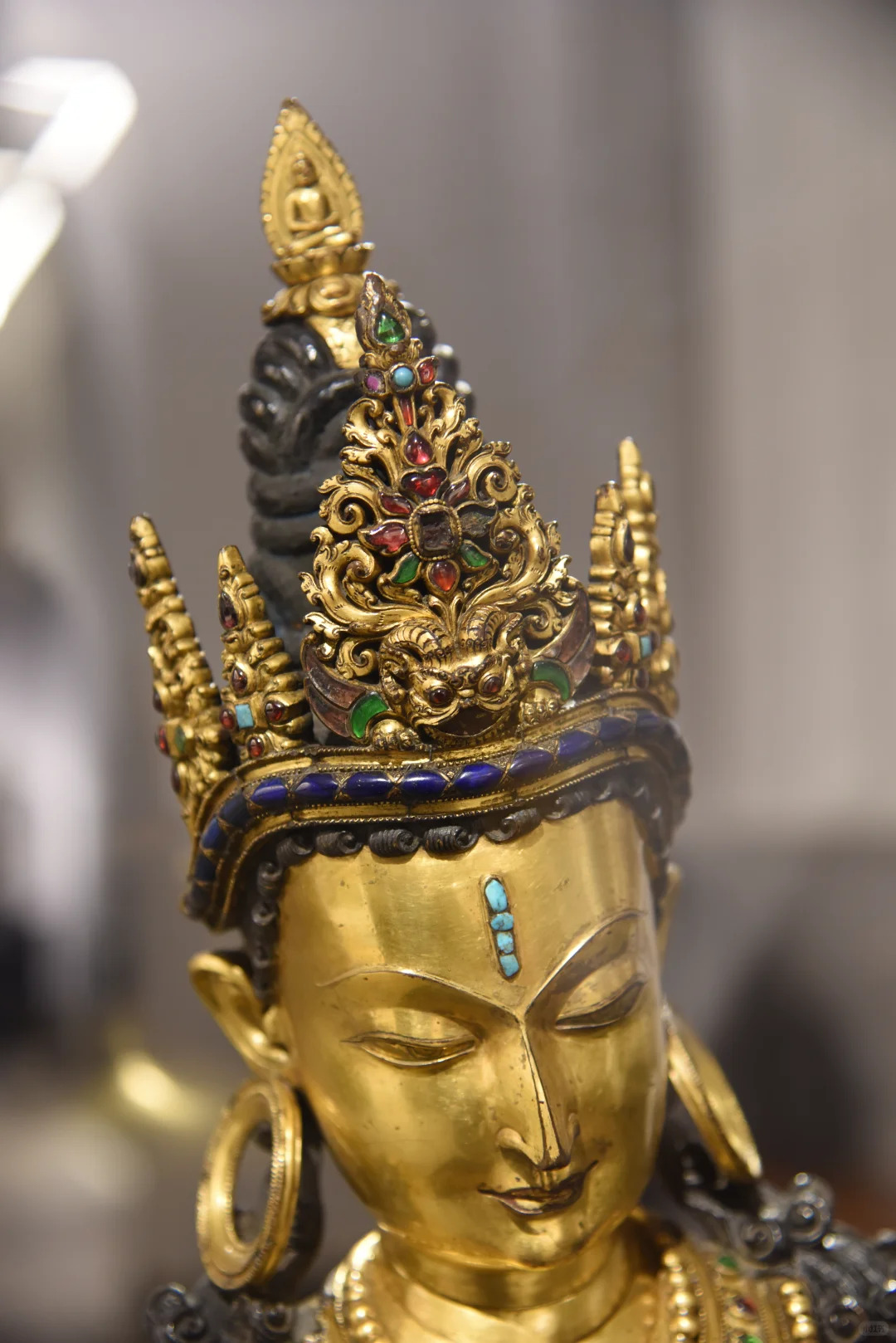
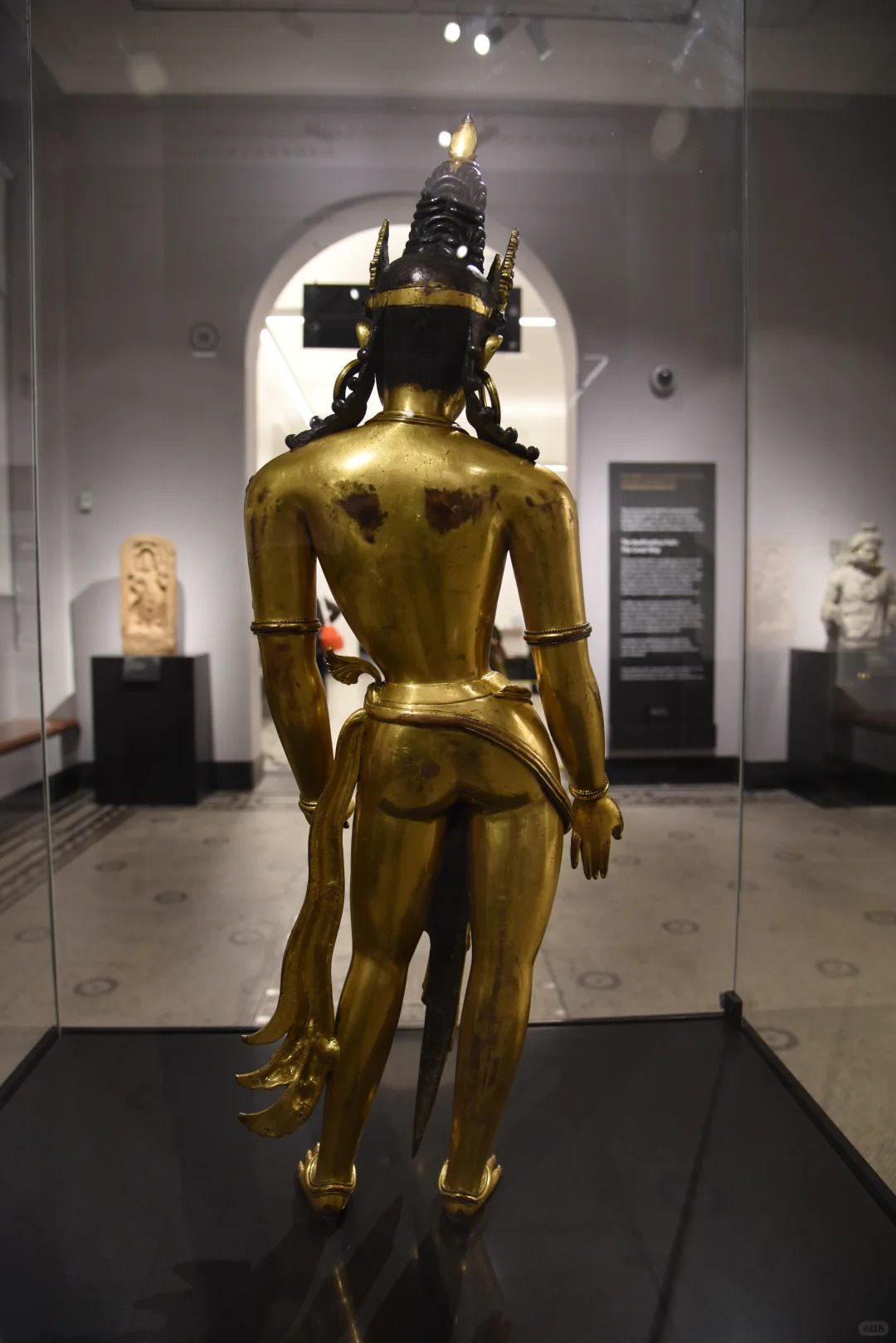
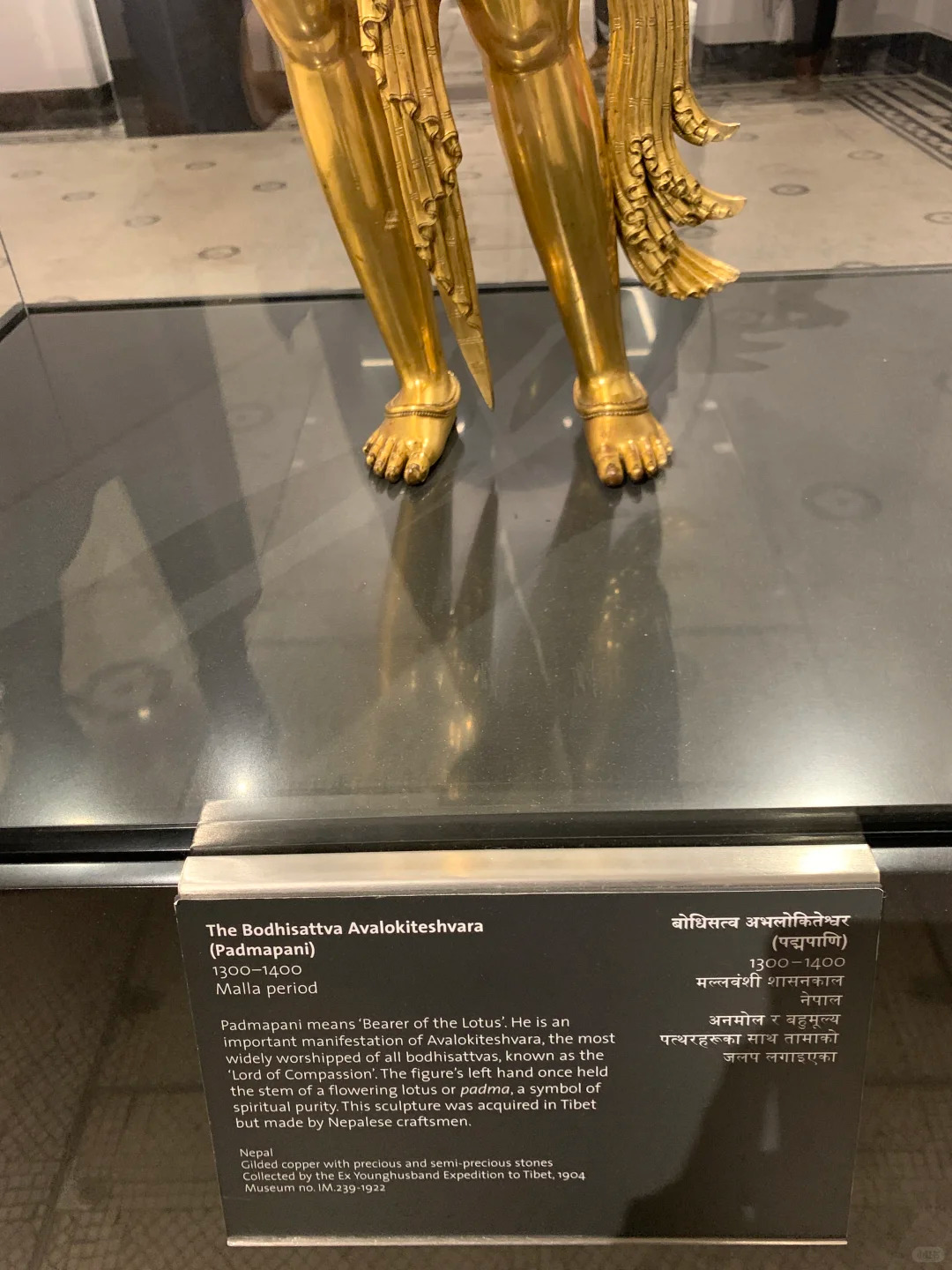 我在小红书上发过这尊造像的图片:外部链接
莲花手观音菩萨像(Padmapani),即“持莲花者”
镀金铜嵌天然绿松石(及仿制玻璃)、石榴石、绿色和无色玻璃
14世纪,尼泊尔或西藏制作
这尊华美的菩萨像由加德满都谷地的纽瓦尔工匠为西藏施主制作。造像以镀金铜为胎,镶嵌天然绿松石(及仿制玻璃)、石榴石、绿色透明玻璃(衬箔染色)、无色透明玻璃(衬箔染红)。
此像表现的是大慈大悲观世音菩萨,即佛教的慈悲之主。这里呈现的是他广为人知的化身——持莲花者(Padmapani)。
莲花手(Padmapani)是一位菩萨,即觉者( enlightened being),他自愿推迟进入涅槃,以便能帮助他人获得解脱。菩萨的概念在大乘佛教思想中发展形成,在喜马拉雅地区及广大亚洲世界深入人心。此像的静谧与安详诉说着菩萨所追求的和合之境,而微曲而富有韵致的立姿又将他与凡俗世界相连。菩萨右手垂下作满愿印(varadamudra),左手原应托举莲茎(莲花为其标识,但现已缺失)。造像周身佩饰繁丽,嵌满宝石。头戴五叶冠,冠下是高耸的髻发(jatamukuta),冠上顶一小化佛——阿弥陀佛,观世音(莲花手)被视为其化身。
尼泊尔纽瓦尔工匠为西藏施主制作了这尊华美的佛像。加德满都河谷纽瓦尔工匠为西藏施主服务的悠久传统可追溯至公元7世纪。
1922年,维多利亚与阿尔伯特博物馆从路易斯·贝斯·罗林中校(Lewis Bathe Rawling, 1871-1940)处购得此像。其兄是塞西尔·戈弗雷·罗林准将(Cecil Godfrey Rawling, 1870-1917),后者曾参与1904年由荣赫鹏少校(Francis Younghusband, 1863-1942)率领的英军远征,该部队从印度一路攻入西藏首府拉萨。这次军事进攻旨在迫使西藏与英属印度通商,并遏制俄国在该地区的影响力。藏军不敌英军,数千人丧生。此次入侵之后,大量物品被带回英国,其中一些为购买所得,但许多是从西藏的寺院、庙宇和民宅中劫掠而来。
V&A博物馆1922年的档案记录称,此像由“已故准将罗林于1904年在西藏日喀则地区获得”。人们常推测罗林是在著名的荣赫鹏远征期间得到此像,但远征军并未到达日喀则。不过,罗林是随后于1904年9月途经日喀则的四名军官之一,此行是为勘定西藏西部噶大克(Gartok)新设英国商務代表处(British trade agency)的选址。此像或许是当时售予或赠予罗林的,甚至可能属于外交礼物交换的一部分。罗林的一位同伴威廉·弗雷德里克·奥康纳(William Frederick O'Connor, 1870-1943)当时正执行一项秘密任务,试图与日喀则扎什伦布寺的住持班禅喇嘛(Thubten Choekyi Nyima, 1883-1937)结盟,以消解达赖喇嘛(Ngawang Lobsang Thubten Gyatso, 1876-1933)的影响力。
Figure of the Bodhisattva Avalokitesvara (Padmapani), the 'Lotus-holder', gilt-copper set with natural turquoise (as well as glass simulants), garnets, green and colourless glass. Produced in Nepal, or possibly Tibet, during the 14th century. This finely jewelled image was made by Newar craftsmen from the Kathmandu Valley for Tibetan patrons.
Gilt copper set with natural turquoise (as well as glass simulants), garnets, green transparent glass (foiled and tinted green), and colourless transparent glass (foiled and tinted red).
This figure represents the Bodhisattva Avalokitesvara, the Buddhist Lord of Compassion. He is seen here in his popular manifestation as Padmapani, the Lotus-holder.
Padmapani is a Bodhisattva, an enlightened being who voluntarily postponed passing into nirvana so that he could help others to gain salvation. The concept of the Bodhisattva was developed in the Mahayanist school of Buddhist thought, and gained enormous popularity in the Himalayas and the greater Asian world. The stillness and serenity of this figure speaks of the state of harmony to which the Bodhisattva aspires, whilst the flexed and sensuous pose in which he stands links him to the human world. The Bodhisattva's right hand is lowered in the gesture of granting wishes (varadamudra), and his left hand is poised to support the stem of a lotus (padma), but this is now missing. The figure is richly adorned with jewellery that is inset with precious and semi-precious stones. A five-pointed diadem surrounds his elaborately dressed and raised hair (jatamukuta), which is surmounted by a small image of the Buddha Amitabha of whom Avalokitesvara Padmapani is seen as an emanation.
Nepalese Newar craftsmen made this finely jewelled image for Tibetan patrons. The long tradition of Newar craftsmen from the Kathmandu Valley working for Tibetan patrons can be dated back to the 7th century A.D.
In 1922 the Victoria and Albert Museum purchased this sculpture from Major Lewis Bathe Rawling (1871-1940). He was the brother of Brigadier-General Cecil Godfrey Rawling (1870 - 1917) who had been a member of the British campaign led by Major Francis Younghusband (1863-1942) which fought its way from India to Lhasa, the capital of Tibet, in 1904. The aim of this military assault was to force Tibet to engage in trade with British India and to counter perceived Russian influence in the region. The Tibetan army proved no match for the British-led forces and thousands were killed. Many objects were brought back to Britain in consequence of the invasion. Some had been purchased, but many had been looted from Tibetan monasteries, temples, and homes.
The V&A's archive file of 1922 states that the sculpture was 'Acquired in the Shigatse district, Tibet, in 1904, by the late Brig.-General Rawling'. It has often been assumed that Rawling got the figure during the Younghusband Mission, as it was known, but the invading force did not go to Shigatse. Rawling was, however, one of four officers who made a subsequent journey through Shigatse in September 1904 to survey the site of a new British trade agency at Gartok in western Tibet. The sculpture was either sold or given to Rawling at this time or may even have been part of a diplomatic exchange. One of Rawling’s companions, William Frederick O’Connor (1870-1943), was conducting a covert assignment to form an alliance with the Panchen Lama, Thubten Choekyi Nyima (1883-1937), head of the Tashi Lhunpo monastery in Shigatse, to thwart the influence of the Dalai Lama, Ngawang Lobsang Thubten Gyatso (1876-1933).

