
侧边栏

16世纪西藏合金铜弥勒菩萨说法坐像(美国Walters艺术博物馆)
尺寸:19.4 x 11.4 x 8.9 cm
年代:16世纪
质地:黄铜嵌银嵌红铜
风格:西藏帕拉
来源:美国Walters艺术博物馆
参阅:外部链接
鉴赏:
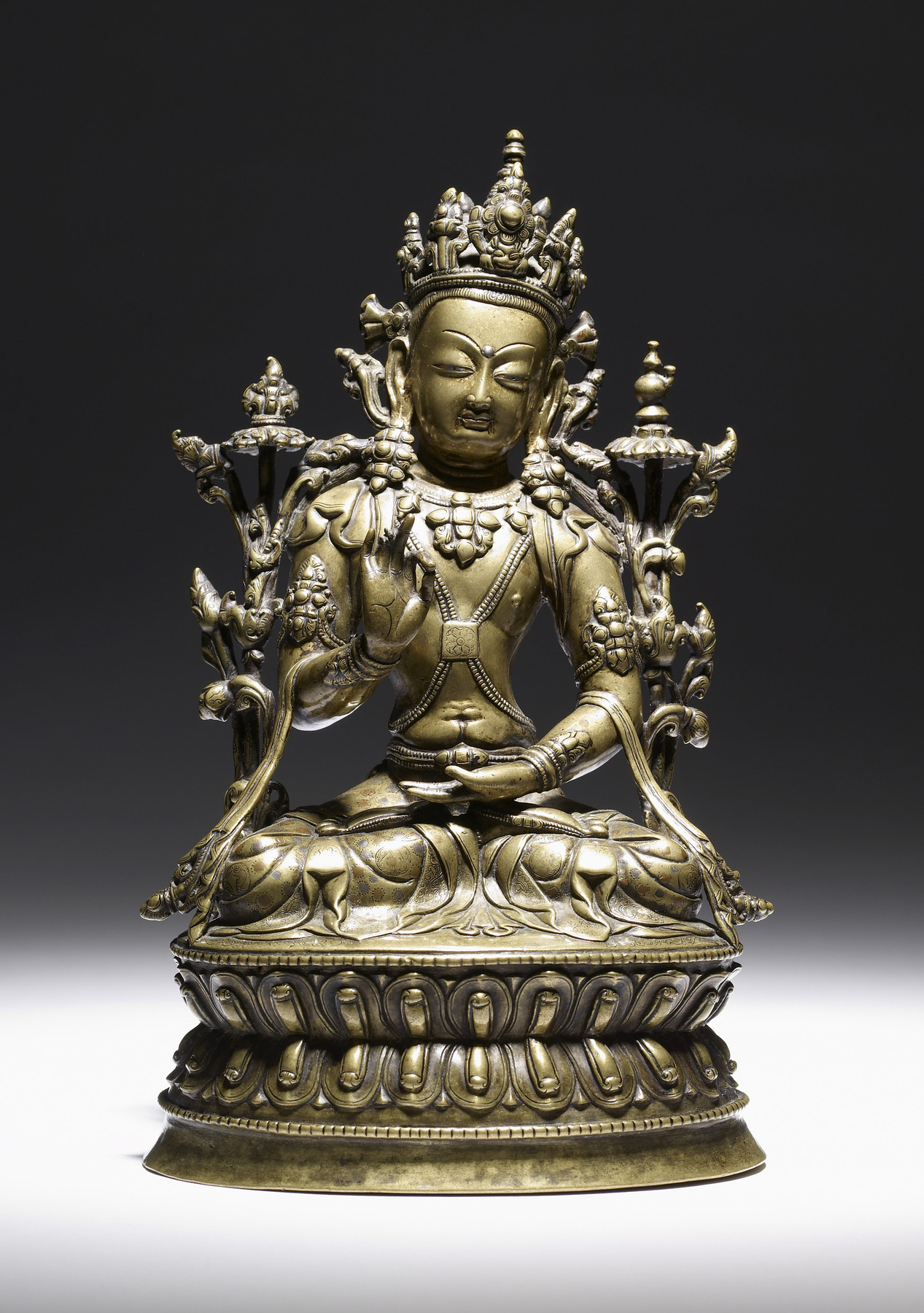
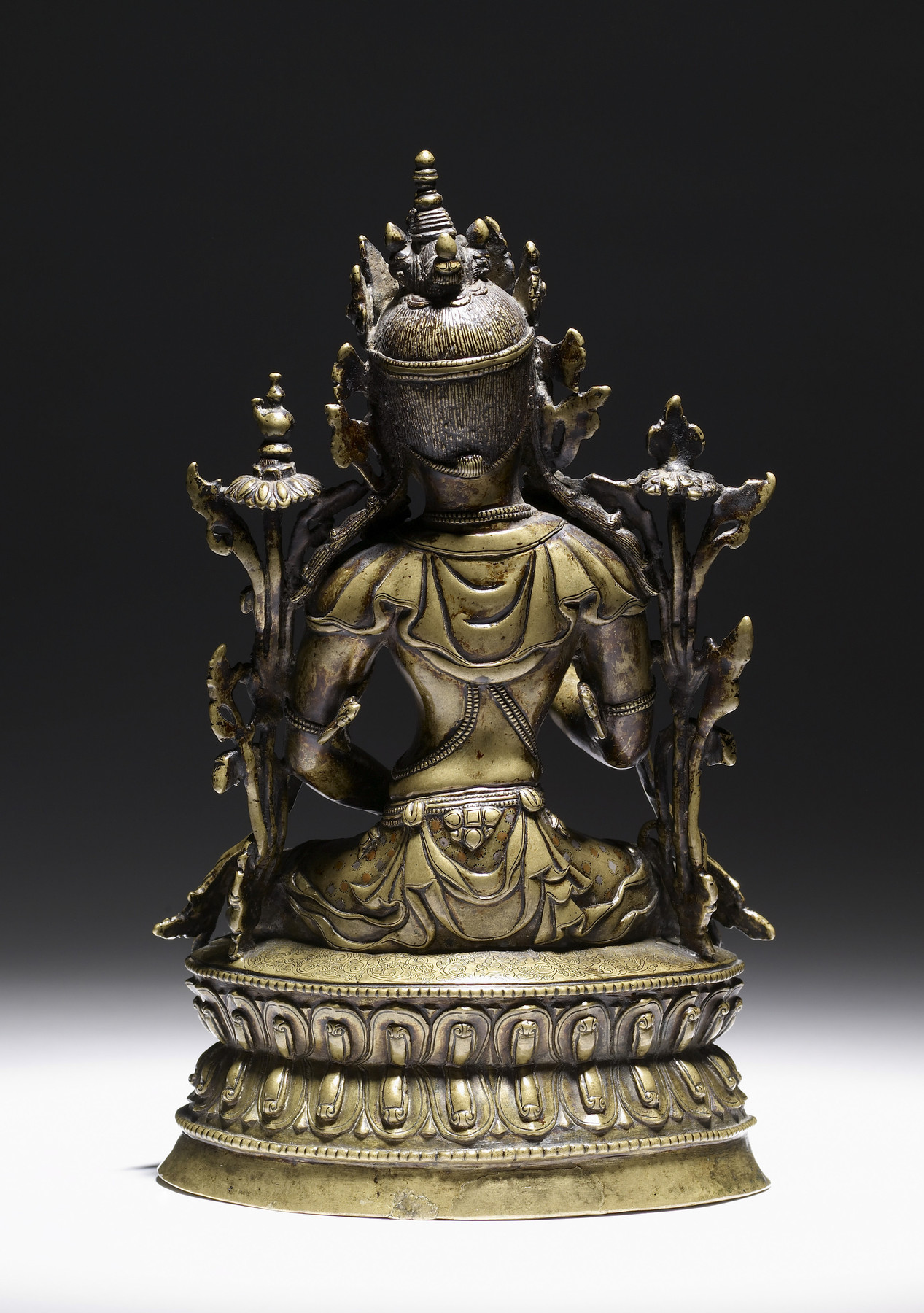
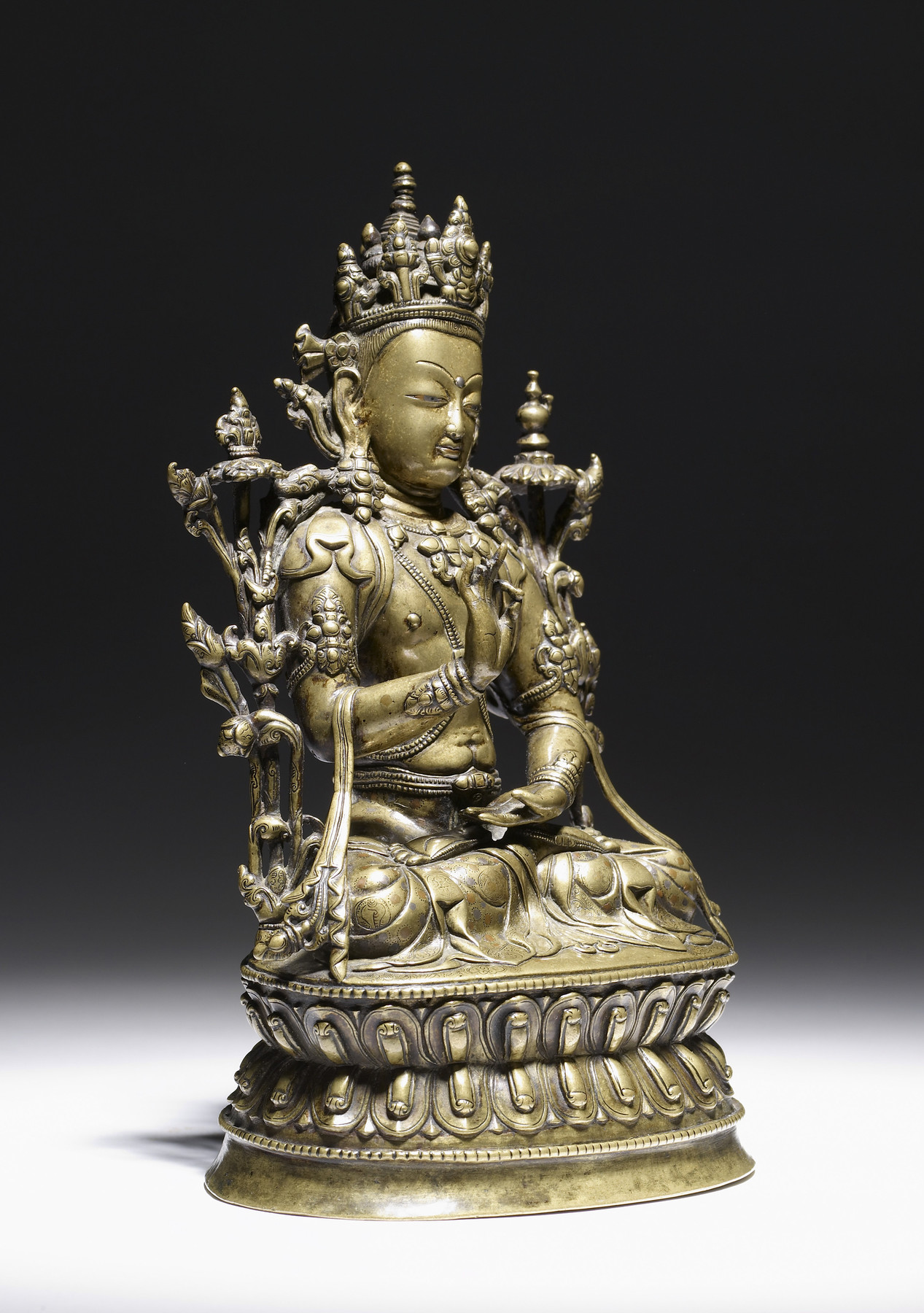
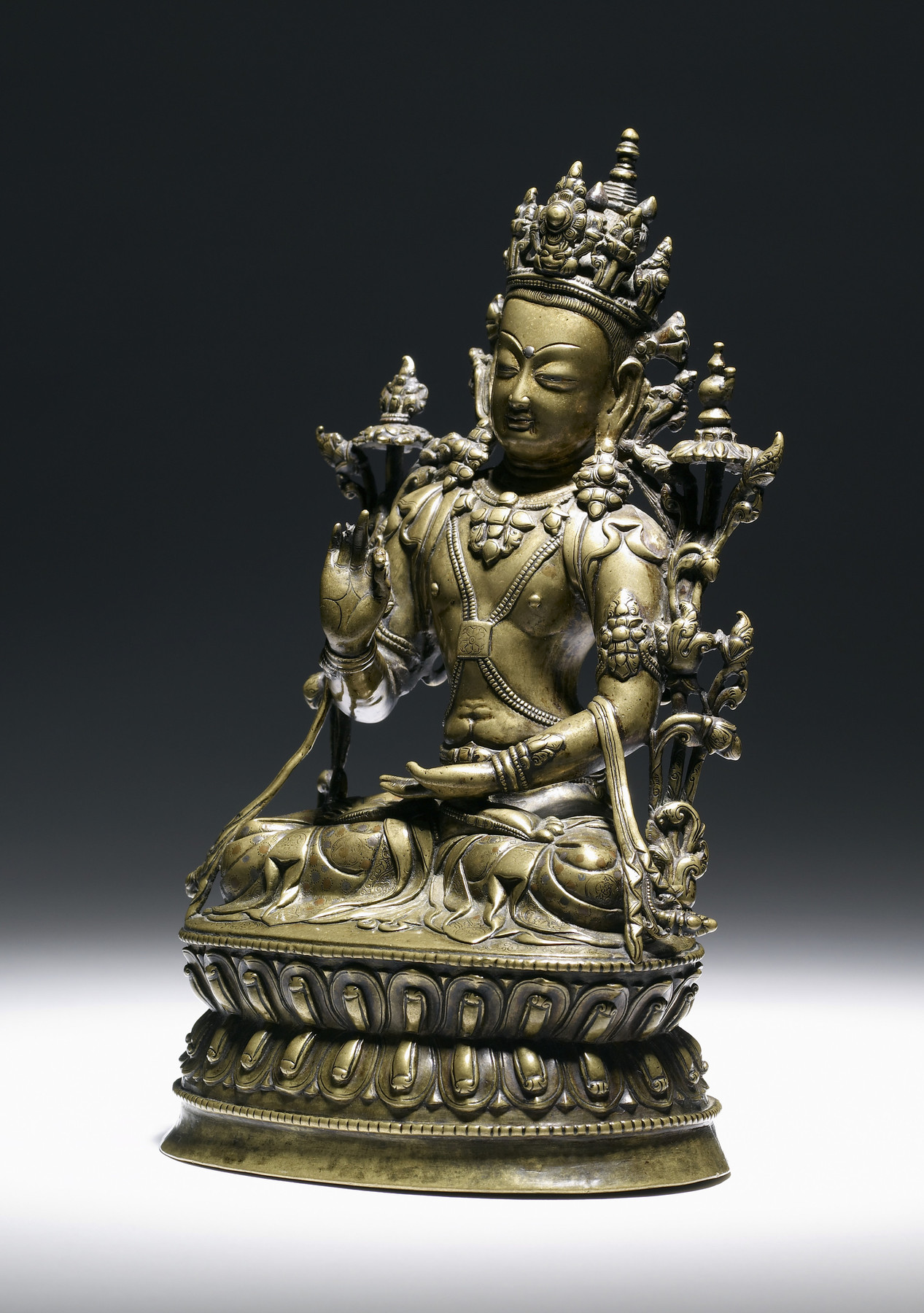
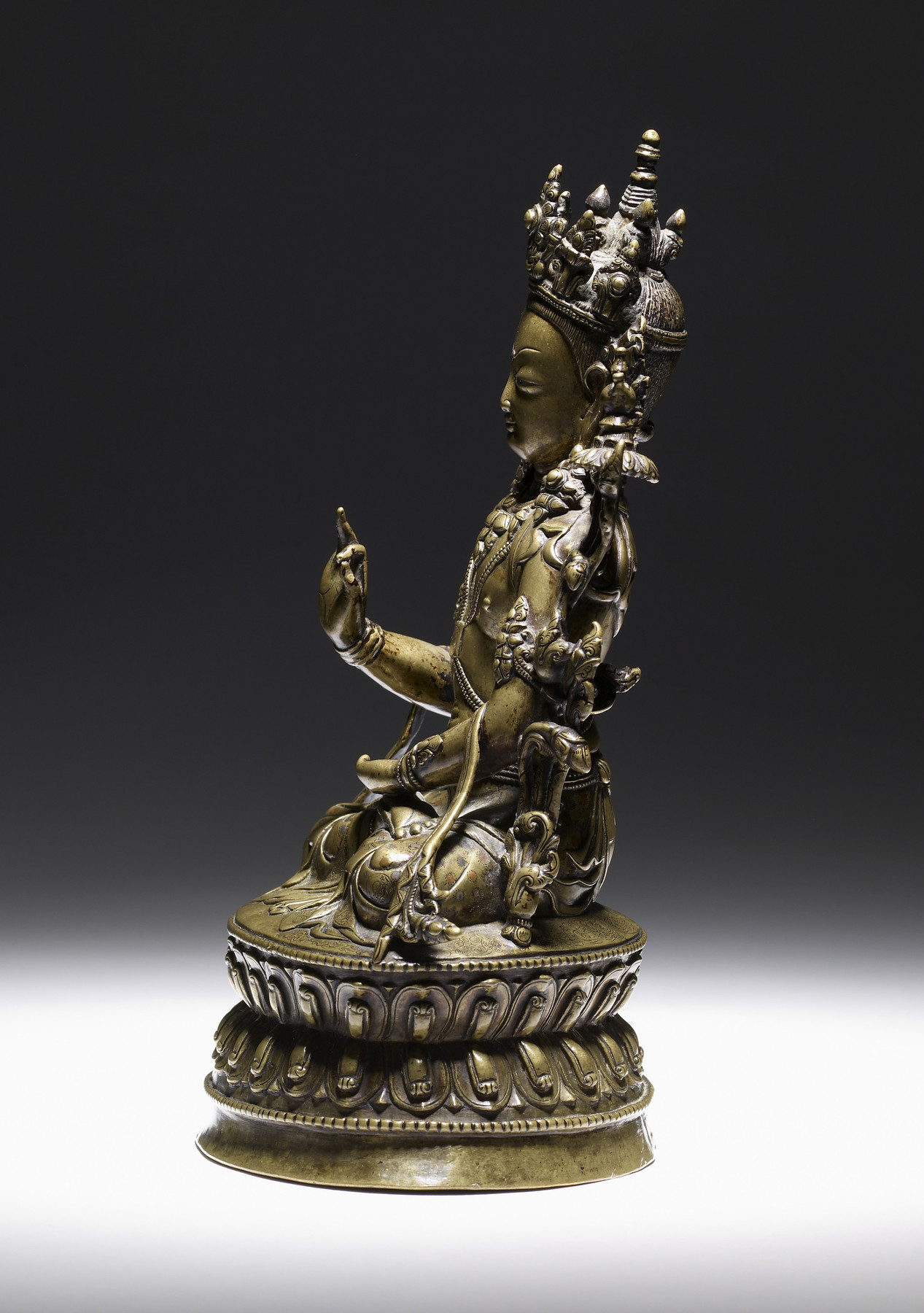
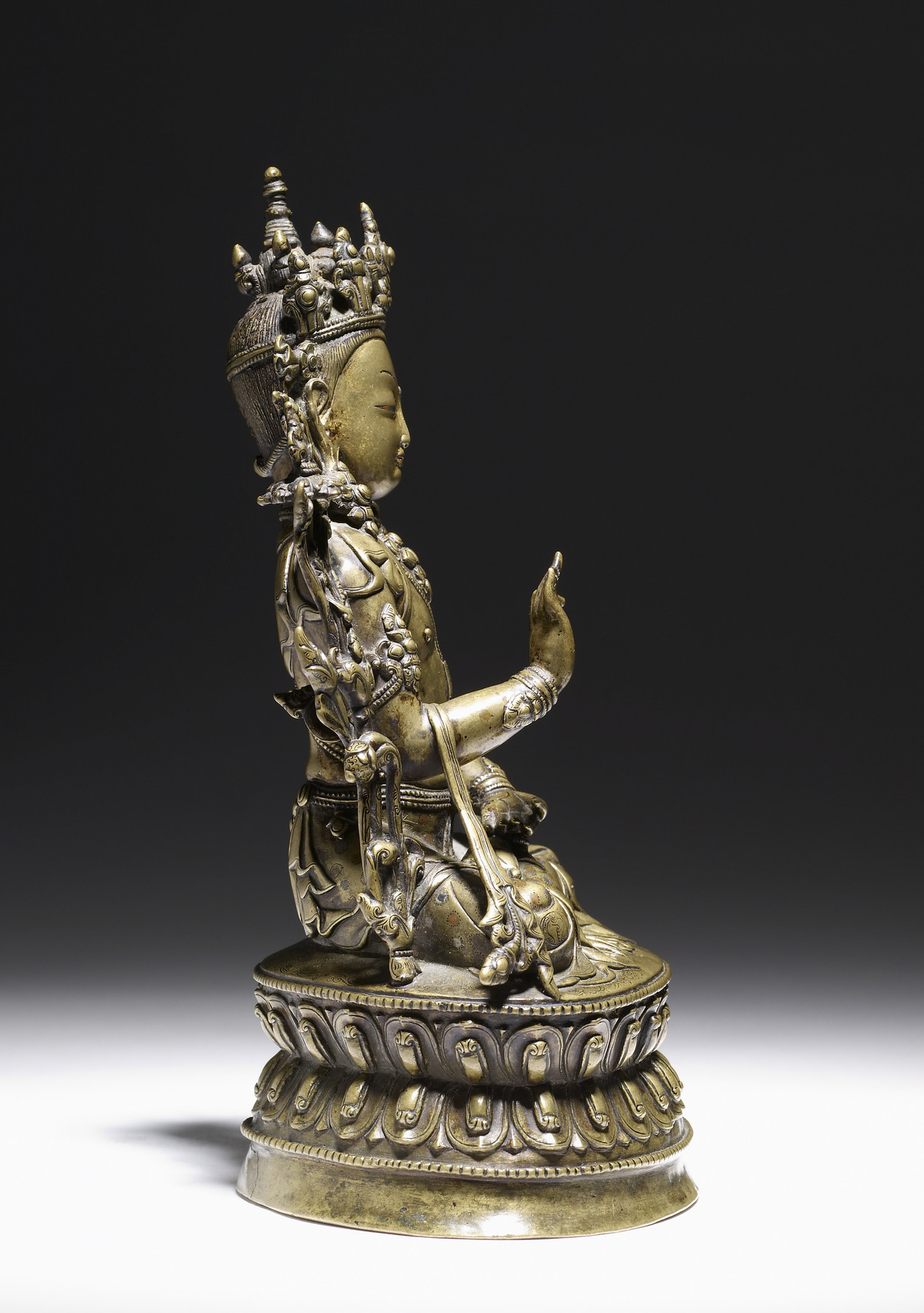 未来佛弥勒在此被表现为一位菩萨,很可能身处兜率天,届时他将从那里降生人间。他结跏趺坐,左手安放于腿上,右手结说法印。从莲座沿两臂升起两根花茎,左侧花蕾上有一小净瓶,另一侧的花朵可能是那伽羯沙罗花——这两者都是菩萨的标识。他遍身宝饰,庄严具足,其胸前饰有十字交扣的腰带,正中有一方形扣环。这种装束在弥勒像中并不常见,却可见于某些大成就者与护法神身上。然而,对作为英雄化身的菩萨而言,这身装束并无不妥。
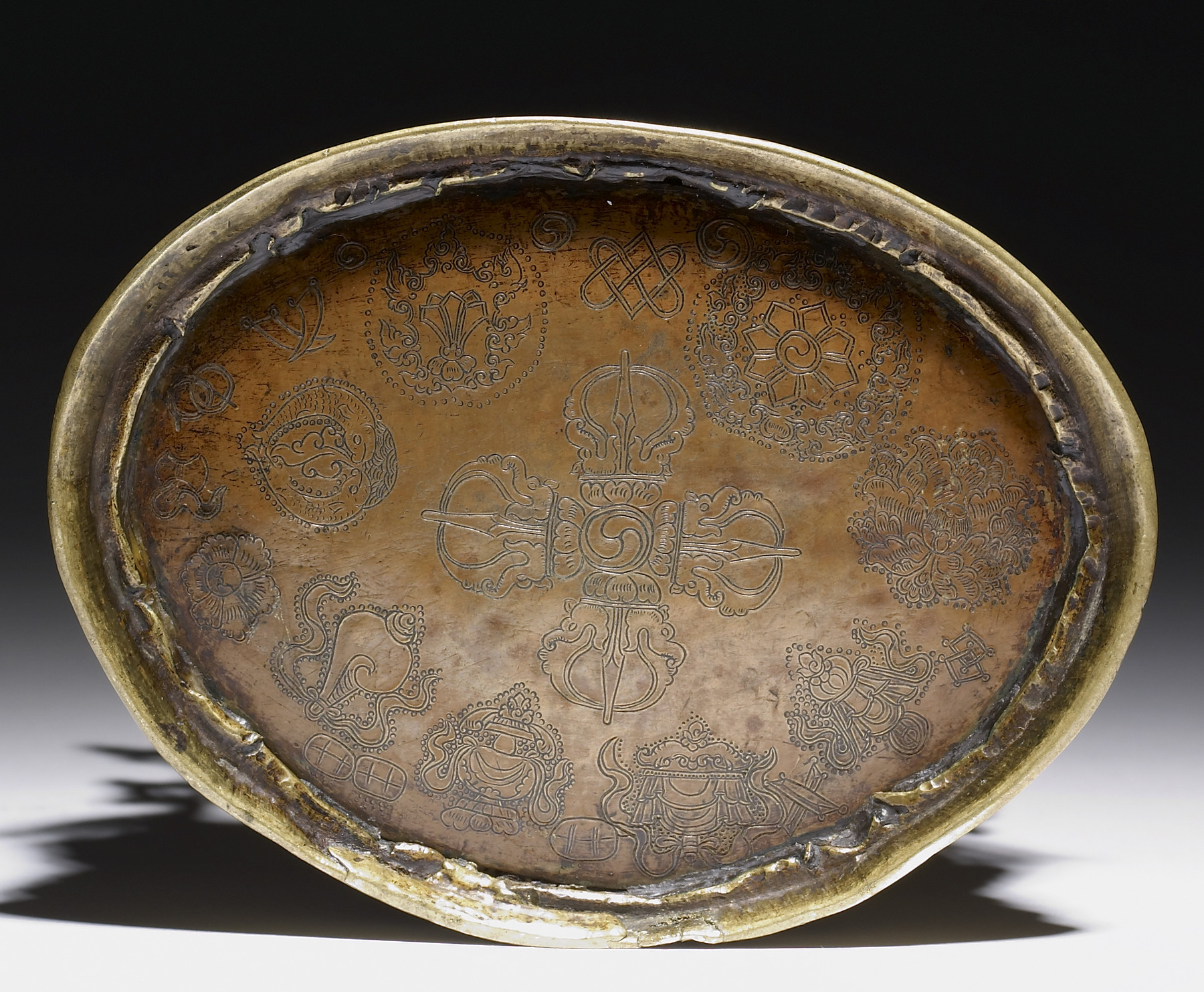
这尊铜像很可能为藏地的江孜地区的施主所铸造,因其风格与15世纪晚期当地著名的白居塔建造期间出现的绘画及雕塑版本有相近之处。大多数藏传金属像都是中空的,其内装藏舍利与咒文,再用底板永久封固,底板素面或刻有金刚杵纹样。而这尊弥勒像的底板更为精工,饰有刻纹:十字金刚杵、八吉祥符号(Ashtamangala)以及阴阳图案。
X射线照相显示,这是一尊薄壁、精细的中空铸像,内部有一大型中心腔,很可能在开光仪式中封入了神圣的经卷或经文。金属较厚的区域在成像中呈白色。穿透金属所需的高能X射线会抹去内部低密度纸卷的任何影像,但成像确认底座内部确有一中空腔体,足以容纳还愿经卷。像身底部以铜板封固,铜板上刻有十字金刚杵与吉祥图案。菩萨袈裟衣褶及面部饰有多色金属镶嵌。细看其眼部,可见匠人巧用不同颜色的金属来制造色彩与对比:黑化的瞳孔镶嵌于银质的虹膜之上,而虹膜周围环绕着赤铜色的巩膜。铸造之后,匠师又以手工錾刻细节,使表面更为华美。头发凹陷处残存的黑色物质,可能是开光仪式中所涂抹的油膏或树脂的遗留。
The future Buddha Maitreya is represented here as a bodhisattva, presumably in Tushita heaven, from where he will descend to earth at the appropriate time. Seated in the meditation posture, his left hand is in his lap, and the right displays the teaching gesture. Two leafy stalks of flowers rise from the lotus base along his arms. A small water pot (“kundika”) sits on top of the bloom to his left, and the flower on the other side is probably the “nagakesara,” both of which are emblems of the bodhisattva. Elaborately bejeweled like a bodhisattva, he is distinguished by a crossbelt on his torso with a square clasp in the middle. This is an accouterment that is not usually encountered in Maitreya images but is sometimes seen on mahasiddhas and protective deities. However, it is not inappropriate for a signifier of a hero, which a bodhisattva is.
Very likely, the bronze was cast for a patron in Gyantse in Tsang, for it relates stylistically to other versions both in painting and in sculpture, that may be associated with the construction of the famous Kumbum temple in the town during the late fifteenth century. Most Tibetan metal images are hollow and enclose relics and mantras that are then sealed permanently with a plate, which is either left plain or sealed with the thunderbolt motif. This particular Maitreya, however, has a more ambitious plate embellished with etched designs: the double thunderbolt, the eight auspicious symbols of good fortune (“ashtamangala”) as well as the yang and yin emblems.
X-radiography shows a thin-walled, intricately hollow-cast figure with a large central cavity that likely contains sacred scrolls or texts that were deposited within the sculpture during its consecration for use. Areas of thickened metal appear white. The high energy x-rays needed to penetrate the metal obliterates any image of the low density paper scrolls within, but the image confirms a hollow central cavity within the base, capable of holding votive scrolls.The underside of the figure is sealed with a copper plate engraved with a double thunderbolt and imagery indicating good fortune. Multicolored decorative metal inlays ornament the metal folds of the bodhisattva’s robes and his face. A closer look at the eyes shows how different colored metals were skillfully used to create color and contrast: the blackened pupil is set against a silver iris, which is surrounded by copper red sclera (the part of the eye that surrounds the iris). Engraved details, created by the artist’s hand after casting, further embellish the surface. Black material left within recesses of hair may be remnants of ritually applied oils or resins that were also a part of the consecration process.
来源:
Kikko, Houston [private gallery; purchased by John and Berthe Ford, Baltimore, November 15 1976; given to Walters Art Museum, 2013.
展览:
2001-2003 Desire and Devotion: Art from India, Nepal, and Tibet in the John and Berthe Ford Collection. The Walters Art Museum, Baltimore; Santa Barbara Museum of Art, Santa Barbara; Albuquerque Museum, Albuquerque; Birmingham Museum of Art, Birmingham; Hong Kong Museum of Art, Hong Kong.
馆藏号:
54.3090

