
侧边栏

北魏太和十年(公元486年)青铜鎏金弥勒佛立像(纽约大都会博物馆)
尺寸:高140.3 cm
年代:北魏太和十年(公元486年)
质地:青铜鎏金
风格:中原
来源:纽约大都会博物馆
参阅:外部链接
鉴赏:
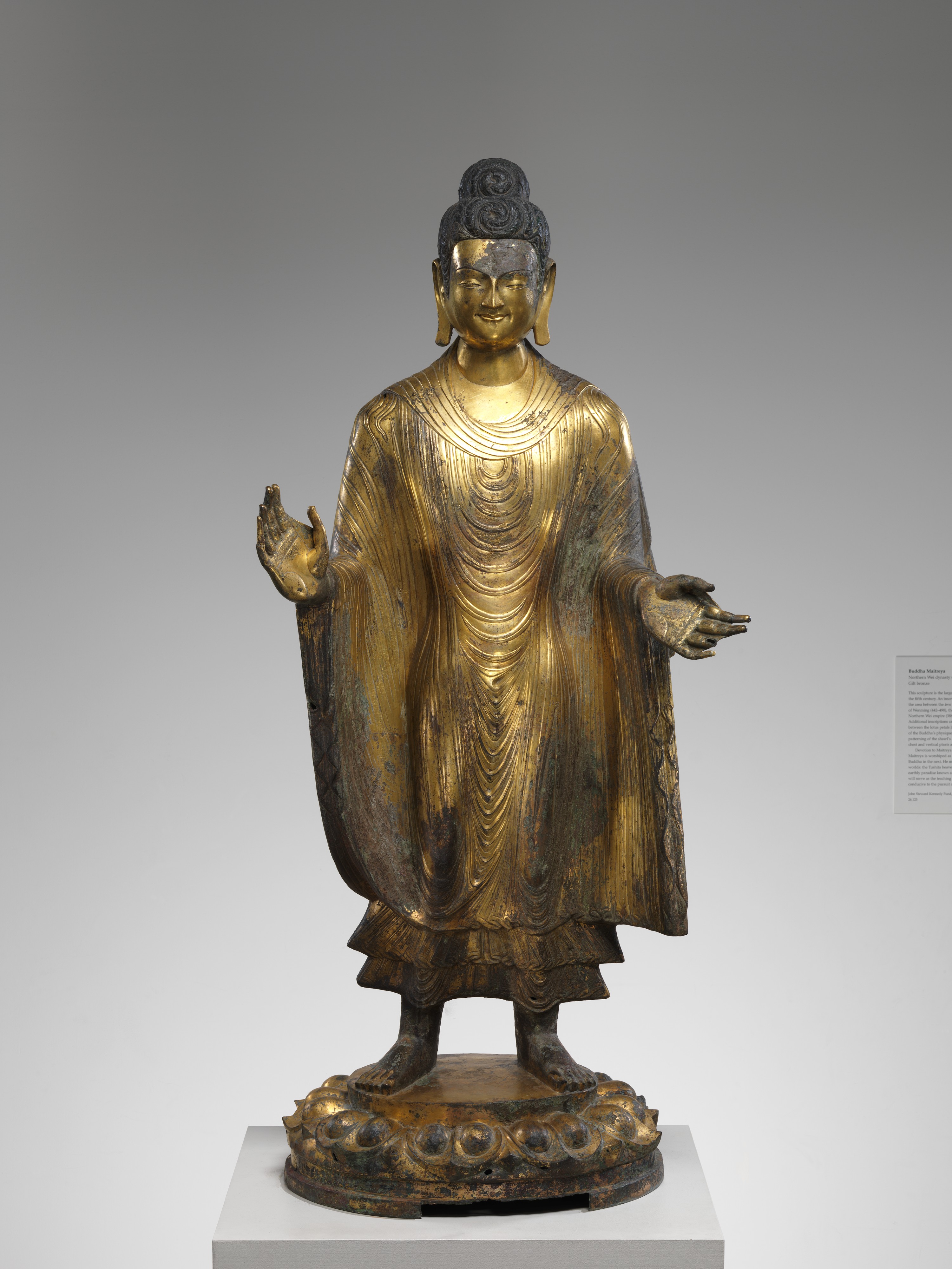
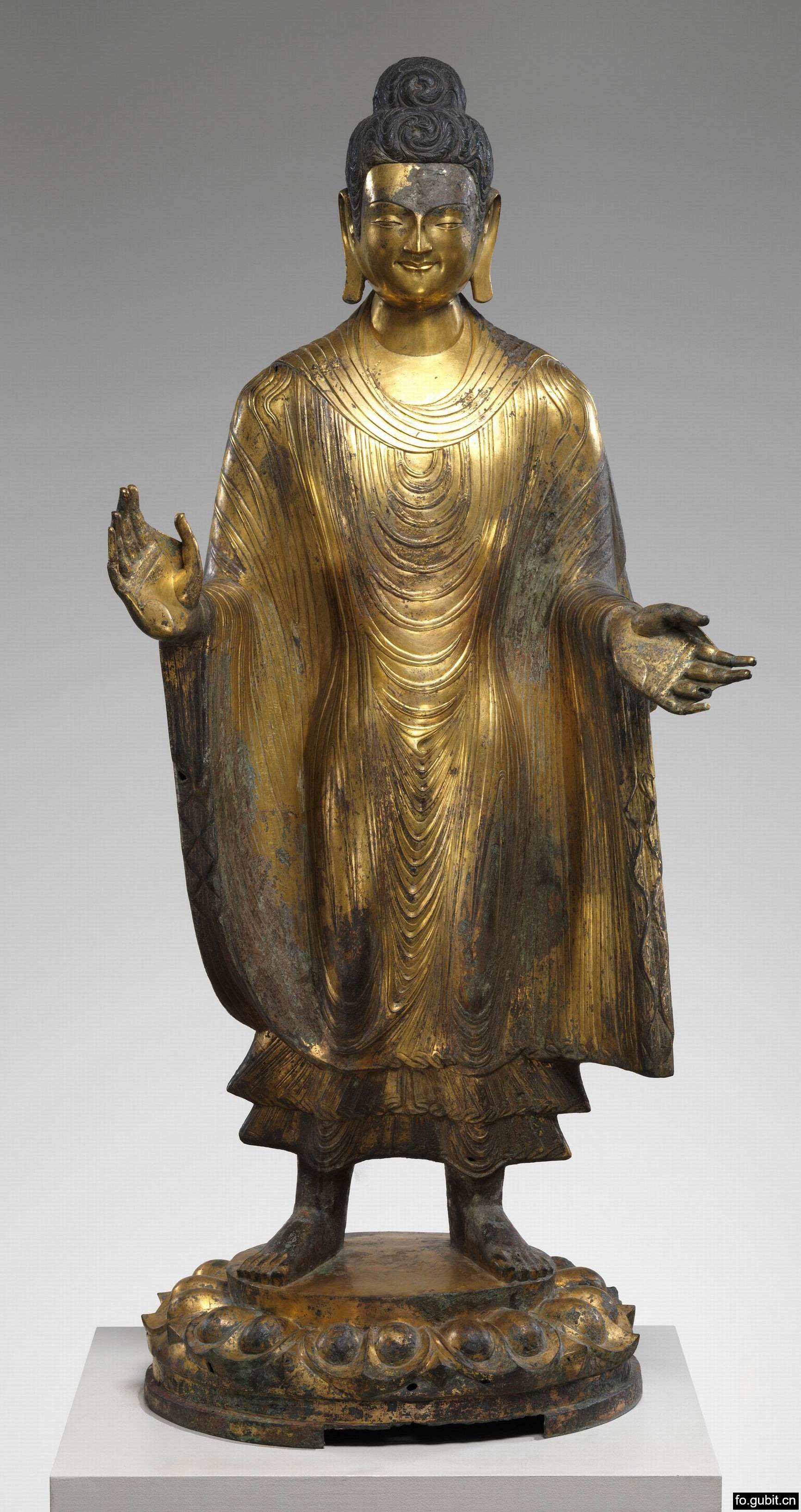
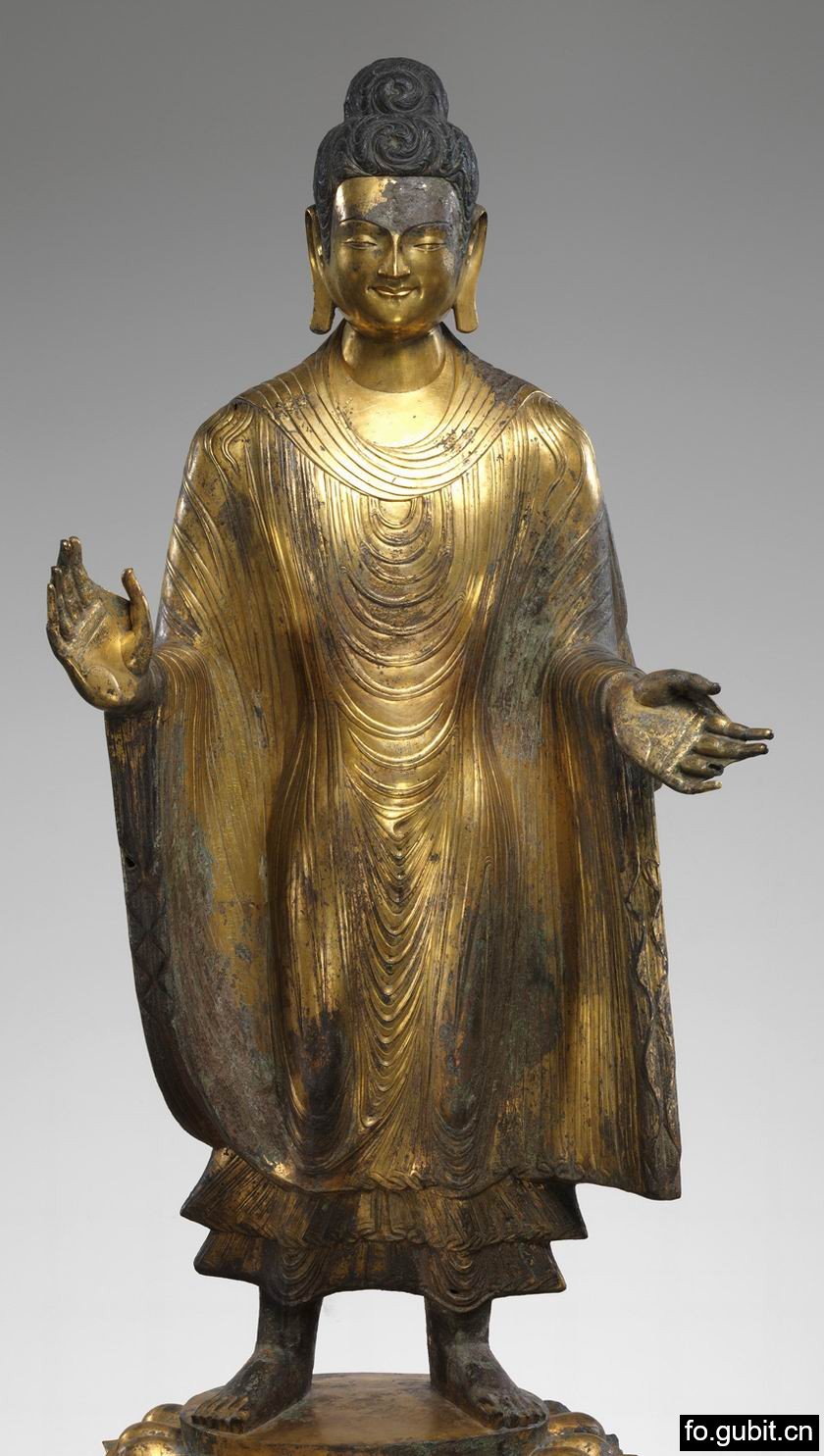
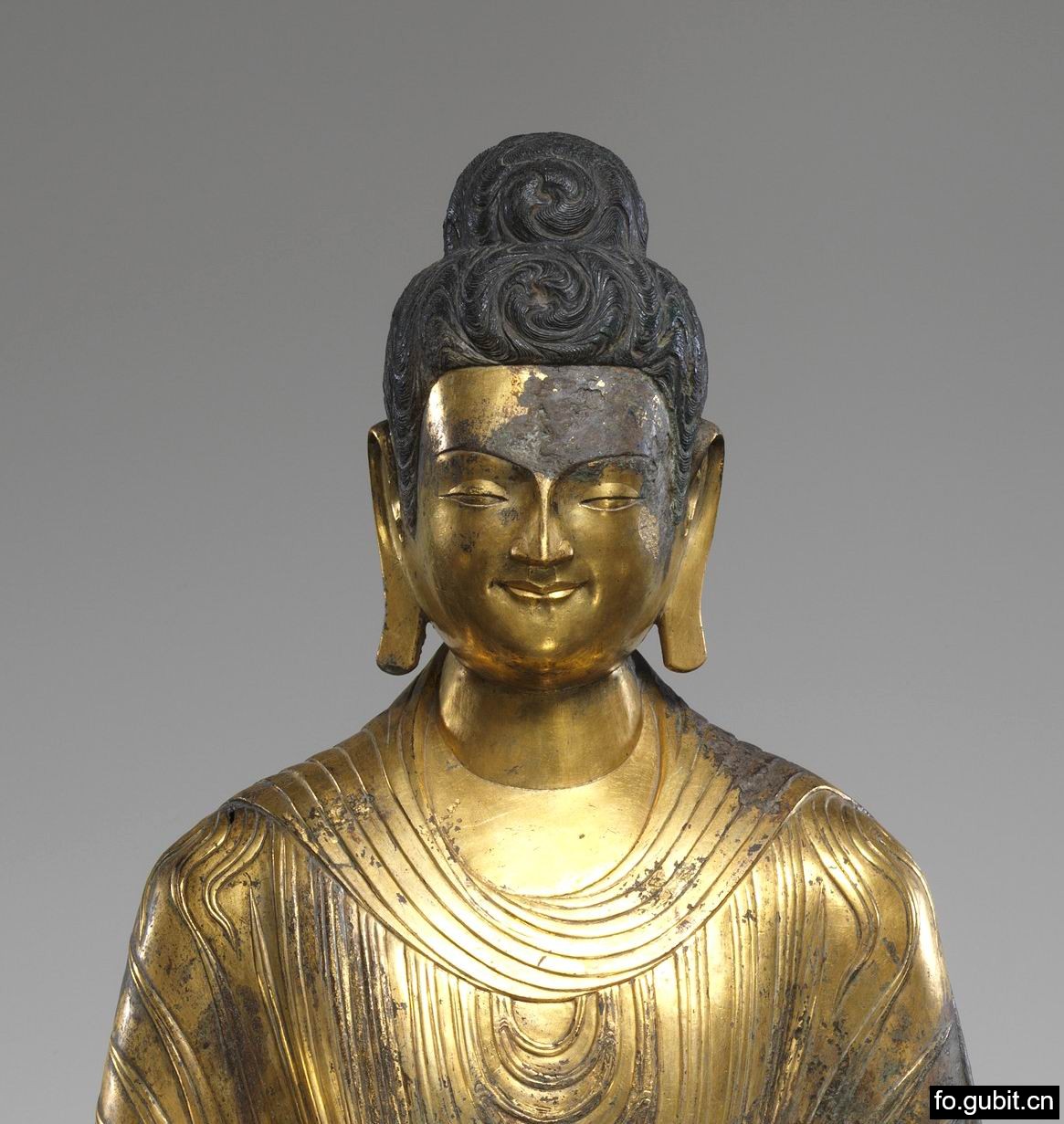
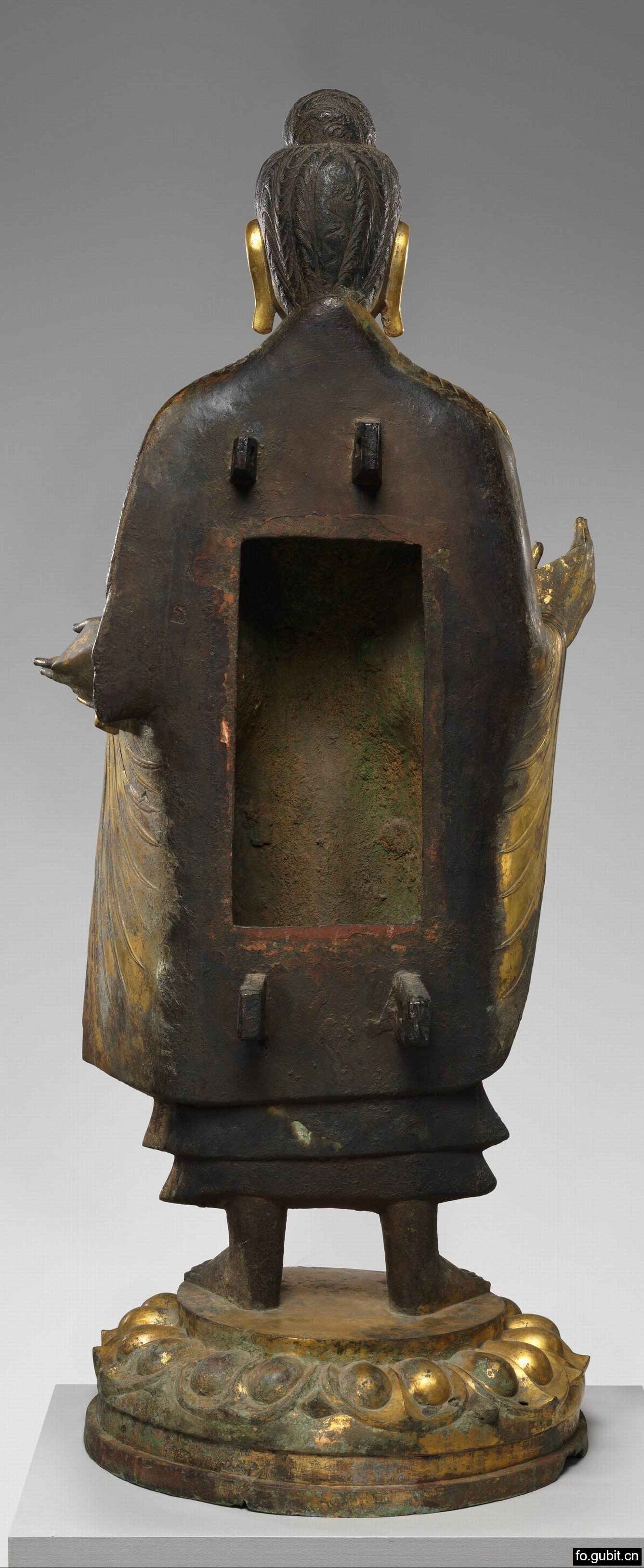 这是已知最大的一座早期鎏金青铜佛像。宽阔的肩膀,强悍的体魄,修长的腿部都可以看到早期印度佛像的影子,细看其背部还留有原先连接大背光的插销扣. 北魏金铜佛像衣服呈圆绳状,贴在身上;发髻除磨光和浅水波式外,又出现了螺发,并以右旋式居多;头挽高髻并戴冠;宽额、耳大,手指纤长。
This is the largest early gilt-bronze Chinese sculpture known today. The Buddha’s broad shoulders, powerful physique, and long legs derive from fifthcentury Indian prototypes that spread to China along the Silk Road, an example of which can be seen directly behind you in the gallery for Indian art.
Maitreya is worshiped both as a bodhisattva and as a Buddha, for it is believed that once the currentcosmic era has destroyed itself, he will be reborn as the teaching Buddha of the next great era. The identification of this figure as the Buddha Maitreya is based on the dedicatory inscription at the back of the base, which dates the sculpture to 486 and states that it was commissioned in honor of the dowager empress Wenming (442–490), who controlled the Northern Wei dynasty during the last three decades of the fifth century.
铭文:
Tai he shi nian / zheng yue nian si ri / wei tai huang / tai hou (space) / xia wei (shi?) / di zhong sheng / zao mi li / xiang yi qu (This can be loosely translated as in the 10th year of the Taihe era (486), the first month the 24th day in honor of the Dowager Empress, for the benefit of the ten classes of beings, one image of Mile (Maitreya) was made.
太和十年
正月廿四日
為太皇
太后 (space)
下為 (shi?)
地眾生
造彌勒
像一軀
(by Denise Patry Leidy)
太和一[十?]年
正月廿四日
為太皇
太后
下為大
地眾生
造彌勒
佛一軀
来源:
Shanxi Province
[ Umeikichi Asano , Osaka, until 1926; sold to MMA]
馆藏号: 26.123
展览:
New York. The Metropolitan Museum of Art. “Masterpieces of Fifty Centuries,” November 14, 1970–June 1, 1971.
Tokyo National Museum. “Treasured Masterpieces from the Metropolitan Museum of Art,” August 9, 1972–October 1, 1972.
Kyoto Municipal Museum. “Treasured Masterpieces from the Metropolitan Museum of Art,” October 8, 1972–November 26, 1972.
Los Angeles County Museum of Art. “Light of Asia: Buddha Sakyamuni in Asian Art,” March 4, 1984–May 20, 1984.
Tokyo National Museum. “Special Exhibition: Gilt Bronze Buddhist Statues - China, Korea, Japan,” March 10, 1987–April 19, 1987.
New York. The Metropolitan Museum of Art. “Weber Galleries Reinstallation,” October 14, 1998–March 19, 2010.
New York. The Metropolitan Museum of Art. “China: Dawn of a Golden Age, 200–750 AD,” October 12, 2004–January 23, 2005.
Seoul. National Museum of Korea. “Masterpieces of Early Buddhist Sculpture,” September 24, 2015–November 15, 2015.
著录:
Behrendt, Kurt. “The Buddha and the Gandharan Classical Tradition.” Arts of Asia 47, no. 2 (March–April 2017). pp. 65–75, fig. 14.
Bosch Reitz, S. C. “A Bronze Gilt Statue of the Wei Period.” The Metropolitan Museum of Art Bulletin 21, no.10 (October 1926). pp. 238–40.
Tōyō Bijutsu 東洋美術 (History of Japanese Fine Arts), July 1930. p. 140.
……

