
侧边栏

6世纪北齐响堂山石窟石雕佛首(伦敦V&A博物馆)
尺寸:H. 90 cm
年代:北齐
质地:石雕(Carved grey limestone with traces of pigment)
风格:中原
来源:伦敦V&A博物馆
参阅:外部链接
鉴赏:
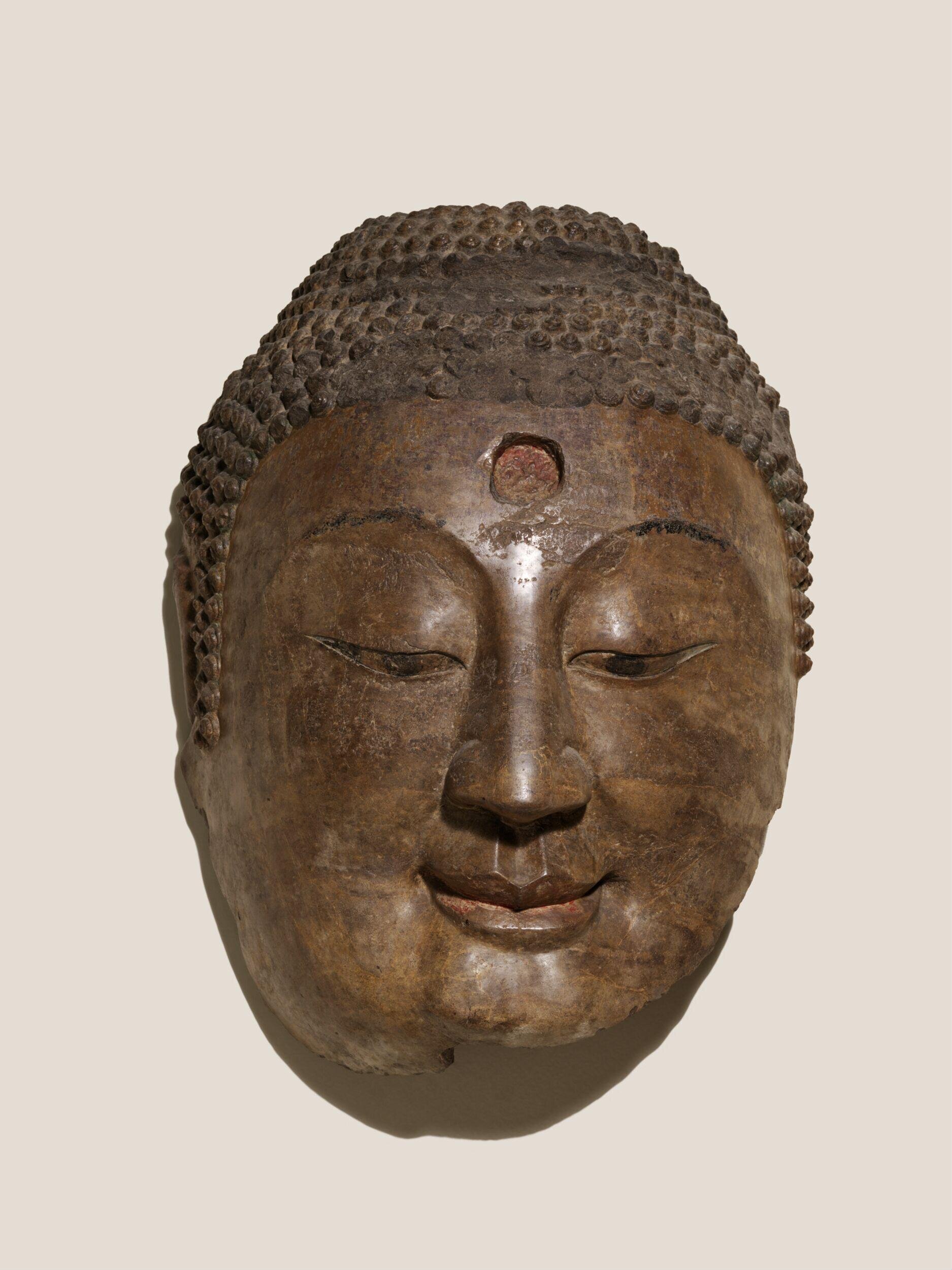
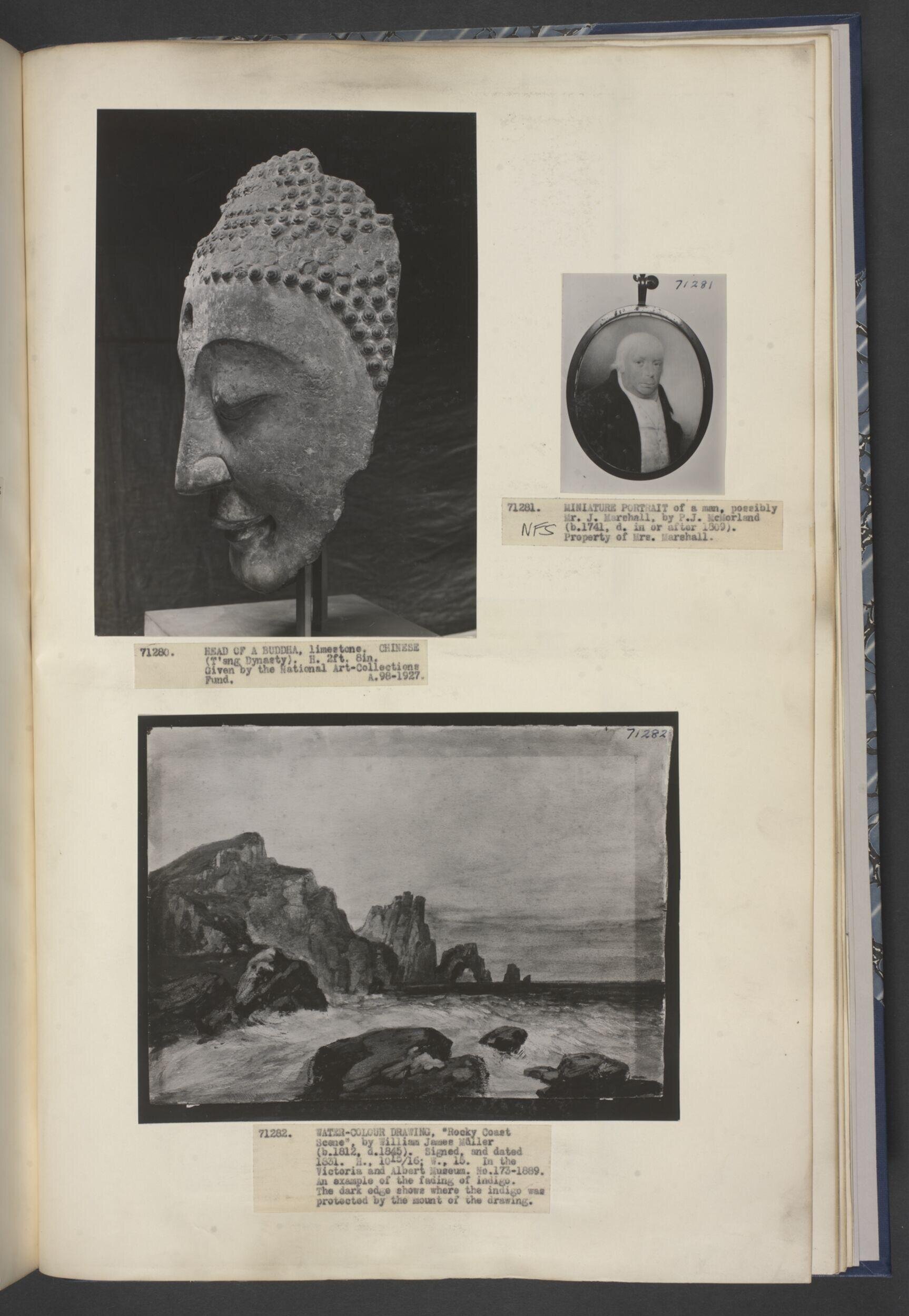 北齐 加彩石佛首 (原置河北响堂山)
Traces of pigment accentuate the eyebrows, eyes and mouth of this huge head. The hairstyle is typical of the historical Buddha Sakyamuni, with tight curls and the prominent usnisa or topknot. The mark on the forehead, expressing wisdom and openness, originally incorporated an impressive jewel. Once part of a monumental figure in a cave complex, the head would have looked down from high. Its symmetrical composition and serene expression would have inspired Buddhist followers standing below.
Large 3-dimensional rounded face/head of Buddha, fractured at the chin. There is colour visible on his lips, eyes and eyebrows, and his mouth is closed. His eyes look downwards. He has high arched brows, bobbled hair with an ushnisha (bun hairstyle). The eyebrows are curved in a butterfly shape, a Chinese sign of beauty, and the symmetrical composition and serene expression expresses Buddhist ideals - the renunciation of worldly desires and the attainment of enlightenment.
Loaned to Burlington House Fair Exhibition Sept. 9-20, 1987, Royal Academy of Arts. A similar sculpture is A.27-1914, and there are also similar works at Philadelphia University and Cologne. It would have been part of an entire figure, and displayed high up.
This piece is probably from the Xiangtangshan cave complex in northern China, of which the sculptures were scattered across international collections in the early 20th century. A Project was established to create a digital reconstruction of what the cave complex would have looked like (see references).
著录:
Clarke, John: Arts of Asia, vol. 45, no. 5, September - October 2015, “The Buddha image in Asia: Phase One of the Robert H. N. Ho Family Foundation Galleries of Buddhist Art”, p.122, pl. 16.
Clarke, John: Buddhist Sculpture, p. 42 Orientations; vol. 40. no. 4; May 2009; The Robert H.N. Ho Family Foundation Gallery, Victoria & Albert Museum.
Project to create a digital reconstruction of what the cave complex would have looked like: http://web.archive.org/web/20230117114544/https://xiangtangshan.uchicago.edu/introduction/

