16世纪西藏黄铜金刚总持(纽约邦瀚斯)
尺寸:高41cm
年代:16世纪
质地:黄铜合金
风格:西藏
来源:拍卖会
成交:75,000美元(2018.03)
参阅:纽约邦瀚斯
鉴赏:
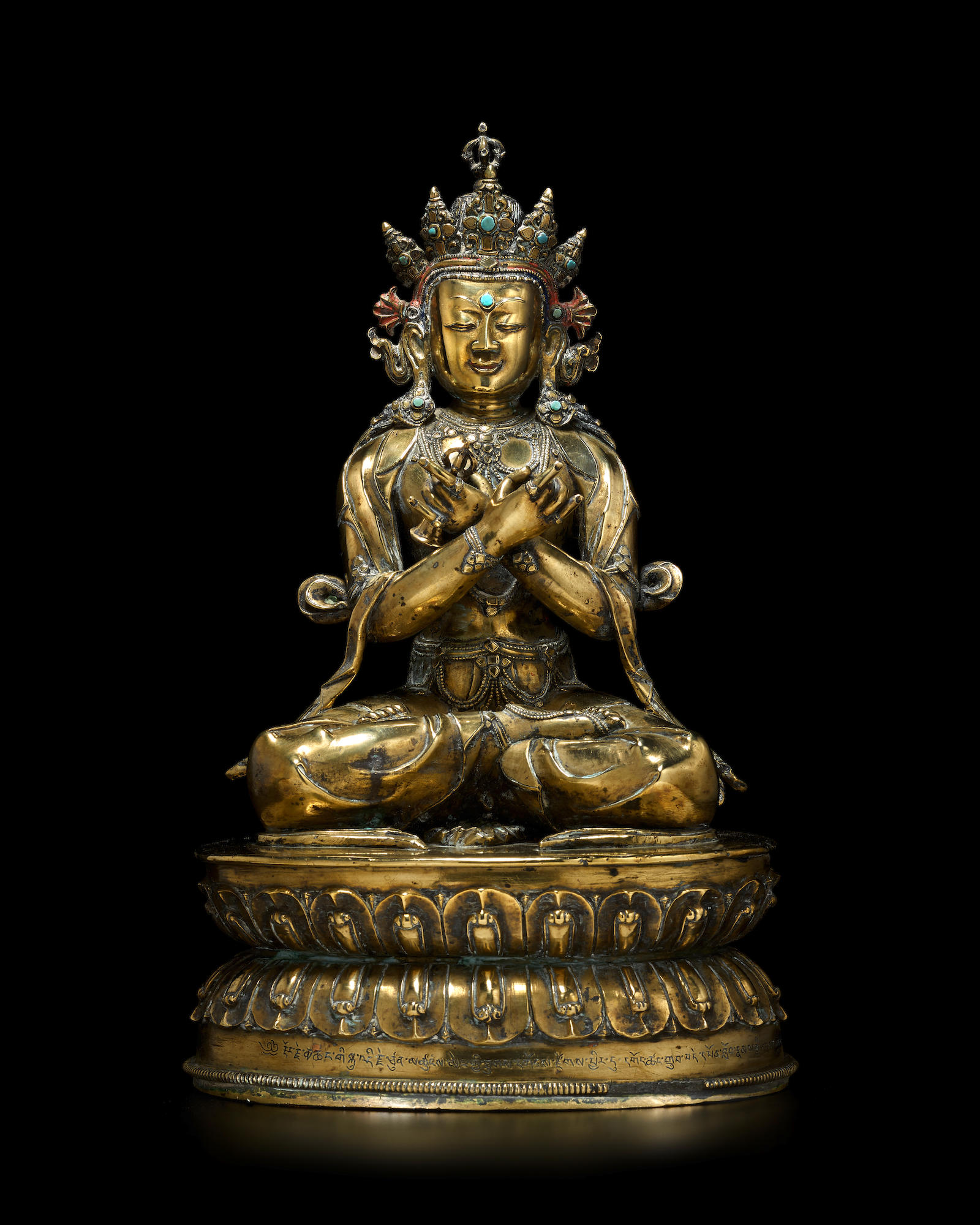
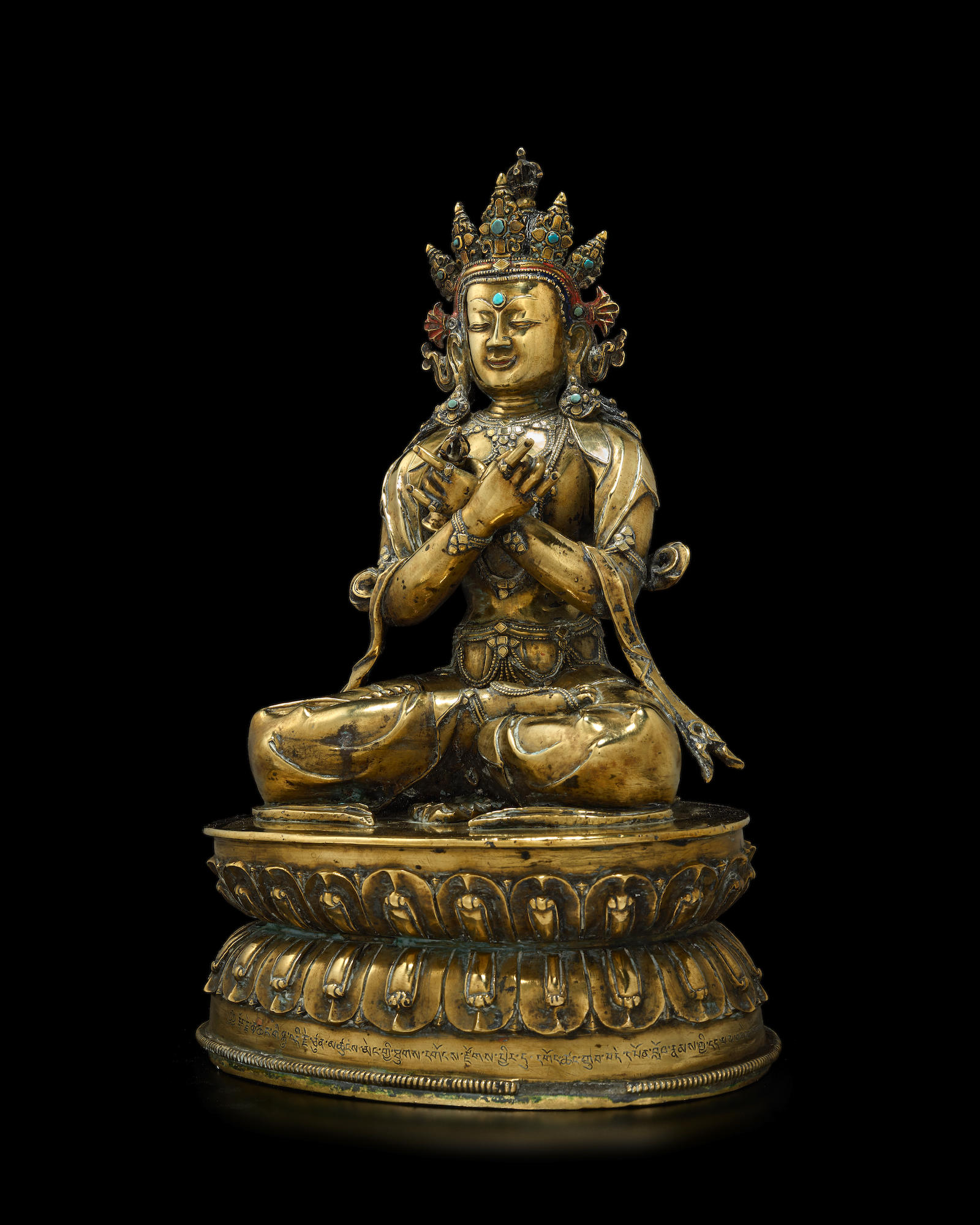
 A BRASS ALLOY FIGURE OF VAJRADHARA
TIBET, 16TH CENTURY
Inscribed around the base.
Himalayan Art Resources item no.61547
佛像网, 编号: 金刚总持:92121
16 1/8 in. (41 cm) high
西藏 十六世紀 金剛總持銅像
这尊尺寸可观的造像带有珍贵铭文,译文如下:
“为圆满无上珍贵上师之宏愿,此尊金刚总持圣像由果仓巴传承之大成就者师徒共同捐资造立。由潘达地方父子匠师亲手制作。愿此造像之功德,令施主生生世世值遇本师,常伴左右。”
此铜像的整体风貌深受明代永乐宫廷风格影响——该风格曾以明朝皇室馈赠西藏主要寺院的“赐礼”形式广泛流传于雪域。匠师对早期明代佛教金铜造像风格的深刻理解,体现在诸多细节中:如腿部袈裟层叠垂落的疏朗衣褶、莲座修长舒展的花瓣形态等。同时,造像亦融入西藏本土特色,如高耸的尖顶宝冠及绿松石镶嵌工艺。可参照北京故宫博物院藏15世纪西藏金刚总持像(《清宫藏传佛教文物》,北京,1992年,第86页,图版58)。其宝冠形制与莲座处理方式,亦与乌尔里希·冯·施罗德《印藏铜像》(香港,1981年)第439页编号117F所示金刚总持像相近。
在宁玛派传承中,金刚总持被视为普贤王如来的化现;而其他主流藏传佛教教派则视其为释迦牟尼佛的秘密化身,乃十方三世一切诸佛功德之总集。由金刚总持衍生出密集金刚、喜金刚、胜乐金刚等重要本尊。
This sizable sculpture bears a valuable inscription, translated:
“In order to fulfill the aspiration of an incomparable precious master, this image of Vajradhara was sponsored by accomplished Godtsang masters and disciples. Created by the hand of father and son Phandar artists. May the merit of sponsoring this image help its sponsors be reborn among the closest disciples to their master.”
The bronze's overall appearance is informed by the imperial Yongle style that circulated throughout Tibet in the form of diplomatic gifts from the Ming court to major monasteries. Decorative elements such as the pooling of the robes in loose folds over the legs, and the elongated lotus petals of the base, betray the awareness of 'Phandar artists' of the early Ming style of Buddhist bronzes. However, Tibetan departures include the tall pointed crown and use of turquoise inlay. Compare for example a Tibetan 15th-century Vajradhara now in the Palace Museum, Beijing (Cultural Relics of Tibetan Buddhism Collected in the Qing Palace, Beijing, 1992, p.86, pl.58). The crown type and treatment of the lotus base is also similar to a Vajradhara illustrated in von Schroeder, Indo-Tibetan Bronzes, Hong Kong, 1981, p.439, no.117F.
According to the Nyingma School, Vajradhara is an emanation of Buddha Samantabhadra. Meanwhile, the other predominant Tibetan Buddhist schools see him as the secret form of Shakyamuni Buddha and the combined essence of the Buddhas of all ten directions and three periods of time gathered as one. From Vajradhara arise important deities such as Guhyasamaja, Shri Hevajra, and Chakrasamvara.
Provenance
Spink & Sons Ltd, London, 1998
Private West Coast Collection