7世纪斯瓦特风格青铜释迦牟尼佛坐像(纽约佳士得)
尺寸:高13.4 cm
年代:7世纪
质地:青铜
风格:斯瓦特
来源:拍卖会
成交:173,000美元(2016.03)
参阅:外部链接
鉴赏:
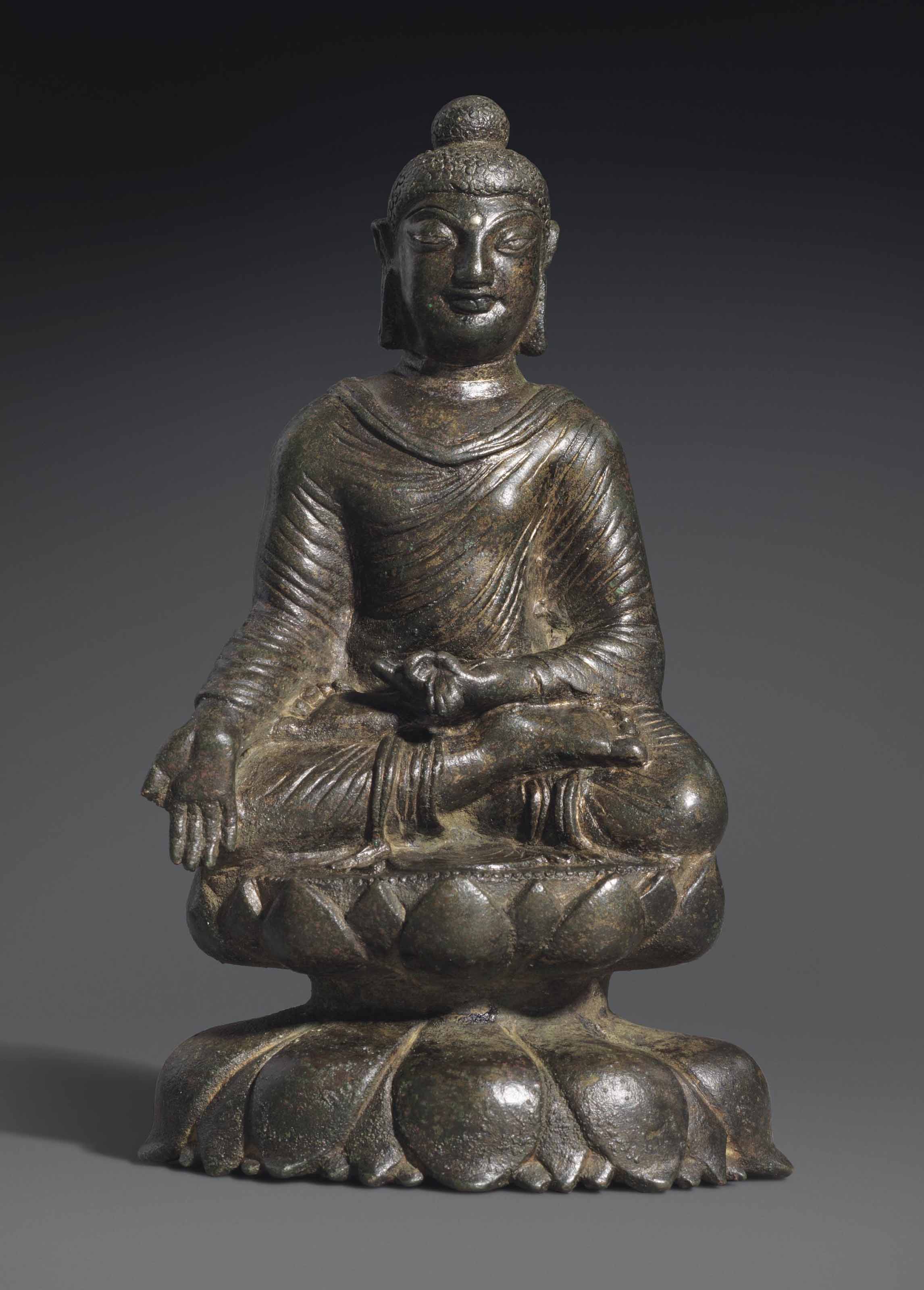 A SILVER-INLAID BRONZE FIGURE OF BUDDHA SHAKYAMUNI
SWAT VALLEY, 7TH CENTURY
Seated in vajrasana on a lotus base with his right hand lowered in varadamudra, holding the hem of his sanghati which falls from his shoulders in regular pleats, his face with a serene expression, silver-inlaid almond-shaped eyes, silver urna, faintly smiling lips, elongated earlobes, curly hair and ushnisha
5 ¼ in. (13.4 cm.) high
Provenance
Acquired from Sotheby's New York, 30 November 1994, lot 90
Lot Essay
The Swat Valley is located along the upper stream of the Indus in the heartland of the Gandhara region. It was a melting pot of various people and arts and served as link between India and Central Asia and further eastwards for a constant flow of Buddhist pilgrims. The earlier Gandhara style is still echoed in the art of many early icons of the Swat Valley, as visible in the present example. The Buddha's parallel folds as well as the protuberance on top of his head, can be traced back to Gandhara Buddha figures. However the V-shaped pleats around his neck are associated with Kashmiri prototypes, as is the use of silver inlay. His face on the other hand reflects a Gupta idiom, with its small mouth and incised eyebrows. The lotus base on which he sits is typical for Swat Valley images. Thus this fine bronze Buddha figure embodies perfectly this melting pot of various styles.