14世纪(1377年)朝鲜绘画白衣观音自在坐像(奈良国立博物馆)
尺寸:H 99.1, W 40.3
年代:14世纪(1377年)
质地:Hanging scroll; ink and colors on silk
风格:朝鲜
来源:奈良国立博物馆
参阅:外部链接
鉴赏:
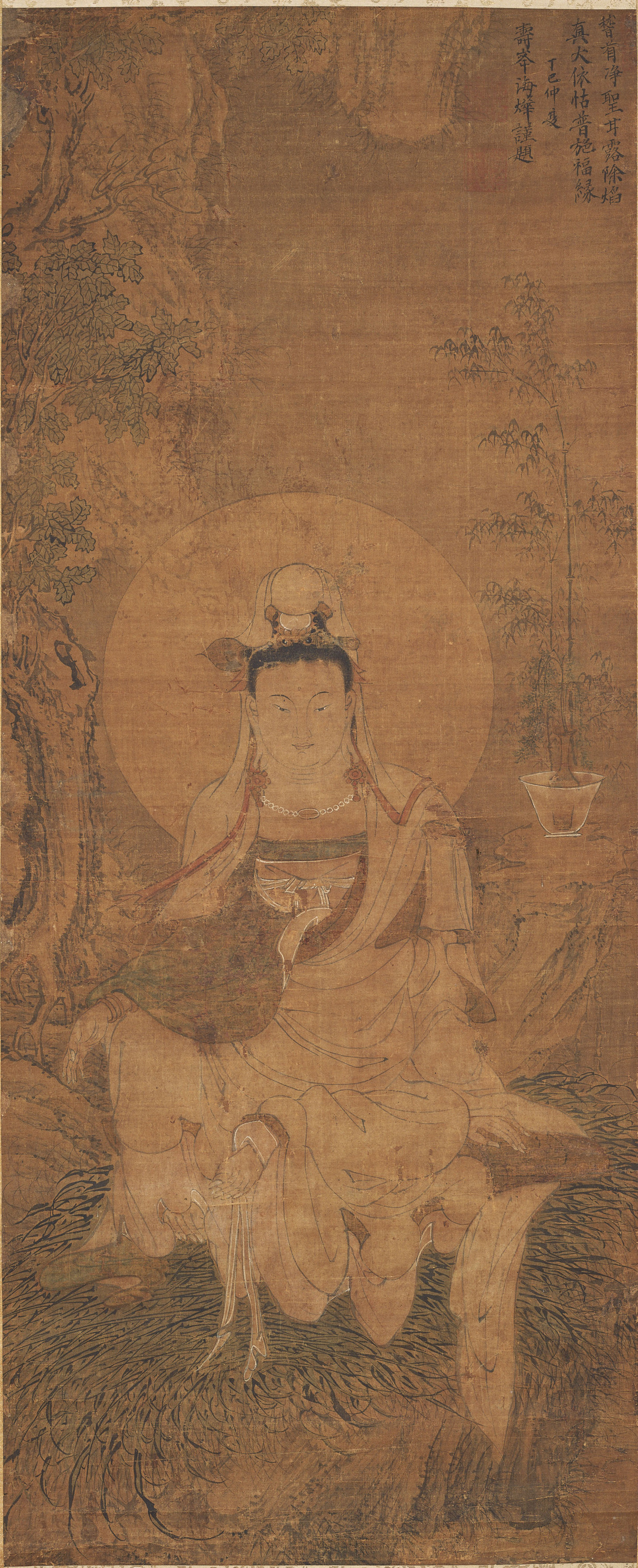 White-Robed Guaneum (Pāṇḍaravāsinī)
In this painting, Kannon (Avalokiteśvara) wearing a white garment over the head is seated on a rock. This composition, however, is not included in any Buddhist scripture, and it does not belong to the iconographic type of “Byakue Kannon” (Pāṇḍaravāsinī) introduced in the Rengebu-in or the lotus section of the Taizō-kai (Garbhadhātu or womb) Mandala. The orthodox type of “Kannon in a White Garment” is, as is seen in the Taizō-kai Mandala, usually presented in front of a big old tree on a steep mountain with deep valleys. But the type of Kannon introduced in this article which is different from the orthodox type, was probably established during the Tang dynasty in China without any reference to Buddhist texts. The grasses on the rock are depicted with sharp brush strokes. On the left side of Kannon a willow branch in a vase is placed within a crystal bowl, and slender bamboo stalks are described behind it. The outline of Kannon's body and drapes are both drawn in ink with sharp brush strokes which indicate the skillful drawing technique of the artist. The interesting aspect about this painting is that the artist described Kannon with an air of the familiar human being. The painting is rendered in a craftsman-like skillful painting technique. Since the painting style of this picture differed from Chinese and Japanese styles, it is very likely that it was made in Korea during the Koryo dynasty. The inscription is about the virtue of Kannon. The inscription writer by the name of Kaika has not been identified. The date written in the inscription is 1377.
白衣观音(Pāṇḍaravāsinī)
此画中,观音(观世音菩萨)以白帕覆首,坐于磐石之上。然此构图不见于任何佛教经典,亦不属于胎藏界曼荼罗莲华部所载“白衣观音”之图像范式。正统之“白衣观音”形象,如胎藏界曼荼罗所示,通常绘于深山幽谷之间,巨木苍苍为衬;而本文所介绍之观音像则异于此正统范式,或为中国唐代时脱离佛经依据而自成一派之图像样式。磐石上之草木以劲健笔触绘就,观音左侧置水晶钵,内盛柳枝之瓶,其后复绘修竹数竿。观音身姿与衣纹皆以墨线勾勒,笔力遒劲,可见画师技法之精湛。此画妙处,在于观音被赋予亲切之人间气息,整体呈现出匠人娴熟之技艺特征。因画风兼采中国与日本之所长,故极可能为高丽王朝时期韩国之作。画中题记赞颂观音功德,题写者“海华”之名已不可考,所署年代为1377年。