18-19世纪蒙古铜鎏金弥勒菩萨持净瓶立像(美国鲁宾艺术博物馆)
尺寸:12 3/4 x 4 3/4 x 3 in.
年代:18-19世纪
质地:铜鎏金
风格:蒙古
来源:美国鲁宾艺术博物馆
参阅:外部链接
鉴赏:
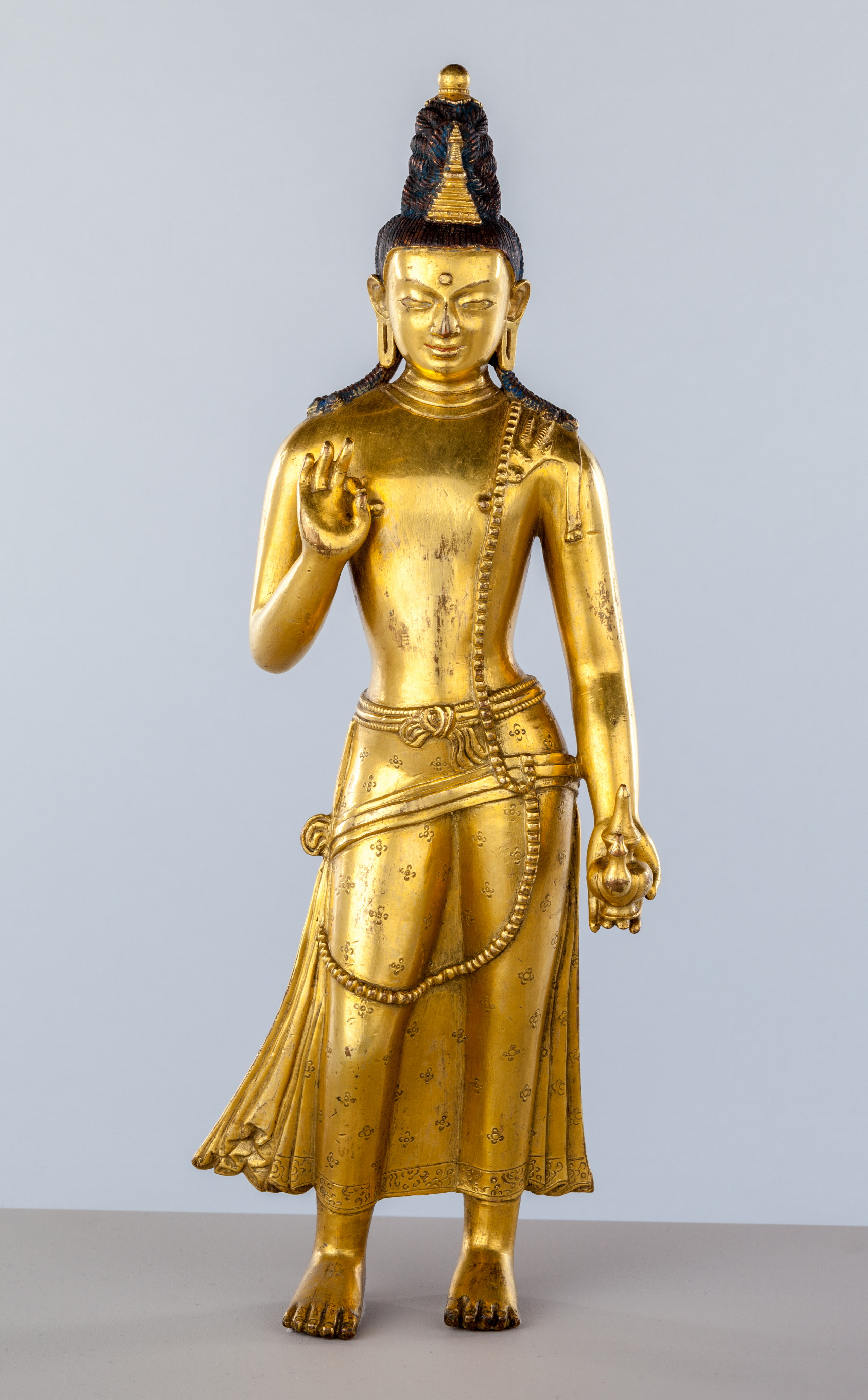
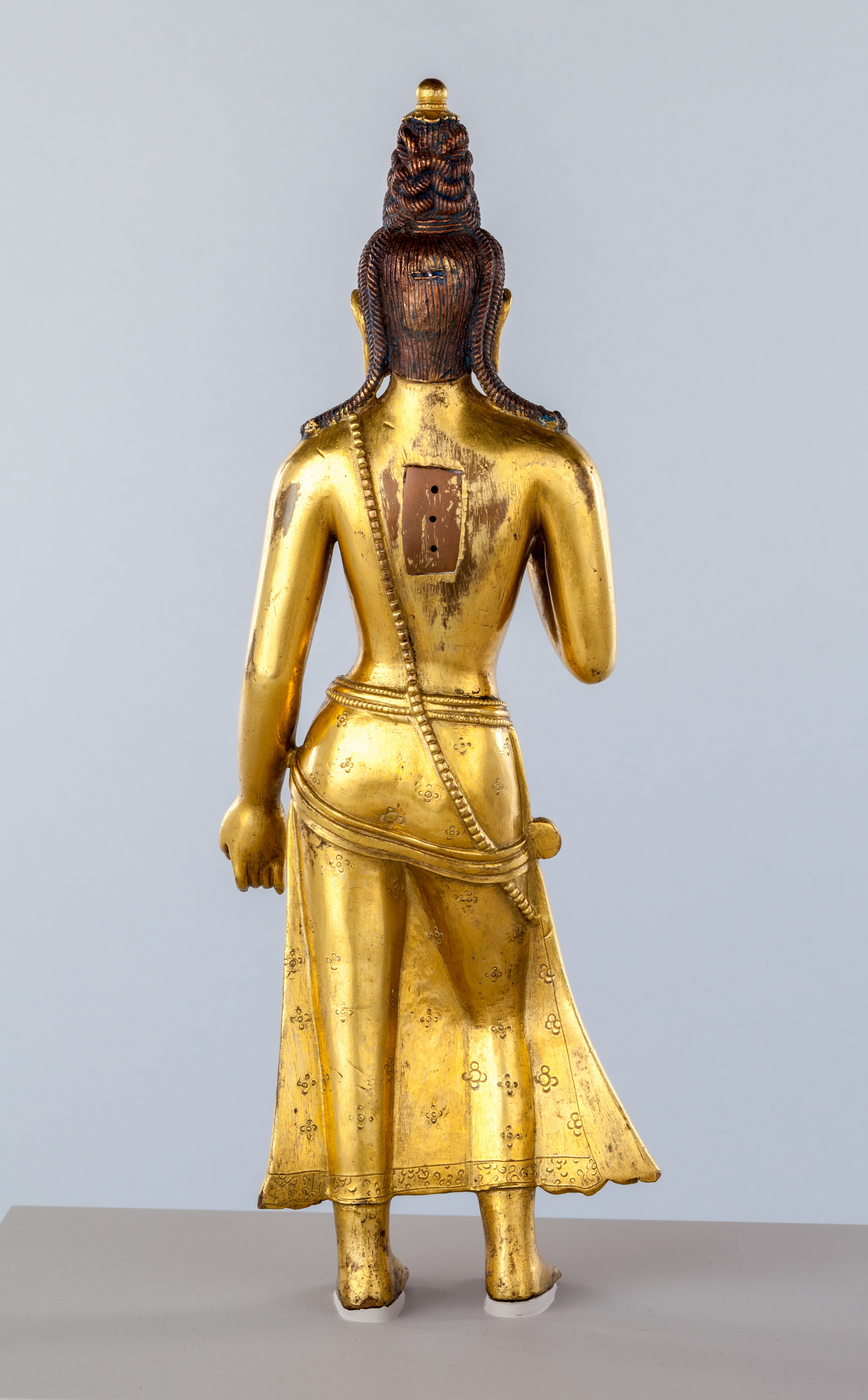
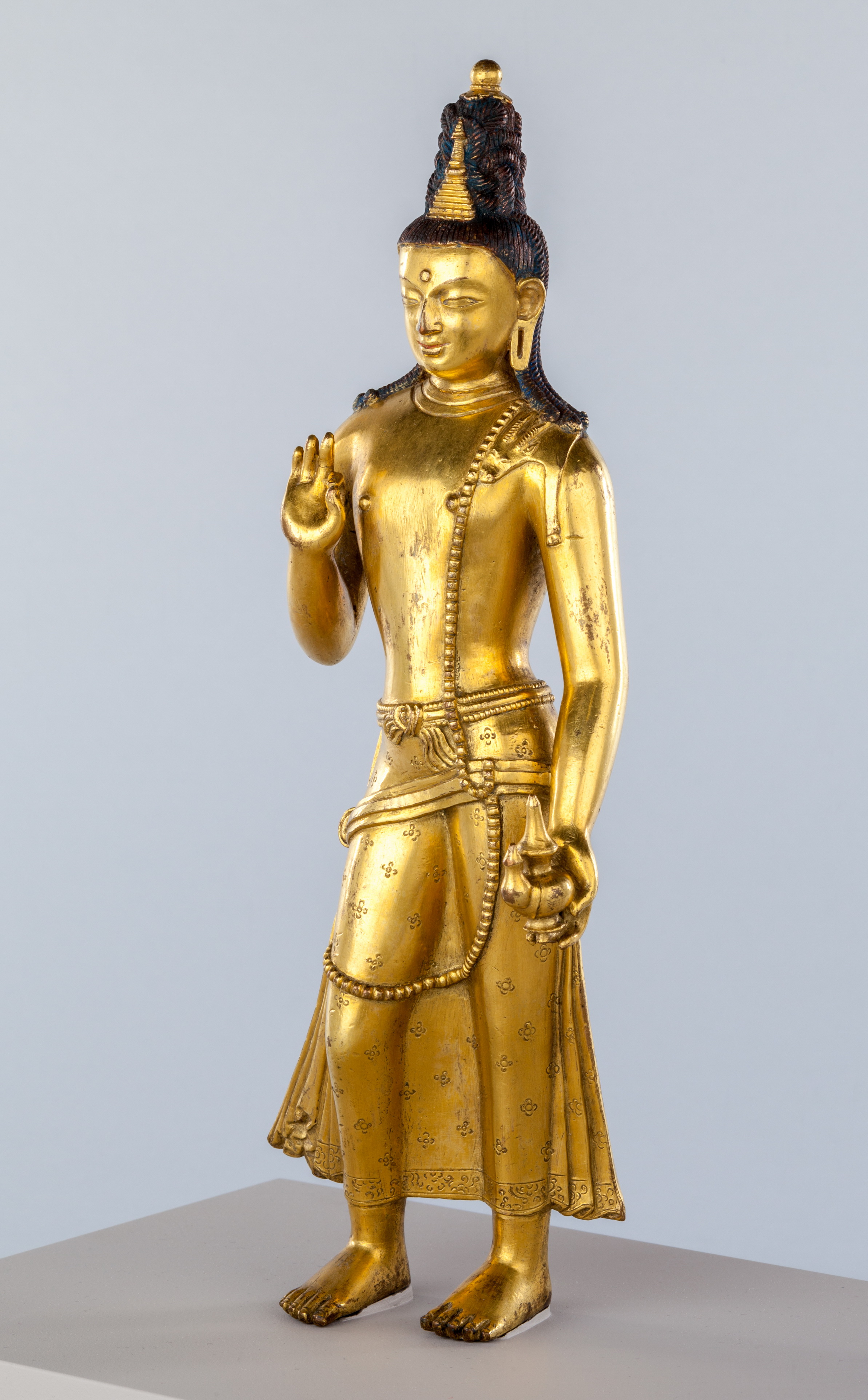
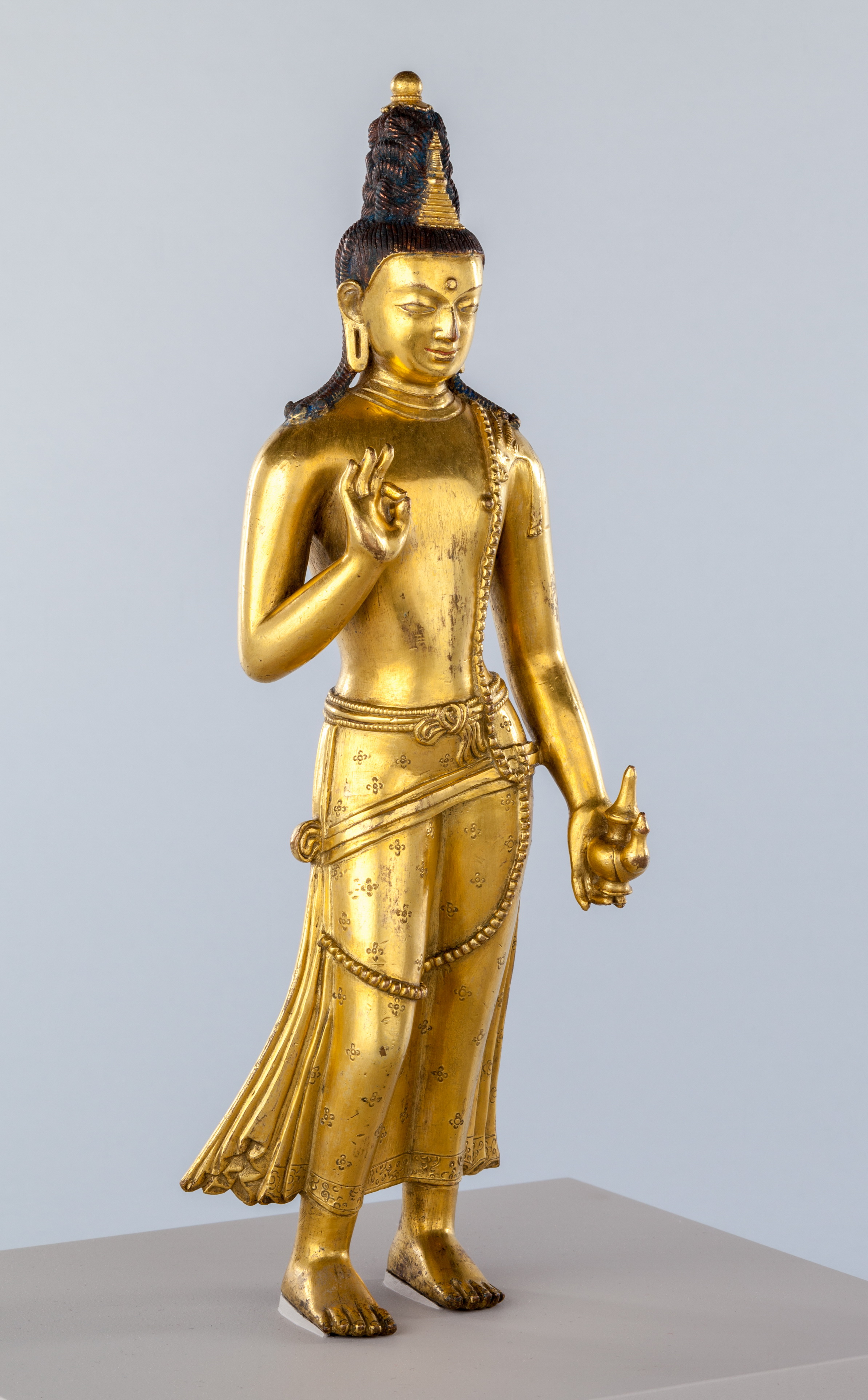 弥勒菩萨——未来佛,以其发髻中的佛塔为标识,是蒙古人特别崇敬的对象。未来佛将开启新时代的许诺对他们尤其具有吸引力,他们把这个传说与重振蒙古帝国辉煌岁月的愿望联系在一起。在库伦(今乌兰巴托)举办的年度弥勒法会游行中,核心圣像是一尊由伟大的雕塑家扎纳巴扎尔(1635–1723)制作的弥勒像,这件公共崇拜的圣物为蒙古艺术家们所熟知。这件优雅的雕塑严格遵循了扎纳巴扎尔受尼泊尔风格启发的弥勒造像样式,其特点是形体柔和流畅,并以微妙的非对称线条(由绳结和飘带构成)加以打破。柔和的对立式站姿因紧身衣袍下摆的展开而更显突出,左肩上披挂的小羚羊皮,以及为安放发髻中佛塔而特意高耸的发髻,都是扎纳巴扎尔设计的典型标志。
HAR Number 65413
Fobit编号 66055
Gilt copper alloy with pigment
Maitreya, the Buddha of the Future, recognizable by the stupa in his hair, is a special focus of worship among the Mongols. The promise of the coming of a new age, which the Buddha of the Future would usher in, was especially appealing to them, and they linked this story with their aspirations to reestablish the glory days of the Mongol Empire. The focus of the annual Maitreya Festival procession in Urga (present-day Ulaanbaatar) was a statue of Maitreya made by the great sculptor Zanabazar (1635–1723), a public object of veneration that would have been well known to Mongolian artists. This graceful sculpture closely follows Zanabazar’s Nepalese-inspired Maitreya compositions, characterized by a soft sleekness of form broken by a subtle asymmetrical linear pattern of cords and sashes. The gentile contrapposto pose accentuated by the flare of the hem of his clinging drapery, the tiny antelope skin draped over his left shoulder, and the unusually tall pile of hair to accommodate the stupa on his head are all hallmarks of Zanabazar’s design.
著录:
Treasures from Mongolia: Buddhist Sculpture from the School of Zanabazar, cat. no. 11.