5世纪犍陀罗灰泥菩萨头像(纽约大都会博物馆)
尺寸:H. 19 3/4 in. (50.2 cm); W. 10 in. (25.4 cm); D. 10 in. (25.4 cm)
年代:5世纪
质地:灰泥(Stucco)
风格:犍陀罗(古巴基斯坦)
来源:纽约大都会博物馆
参阅:外部链接
鉴赏:
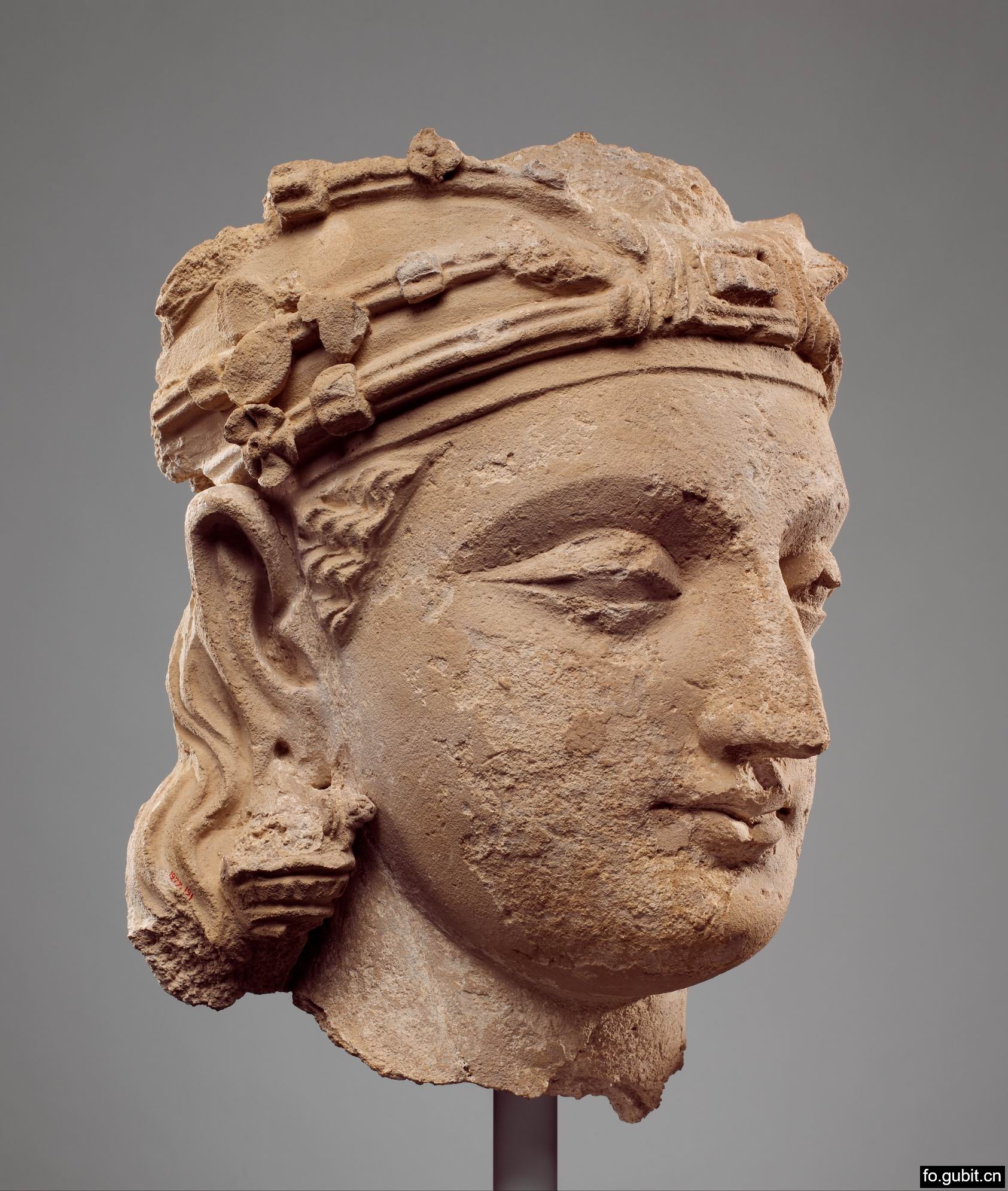 Monumental Bodhisattva Head
This head comes from a scupture that would have been more than twelve feet tall and likely stood along the perimeter of a Buddhist sacred area enclosing a stupa. By the fourth and fifth centuries monumental imagery became increasingly popular in Gandhara and was almost exclusively restricted to images of the Buddha. The bodhisattva’s turban and jewelry might indicate that he is a rare image of Shakyamuni prior to enlightenment. Alternatively, the bodhisattva may have attended the Buddha as part of a massive triad.
这尊菩萨头像来自一尊原本超过十二英尺高的雕像,很可能曾矗立于佛塔所在的佛教圣地围墙沿线。到四、五世纪时,巨型造像在犍陀罗地区日益盛行,且几乎仅限于佛陀形象。菩萨佩戴的头冠与珠宝可能暗示这是一尊罕见的释迦牟尼成佛前造像,抑或该菩萨像本是大型三尊像中侍奉佛陀的协侍之一。
来源:
Christian Humann , New York (until 1977; donated to MMA)
展览:
New York. The Metropolitan Museum of Art. “Buddhism Along the Silk Road,” June 2, 2012–February 10, 2013.
著录:
Behrendt, Kurt. The Art of Gandhara in The Metropolitan Museum of Art. New York: The Metropolitan Museum of Art, 2007, p. 73, cat. no. 55.