
侧边栏

5-6世纪新疆地区木雕释迦牟尼佛立像(纽约大都会博物馆)
尺寸:36.2 x 14 x 6.7 cm
年代:5-6世纪
质地:木雕
风格:新疆 犍陀罗晚期
来源:纽约大都会博物馆
参阅:外部链接
鉴赏:
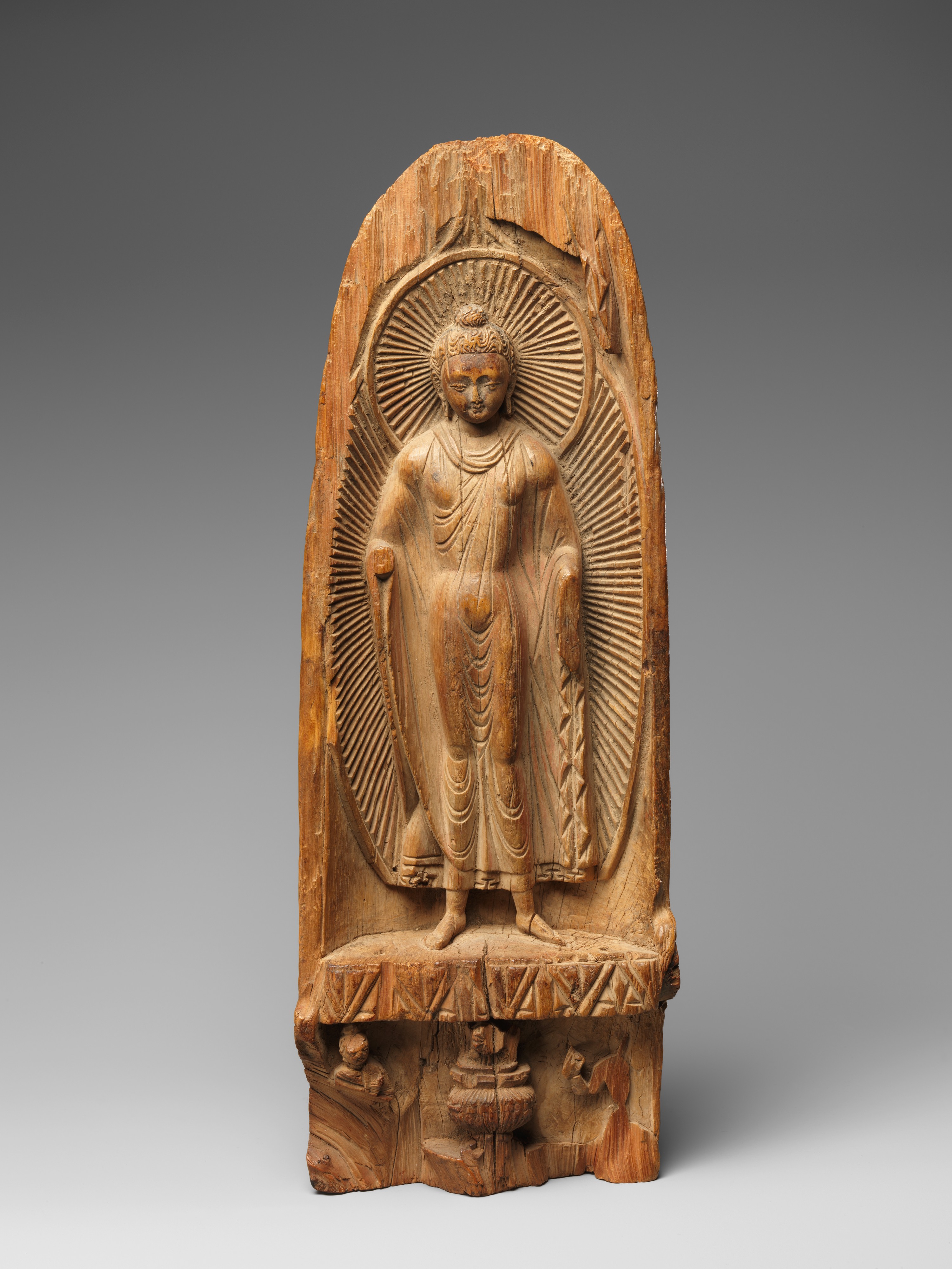
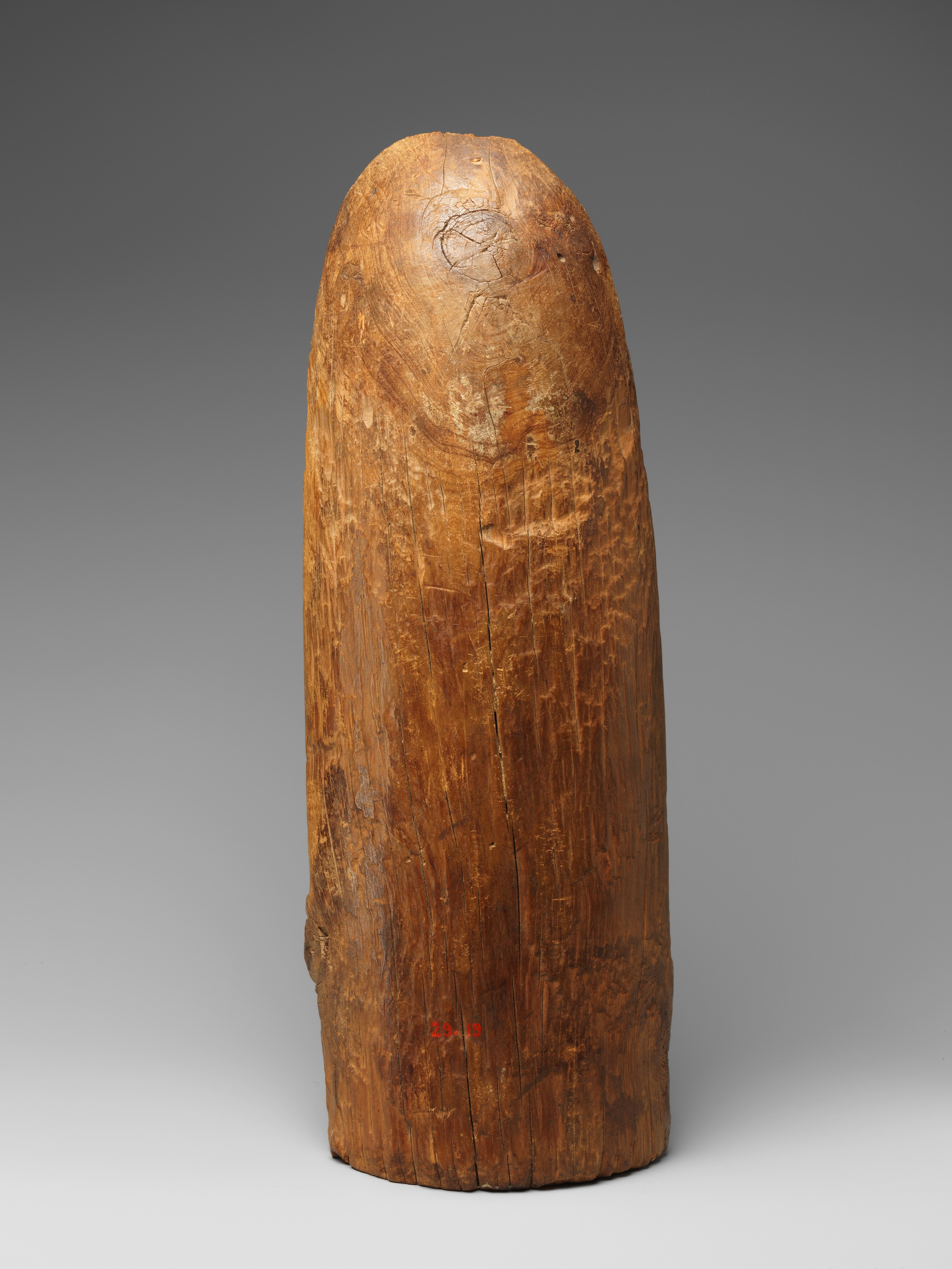 双背光释迦牟尼佛立像, 可参考相似的一尊:6世纪犍陀罗晚期黄铜释迦牟尼佛立像(纽约大都会博物馆)
Buddha with Radiate Halo and Mandorla
5th–6th century
Juniper wood with traces of color and gold
China (Xinjiang Autonomous Region, Turfan area)
This portable shrine from the northern branch of the Central Asian Silk Road was probably the centerpiece of a three-part traveling shrine—a small triptych with doors. Two donors on the base venerate what appears to be a pot overflowing with vegetation. Such shrines for personal devotion traveled with merchants and pilgrims. While the Buddha, especially his hairstyle, can be related to Chinese imagery, the overall presentation of the figure and the combined halo and mandorla show connections to the Afghan and Gandharan visual tradition (see 48.66a, b).
来源:
[ Edgar Worch , New York, until 1929; sold to MMA]
展览:
Osaka. : Japanese Association for the 1970 World Exposition. “Progress and Harmony for Mankind,” March 15, 1970–September 13, 1970.
Nara National Museum. “Nihon Bukkyō bijutsu no genryū,” April 29, 1978–June 11, 1978.
Nara National Museum. “Danzō: Buddhist Images Carved in Aromatic Woods,” April 27, 1991–June 2, 1991.
Paris. Réunion des Musées Nationaux. “La Sérinde, Terre du Bouddha: Dix Siecles d'Art sur la Route de la Soie,” 1995–96.
New York. The Metropolitan Museum of Art. “Glimpses of the Silk Road: Central Asia in the First Millennium,” September 19, 2002–May 24, 2009.
New York. The Metropolitan Museum of Art. “Buddhism Along the Silk Road,” June 2, 2012–February 10, 2013.
著录:
Priest, Alan. “Two Central Asian Sculptures.” The Metropolitan Museum of Art Bulletin 25, no. 5 (May 1930). pp. 125–26.
Priest, Alan. “Indian Sculpture.” The Metropolitan Museum of Art Bulletin 34, no. 6 (June 1939) pp. 152–58, fig. 2.
Priest, Alan. Chinese Sculpture in The Metropolitan Museum of Art. New York: The Metropolitan Museum of Art, 1944, p. 38, cat. no. 38, pl. LXXX.
The Metropolitan Museum of Art. Art Treasures of the Metropolitan: A Selection from the European and Asiatic Collections of the Metropolitan Museum of Ar. New York: H. N. Abrams, 1952, pp. 195, 238, fig. 190.
Ingholtm, Harald, and Islay Lyons. Gandharan Art in Pakistan. New York: Pantheon Books, 1957, p. 40, fig. 24–2.
Granoff, Phyllis. “A Portable Buddhist Shrine from Central Asia.” Archives of Asian Art 22 (1968–69). pp. 83, 84, fig. 5.
Hallade, Madeleine. Gandharan Art of North India and the Greco-Buddhist Tradition in India, Persia, and Central Asia. Translated by Translated from French by Diana Imber. New York: Harry N. Abrams, Inc., 1968, p. 166, pl. 129.
Pal, Pratapaditya. Light of Asia: Buddha Sakyamuni in Asian art. Exh. cat. Los Angeles: Los Angeles County Museum of Art, 1984, p. 198, cat. no. 81.
Behrendt, Kurt. How to Read Buddhist Art. New York: The Metropolitan Museum of Art, 2019, p. 58, fig. 37.
「荣游记」新疆 桧木浮雕释迦立佛 新疆吐鲁番公元5–6世纪(南北朝时期,高昌国,今新疆吐鲁番地区)桧木浮雕释迦立佛。大都会博物馆馆藏
本地桧木整板雕刻,残存彩绘、鎏金痕迹。
高36.2cm,宽13cm,厚4.8cm。
整体舟形背光龛。
整块木料修成上尖下宽的舟形龛,是西域佛教经典火焰舟形背光简化木雕版本。是民间小型供养造像特征。
佛首造型是标准西域犍陀罗风格演化。头顶细密螺旋螺髻,肉髻平缓圆润。带有中亚与中原融合的审美。
佛身后第一层圆形光环,布满密集放射状直线刻纹,代表佛光普照。是西域造像表现“光明”的标志性雕刻手法。
释迦立佛主体造像直立站姿,双脚赤裸踩平台。右手施无畏印,寓意消除众生恐惧。左手垂持袈裟衣角,是西域中原早期释迦立佛最经典制式。
袈裟衣纹是犍陀罗风格。线条随身体起伏自然贴合,保留古印度犍陀罗雕塑写实衣褶特征。身体轮廓轻薄,透过袈裟隐约可见躯体形态,是5–6世纪高昌造像独有的“薄衣透体”审美。
佛双脚踩踏长方形平台,平台立面满刻连续三角锯齿纹(西域佛教几何装饰,象征须弥山、金刚地界),作为凡俗与神圣空间的分界。
平台下方空白木面浅浮雕三组小型场景,还原当时民间礼佛场景。
左侧跪坐供养人,双手合十礼拜佛陀。 正中莲花香炉,多层莲瓣承托博山炉,是西域佛寺供养器具。 右侧另一身供养人,手持花枝献佛。 三组小像代表信众供养、祈福的核心用途,这整块木板是古代信众供奉在石窟佛龛的小型供养造像。 这是一件民间私人供养木雕,古代信徒携带至石窟、佛寺供奉,祈求平安。
造像范式继承古印度犍陀罗佛教艺术,舟形背光、三角几何纹饰、底层供养人浮雕,是高昌本地审美。
公元5–6世纪高昌国佛教鼎盛,吐鲁番石窟大量制作木、泥、绢本小型供养像。
中原北魏木雕造像背光多火焰纹,极少通体放射直线。衣纹更厚重,无底层供养人浮雕。
隋唐造像佛面相丰腴饱满,这件脸型清瘦,犍陀罗外来风格更浓厚。
西域高昌特征双层放射纹光环、舟形整木龛、基座三角纹、底部三联供养浅浮雕。

